• Fri frakt över 249 kr
  • •
  • Snabba leveranser
  • •
  • Billiga böcker
Kundservice

Du är på sajten för privatpersoner.

Företag, bibliotek eller offentlig verksamhet?

Du handlar på classic.bokus.com, där alla dina funktioner finns intakta.
Till classic.bokus.com
Bokus logotyp. Gå till startsidan.
  • Erbjudanden
  • Student
  • Topplistor
  • Barn & ungdom
  • Bokus Play
  • E-böcker
  • Ljudböcker
  • Pocketböcker
  • Spel och pussel

Pocketfynda! Hundratals böcker för 49 kr/st →

Sidfot

Mina sidor

    Hjälp

    • Kundservice
    • Vanliga frågor och svar
    • Frakt och leverans
    • Retur vid ångerrätt
    • Reklamera vara
    • Betalning
    • Köpvillkor
    • Allmänna villkor
    • Information om webbplatsens tillgänglighet

    Om Bokus

    • Om oss
    • Pressrum
    • För studenter
    • För företag
    • För bibliotek och offentlig verksamhet
    • För leverantörer
    • Hållbarhet

    Populärt

    • Aktuella erbjudanden
    • Presentkort
    • Studentlitteratur
    • Nya böcker
    • Topplistor
    • Signerade böcker
    • Engelska böcker

    Inspiration

    • Boktips
    • BookTok
    • Barnbokskaraktärer
    • Populära författare
    Logotyp för Bokus
    Följ oss på Facebook (extern länk)Följ oss på Instagram (extern länk)Följ oss på YouTube (extern länk)Följ oss på TikTok (extern länk)
    bokus @ CookiesAnpassa cookiesIntegritetspolicyKöpvillkor
    Till Citymail hemsida (extern länk)Till Budbee hemsida (extern länk)Till Postnord hemsida (extern länk)Till Schenker hemsida (extern länk)Till Early Bird hemsida (extern länk)Till Walleys hemsida (extern länk)
    1. Samhälle och politik
    2. Samhälle och kultur
    3. Kultur och medier
    4. Referensverk och tvärvetenskap

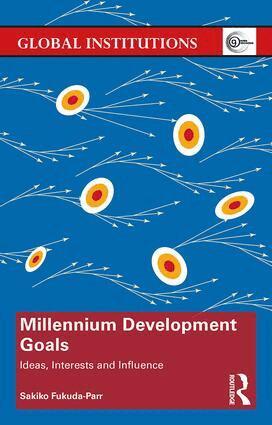
    Millennium Development Goals

    Ideas, Interests and Influence

    AvSakiko Fukuda-Parr

    Häftad, Engelska, 2017

    Del i serien Global Institutions

    622 kr

    Beställningsvara. Skickas inom 10-15 vardagar. Fri frakt över 249 kr.

    Fler format och utgåvor

    Inbunden

    2 410 kr

    E-bok

    740 kr

    E-bok

    738 kr

    Beskrivning

    Heralded as a success that mobilized support for development, the Millennium Development Goals (MDGs) ushered in an era of setting development agendas by setting global goals. This book critically evaluates the MDG experience from the capabilities and human rights perspectives, and questions the use of quantitative targets as an instrument of global governance. It provides an account of their origins, trajectory and influence in shaping the policy agenda, and ideas about international development during the first 15 years of the 21st century. The chapters explore:• whether the goals are adequate as benchmarks for the transformative vision of the Millennium Declaration;• how the goals came to be formulated the way they were, drawing on interviews with key actors who were involved in the process;• how the goals exercised influence through framing to shape policy agendas on the part of both developing countries and the international community;• the political economy that drove the formulation of the goals and their consequences on the agendas of the South and the North;• the effects of quantification and indicators on ideas and action; and• the lessons to be drawn for using numeric goals to promote global priorities.Representing a significant body of work on the MDGs in its multiple dimensions, compiled here for the first time as a single collection that tells the whole definitive story, this book provides a comprehensive resource. It will be of great interest to students, researchers and policymakers in the fields of development, human rights, international political economy, and governance by numeric indicators.

    Produktinformation

    • Utgivningsdatum:2017-06-12
    • Mått:138 x 216 x 15 mm
    • Vikt:372 g
    • Format:Häftad
    • Språk:Engelska
    • Serie:Global Institutions
    • Antal sidor:251
    • Förlag:Taylor & Francis Ltd
    • ISBN:9781138400177

    Utforska kategorier

    • Referensverk och tvärvetenskap inom Samhälle och politik
    • Offentlig förvaltning inom Samhälle och politik
    • Politiskt förtryck inom Samhälle och politik

    Mer om författaren

    Sakiko Fukuda-Parr is Professor in the Graduate Program in International Affairs at The New School, New York. From 1995 to 2004, she was Director of the UNDP Human Development Reports.

    Recensioner i media

    ‘This book, by one of the foremost analysts of development goals, presents a review of the strong influence but also the limitations of the United Nations’ MDGs. It holds important lessons on the use of global goals, and it is a must read in the era of the SDGs launched by the UN in 2015.’ - José Antonio Ocampo, Professor, Columbia University, USA. Former UN Under-Secretary-General for Economic and Social Affairs'This critically important book examines the consequences of using numerical goals for development. Focusing on the major contemporary development initiative, Sakiko Fukuda-Parr exposes serious limitations of governance by indicators, particularly for a human rights approach to development.' Sally Engle Merry, New York University and author of 'The Seductions of Quantification: Measuring Human Rights, Gender Violence, and Sex Trafficking' 'Just like the king in "The Little Prince" claimed to command the sun to set every evening, the MDGs have been credited with results that would most likely have happened anyhow, while obscuring increased inequalities and structural causes. A privileged witness and participant, Sakiko Fukuda-Parr brilliantly documents in this book two decades of development practice and narrative and draws unavoidable conclusions.' - Roberto Bissio, coordinator of Social Watch

    Innehållsförteckning

    • Introduction: Goals and norms of development Part I Shaping the international development agenda: From human development and human rights to basic needsChapter 1. Prospective circa 2003: The Millennium Development Goals—why they matterChapter 2. Retrospective circa 2013: Recapturing the human rights vision of the Millennium DeclarationPart II The marketplace of ideasChapter 3. The emergence and spread of the global poverty normChapter 4. The poverty narrative and the political economy of developmentChapter 5. Are the MDGs a priority in national poverty reduction strategies and aid programs? Only a few are!Part III Global goals and the power of numbers Chapter 6. Global goals as a policy tool: Intended and unintended effects of quantificationChapter 7. The power of numbers: How targets perverted human rights and human development agendasChapter 8. Framing the discourse and shaping agendas: The MDG hunger target and the narrative of food securityChapter 9. MDGs as performance measures: Faulty metrics that penalize countries starting behindChapter 10. Conclusion: Global goals to set international agendasSelect bibliography