716 kr
Global Institutions – serie
- Häftad, Engelska, 2018This edited volume advances existing research on the production and use of expert knowledge by international bureaucracies. Given the complexity, technicality and apparent apolitical character of the issues dealt with in global governance arenas, ‘evidence-based’ policy-making has imposed itself as the best way to evaluate the risks and consequences of political action in global arenas. In the absence of alternative, democratic modes of legitimation, international organizations have adopted this approach to policy-making. By treating international bureaucracies as strategic actors, this volume address novel questions: why and how do international bureaucrats deploy knowledge in policy-making? Where does the knowledge they use come from, and how can we retrace pathways between the origins of certain ideas and their adoption by international administrations? What kind of evidence do international bureaucrats resort to, and with what implications? Which types of knowledge are seen as authoritative, and why?This volume makes a crucial contribution to our understanding of the way global policy agendas are shaped and propagated. It will be of great interest to scholars, policy-makers and practitioners in the fields of public policy, international relations, global governance and international organizations.
- Häftad, Engelska, 2019
730 kr
Skickas inom 10-15 vardagar
Inside the United Nations illustrates some of the parameters surrounding consensus-building at the United Nations, seeking to provide new insights beyond what is already known. The author spent twelve years as P.R of Guatemala at the UN, offering him privileged observatories in all three of the main inter-governmental organs: the General Assembly, the Economic and Social Council, and the Security Council.In this book Rosenthal focuses on six case studies that offer the breadth and scope of what the UN does, and illustrate some of the main elements of the dynamics of consensus-building, providing concrete examples of the ingredients that shape decision-making in a multilateral setting. The chapters:cover the origin, preparation, and outcome of two successful international conferences: the 2000 Millennium Summit and the 2002 International Conference on Financing for Development;look at the 2000 negotiation on the scale of assessments to finance the UN’s budget in the General Assembly’s fifth committee (2000-2001);focus on the relevance of the Economic and Social Council;consider the internal politics involved in vying for elected posts in intergovernmental bodies by focusing on the campaign to be elected to the Security Council between Guatemala and Venezuela in 2006;reflect on the peculiarities of decision-making in the Security Council.Providing an insider’s view on the UN and exploring different facets of multilateral diplomacy at the UN, this book will be of great use and interest to scholars of international relations as well as the diplomatic community. - Inbunden, Engelska, 2020
2 076 kr
Skickas inom 10-15 vardagar
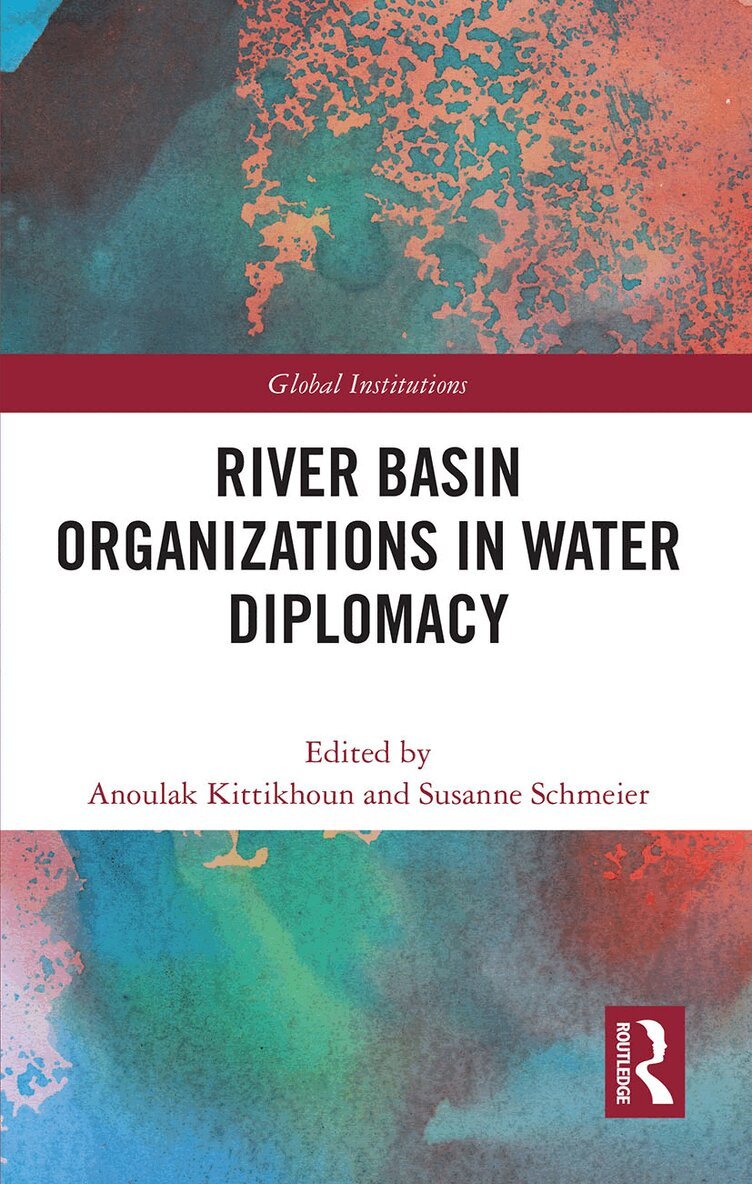
Will tensions and disputes among states sharing international water courses and lakes turn into active conflicts? Addressing this question, the book shows that these concerns are more prominent due to the locations and underlying political dynamics of some of these large rivers and the strategic interests of major powers.Written by a combination of leading practitioners and academics, this book shows that states are more prone to cooperate and manage their transboundary issues over the use of their common water resources through peaceful means, and the key institutions they employ are international river basin organizations (RBOs). Far from being mere technical institutions, RBOs are key mechanisms of water diplomacy with capacity and effectiveness varying on four key interrelated factors: their legal and institutional development, and the influence of their technical and strategic resources. The basins analyzed span all continents, from both developed and developing basins, including the Columbia, Great Lakes, Colorado, Senegal, Niger, Nile, Congo, Jordan, Helmand, Aral Sea, Mekong, Danube and Rhine.Contributing to the academic discourse on transboundary water management and water conflict and cooperation, the book provides insights to policy-makers on which water diplomacy engagements can be successful, the strengths to build on and the pitfalls to avoid so that shared water resources are managed in a cooperative, sustainable and stable way. - Inbunden, Engelska, 2021
2 445 kr
Skickas inom 10-15 vardagar
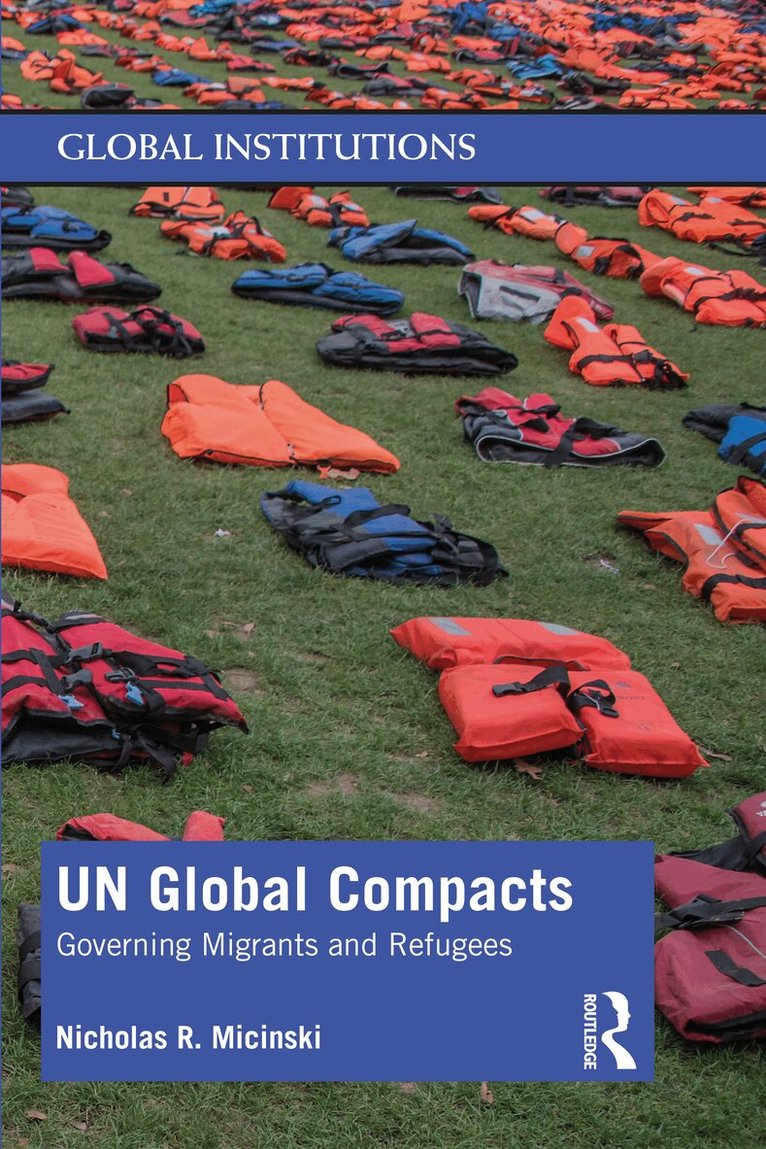
UN Global Compacts is a concise introduction to the key concepts, issues, and actors in global migration governance and presents a comprehensive analysis of the New York Declaration for Refugees and Migrants, the Global Compact on Refugees, and the Global Compact for Migration. The book places the declaration and compacts within their historical context, traces the evolution of global migration governance, and evaluates the implementation of the compacts. Ultimately, the global compacts were the result of three wider shifts in global governance from hard to soft law, from rights to aid, and from Cold War politics to nationalism. The book is an important contribution to international relations and migration studies and provides essential information on the NY declaration and the global compacts, in addition to an examination of the:• Negotiating blocs and strategies• Populist backlash to the Global Compact for Migration• Responsibility sharing for refugee protection• Human rights of migrants• Principle of non-refoulement• Comprehensive Refugee Response Framework• UNHCR, IOM, and the UN Network on MigrationThe book will be of interest to practitioners, students, and scholars of international cooperation, global governance, migrants, and refugees, and will be essential reading for graduate and undergraduate courses on international law, international organizations, and migration. - Häftad, Engelska, 2021
631 kr
Skickas inom 10-15 vardagar
UN Global Compacts is a concise introduction to the key concepts, issues, and actors in global migration governance and presents a comprehensive analysis of the New York Declaration for Refugees and Migrants, the Global Compact on Refugees, and the Global Compact for Migration. The book places the declaration and compacts within their historical context, traces the evolution of global migration governance, and evaluates the implementation of the compacts. Ultimately, the global compacts were the result of three wider shifts in global governance from hard to soft law, from rights to aid, and from Cold War politics to nationalism. The book is an important contribution to international relations and migration studies and provides essential information on the NY declaration and the global compacts, in addition to an examination of the:• Negotiating blocs and strategies• Populist backlash to the Global Compact for Migration• Responsibility sharing for refugee protection• Human rights of migrants• Principle of non-refoulement• Comprehensive Refugee Response Framework• UNHCR, IOM, and the UN Network on MigrationThe book will be of interest to practitioners, students, and scholars of international cooperation, global governance, migrants, and refugees, and will be essential reading for graduate and undergraduate courses on international law, international organizations, and migration. - Inbunden, Engelska, 2019
2 549 kr
Skickas inom 10-15 vardagar
Conflict and disaster have been part of human history for as long as it has been recorded. Over time, more mechanisms for responding to crises have developed and become more systematized. Today a large and complex ‘global humanitarian response system’ made up of a multitude of local, national and international actors carries out a wide variety of responses. Understanding this intricate system, and the forces that shape it, are the core focus of this book.Daniel G Maxwell and Kirsten Gelsdorf highlight the origins, growth, and specific challenges to, humanitarian action and examine why the contemporary system functions as it does. They outline the main actors, explore how they are organised and look at the ways they plan and carry out their operations. Interrogating major contemporary debates and controversies in the humanitarian system, and the reasons why actions undertaken in its name remain the subject of so much controversy, they provide an important overview of the contemporary humanitarian system and the ways it may develop in the future.This book offers a nuanced understanding of the way humanitarian action operates in the 21st century. It will be essential reading for anyone with an interest in international human rights law, disaster management and international relations.For more information, please see the authors' website: https://www.understandingthehumanitarianworld.com/ - Häftad, Engelska, 2019
606 kr
Skickas inom 10-15 vardagar
Conflict and disaster have been part of human history for as long as it has been recorded. Over time, more mechanisms for responding to crises have developed and become more systematized. Today a large and complex ‘global humanitarian response system’ made up of a multitude of local, national and international actors carries out a wide variety of responses. Understanding this intricate system, and the forces that shape it, are the core focus of this book.Daniel G Maxwell and Kirsten Gelsdorf highlight the origins, growth, and specific challenges to, humanitarian action and examine why the contemporary system functions as it does. They outline the main actors, explore how they are organised and look at the ways they plan and carry out their operations. Interrogating major contemporary debates and controversies in the humanitarian system, and the reasons why actions undertaken in its name remain the subject of so much controversy, they provide an important overview of the contemporary humanitarian system and the ways it may develop in the future.This book offers a nuanced understanding of the way humanitarian action operates in the 21st century. It will be essential reading for anyone with an interest in international human rights law, disaster management and international relations.For more information, please see the authors' website: https://www.understandingthehumanitarianworld.com/ - Inbunden, Engelska, 2020
2 445 kr
Skickas inom 10-15 vardagar
This book offers an explanation and evaluation of preventative diplomacy in an age of increasing precariousness. It emphasises the importance of pursuing diplomacy and human security in connection with the Sustainable Development Goals (SDG) which promote development grounded in peace, justice, and universal respect for human rights.It explores and uncovers efforts to set up diplomatic channels designed to ensure relations between the great powers, intra- and inter-state conflict, terrorism and weapons of mass destruction, human rights, and the global watch over human security do not escalate out of control. Discussing evolving tensions between the United States and China, and the United States and Russia, this book recalls past examples of preventive diplomacy between them, and explores ideas for the exercise of preventive diplomacy in the future. Presenting evidence that contemporary preventive diplomacy is pursued not only by international or regional officials but also by nongovernmental organizations and individuals, the book emphasises the need to pursue and enhance a comprehensive effort to realize SDG16 and human security. The book contains a range of practical recommendations to improve preventive diplomacy and provides a unique optic into understanding the threats facing the planet. It will be of interest to scholars and students of diplomacy, security studies, global governance and practitioners in government and international organisations.. - Inbunden, Engelska, 2020
2 076 kr
Skickas inom 10-15 vardagar
This completely revised edition of Global Think Tanks: Policy Networks and Governance provides a clear description of, and context for, the global proliferation of think tanks. It explores the origins, development, and diversity of think tanks and policy networks, discusses past and current issues facing transnational think tanks, and considers the possible future challenges and developments. The updated content reflects recent trends such as globalization, digitalization, diversity, populism, and disinformation; and it also includes a new chapter on the impact of emerging technologies on global think tanks and governance.The book: identifies, maps, and analyzes these phenomena of proliferation, expansion, and networking; provides a primer and a roadmap for global public policy practitioners, participants, and the interested public; illustrates the global growth of think tanks that the world has experienced over the past eight years; analyzes the impact and emerging potential of new technologies and increasing diversity; and considers how global think tanks and policy networks can continue to improve their impact and overall reach.This volume will be of great interest to all students of international relations and international organizations, alongside policy professionals working at think tanks around the world. - Häftad, Engelska, 2020
545 kr
Skickas inom 10-15 vardagar
This completely revised edition of Global Think Tanks: Policy Networks and Governance provides a clear description of, and context for, the global proliferation of think tanks. It explores the origins, development, and diversity of think tanks and policy networks, discusses past and current issues facing transnational think tanks, and considers the possible future challenges and developments. The updated content reflects recent trends such as globalization, digitalization, diversity, populism, and disinformation; and it also includes a new chapter on the impact of emerging technologies on global think tanks and governance.The book: identifies, maps, and analyzes these phenomena of proliferation, expansion, and networking; provides a primer and a roadmap for global public policy practitioners, participants, and the interested public; illustrates the global growth of think tanks that the world has experienced over the past eight years; analyzes the impact and emerging potential of new technologies and increasing diversity; and considers how global think tanks and policy networks can continue to improve their impact and overall reach.This volume will be of great interest to all students of international relations and international organizations, alongside policy professionals working at think tanks around the world. - Inbunden, Engelska, 2019
2 445 kr
Skickas inom 10-15 vardagar
Humanitarians operate on the frontlines of today’s armed conflicts, where they regularly negotiate to provide assistance and to protect vulnerable civilians. This book explores this unique and under-researched field of humanitarian negotiation. It details the challenges faced by humanitarians negotiating with armed groups in Yemen, Myanmar, and elsewhere, arguing that humanitarians typically negotiate from a position of weakness. It also explores some of the tactics and strategies they use to overcome this power asymmetry to reach more favorable agreements.The author applies these findings to broader negotiation scholarship and investigates the implications of this research for the field and practice of humanitarianism. This book also demonstrates how non-state actors – both humanitarians and armed groups – have become increasingly potent diplomatic actors. It challenges traditional state-centric approaches to diplomacy and argues that non-state actors constitute an increasingly crucial vector through which international relations are replicated and reconstituted during contemporary armed conflict. Only by accepting these changes to the nature of diplomacy itself can the causes, symptoms, and solutions to armed conflict be better managed.This book will be of interest to scholars concerned with conflict resolution, negotiation, and mediation, as well as to humanitarian practitioners themselves. - Inbunden, Engelska, 2020
2 518 kr
Skickas inom 10-15 vardagar
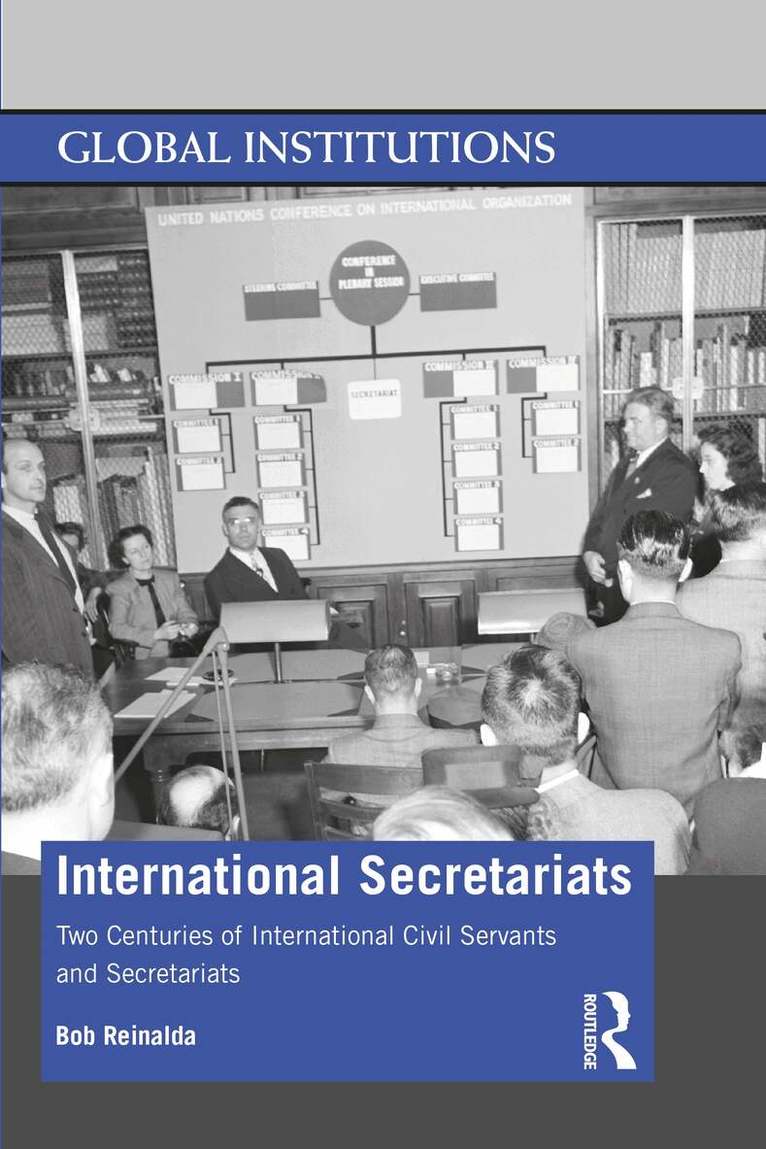
Providing a comprehensive overview of two centuries of international civil servants and international secretariats, this book reveals how international secretariats have emerged and evolved, focusing on both structures (international public administrations) and the practitioners (international civil servants).Reinalda explores the history and development of international secretariats and international civil servants, starting with the Congress of Vienna (1814–1815), when the first international organization was established in the form of a river commission for the navigation of the Rhine. Charting the development of international secretariats through the nineteenth century – the League of Nations, the United Nations, and the United Nations System with its many specialized agencies, the author explains why NATO (North Atlantic Treaty Organization) and the OECD (Organisation for Economic Co-operation and Development) have strong, rather than weak, international secretariats, and shines a light on the registries of international courts and tribunals.The book fills a gap in the literature by exploring the full evolution of international secretariats, covering global and continental developments as well as regional integration practices around the world. Secretariats have become the leading actors in multilateral diplomacy particularly for dealing with complex issues, and this book will be of interest to all scholars of global governance and practitioners working for a range of international organizations. - Häftad, Engelska, 2020
649 kr
Skickas inom 10-15 vardagar
Providing a comprehensive overview of two centuries of international civil servants and international secretariats, this book reveals how international secretariats have emerged and evolved, focusing on both structures (international public administrations) and the practitioners (international civil servants).Reinalda explores the history and development of international secretariats and international civil servants, starting with the Congress of Vienna (1814–1815), when the first international organization was established in the form of a river commission for the navigation of the Rhine. Charting the development of international secretariats through the nineteenth century – the League of Nations, the United Nations, and the United Nations System with its many specialized agencies, the author explains why NATO (North Atlantic Treaty Organization) and the OECD (Organisation for Economic Co-operation and Development) have strong, rather than weak, international secretariats, and shines a light on the registries of international courts and tribunals.The book fills a gap in the literature by exploring the full evolution of international secretariats, covering global and continental developments as well as regional integration practices around the world. Secretariats have become the leading actors in multilateral diplomacy particularly for dealing with complex issues, and this book will be of interest to all scholars of global governance and practitioners working for a range of international organizations. - Häftad, Engelska, 2021
673 kr
Skickas inom 10-15 vardagar
This book offers an explanation and evaluation of preventative diplomacy in an age of increasing precariousness. It emphasises the importance of pursuing diplomacy and human security in connection with the Sustainable Development Goals (SDG) which promote development grounded in peace, justice, and universal respect for human rights.It explores and uncovers efforts to set up diplomatic channels designed to ensure relations between the great powers, intra- and inter-state conflict, terrorism and weapons of mass destruction, human rights, and the global watch over human security do not escalate out of control. Discussing evolving tensions between the United States and China, and the United States and Russia, this book recalls past examples of preventive diplomacy between them, and explores ideas for the exercise of preventive diplomacy in the future. Presenting evidence that contemporary preventive diplomacy is pursued not only by international or regional officials but also by nongovernmental organizations and individuals, the book emphasises the need to pursue and enhance a comprehensive effort to realize SDG16 and human security. The book contains a range of practical recommendations to improve preventive diplomacy and provides a unique optic into understanding the threats facing the planet. It will be of interest to scholars and students of diplomacy, security studies, global governance and practitioners in government and international organisations.. - Inbunden, Engelska, 2021
2 445 kr
Skickas inom 10-15 vardagar
This book examines a particular type of donor behavior – known as country earmarking of contributions – which occurs within the voluntary financing system of the United Nations.The research demonstrates that already during the period of the Millennium Development Goals a large share of the voluntary multilateral funding decisions was influenced by the commercial priorities of the OECD/DAC donor countries. The theoretical contribution focuses on disentangling the mix of policy advantages that can be pursued through linking of donors’ commercial priorities with multi-bilateral development programs. The book considers its empirical findings within the current framework of the Sustainable Development Goals and the associated aid financing architecture. It demonstrates that, despite many negative associations of commercial aid giving, it is difficult to make an indisputably negative judgment on the practice of commercial earmarking in the specific context of the specialized UN agencies. The author argues that whether commercial earmarking proves to be a curse or a blessing for the multilateral development institutions will very much depend on the availability of parallel, flexible funding, and the creation of adequate political and operational space for supranational norm-keepers. Synthesizing the existing knowledge concerning the supply-side of multi-bi aid, this book provides an accessible, entry-level overview of the topic that will appeal to students and scholars of global governance and international organizations. - Häftad, Engelska, 2023
631 kr
Skickas inom 10-15 vardagar
This book examines a particular type of donor behavior – known as country earmarking of contributions – which occurs within the voluntary financing system of the United Nations.The research demonstrates that already during the period of the Millennium Development Goals a large share of the voluntary multilateral funding decisions was influenced by the commercial priorities of the OECD/DAC donor countries. The theoretical contribution focuses on disentangling the mix of policy advantages that can be pursued through linking of donors’ commercial priorities with multi-bilateral development programs. The book considers its empirical findings within the current framework of the Sustainable Development Goals and the associated aid financing architecture. It demonstrates that, despite many negative associations of commercial aid giving, it is difficult to make an indisputably negative judgment on the practice of commercial earmarking in the specific context of the specialized UN agencies. The author argues that whether commercial earmarking proves to be a curse or a blessing for the multilateral development institutions will very much depend on the availability of parallel, flexible funding, and the creation of adequate political and operational space for supranational norm-keepers. Synthesizing the existing knowledge concerning the supply-side of multi-bi aid, this book provides an accessible, entry-level overview of the topic that will appeal to students and scholars of global governance and international organizations. - Inbunden, Engelska, 2021
2 445 kr
Skickas inom 10-15 vardagar
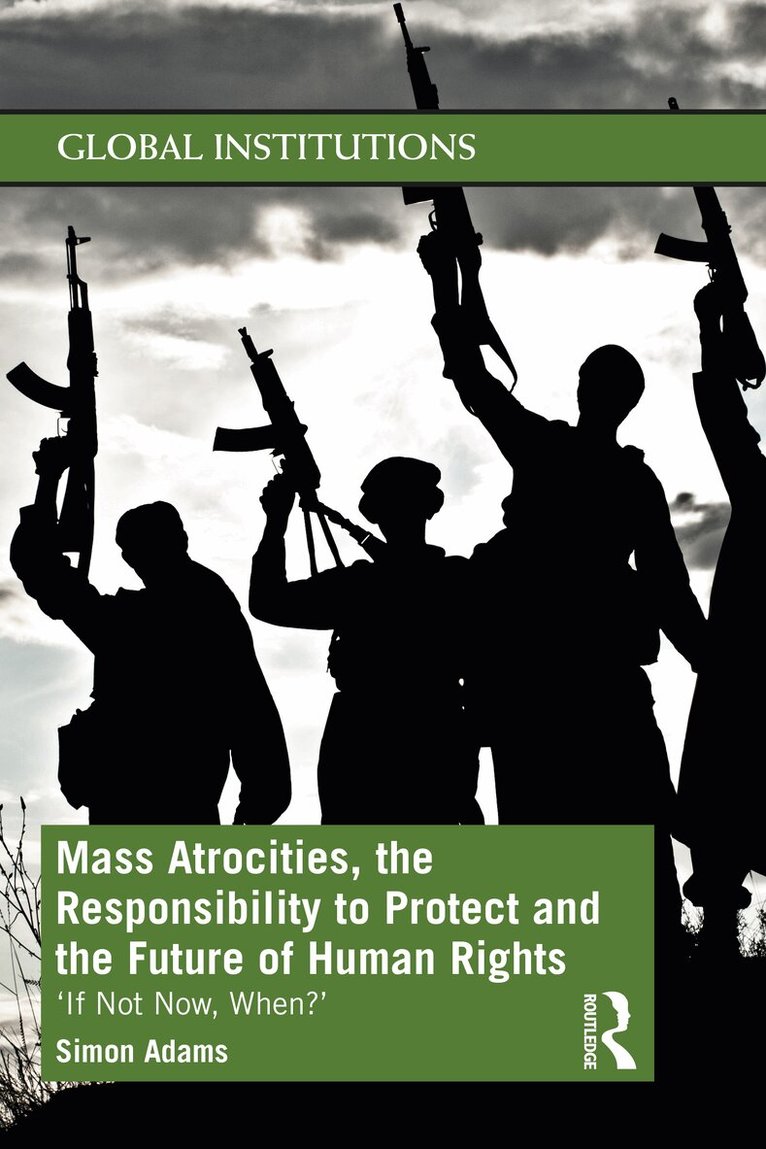
This book ambitiously weaves together history and politics to explain all of the major situations where mass atrocities have occurred, or been prevented, over the 15 years since the 'Responsibility to Protect' (R2P) was adopted at the 2005 UN World Summit.The author provides a history of human rights, mass atrocities and the principle of the R2P from the perspective of someone whose day job has been to work with the UN Security Council, various governments and civil society to help ensure the international community does not fail those who face the threat of genocide, war crimes and crimes against humanity today. It examines the implementation of the controversial principle of R2P since 2011 and how we end the politics of impunity, indifference and inaction once and for all. Using case studies from Iraq, Syria, Myanmar and Libya, the book offers a unique perspective regarding how we make 'never again' a living principle, rather than a cliché and how we end the politics of impunity, indifference and inaction once and for all.It will be of especial interest to scholars, students and policymakers working in the fields of international politics or concerned about human rights, atrocities, the United Nations and international justice in the world today. - Häftad, Engelska, 2021
631 kr
Skickas inom 10-15 vardagar
This book ambitiously weaves together history and politics to explain all of the major situations where mass atrocities have occurred, or been prevented, over the 15 years since the 'Responsibility to Protect' (R2P) was adopted at the 2005 UN World Summit.The author provides a history of human rights, mass atrocities and the principle of the R2P from the perspective of someone whose day job has been to work with the UN Security Council, various governments and civil society to help ensure the international community does not fail those who face the threat of genocide, war crimes and crimes against humanity today. It examines the implementation of the controversial principle of R2P since 2011 and how we end the politics of impunity, indifference and inaction once and for all. Using case studies from Iraq, Syria, Myanmar and Libya, the book offers a unique perspective regarding how we make 'never again' a living principle, rather than a cliché and how we end the politics of impunity, indifference and inaction once and for all.It will be of especial interest to scholars, students and policymakers working in the fields of international politics or concerned about human rights, atrocities, the United Nations and international justice in the world today. - Häftad, Engelska, 2020
673 kr
Skickas inom 10-15 vardagar
This edited volume provides a detailed and nuanced analysis of UN peacekeeping and the use of force, to inform a better understanding of the complex and interconnected issues at stake for the UN community. Peacekeeping is traditionally viewed as a largely passive military activity, governed by the principles of impartiality, consent, and the minimum use of force. Today, most large UN Peacekeeping Operations are only authorized to use force in defence of their mandates and to protect civilians under imminent threat of physical violence. Recently, with the deployment of the Force Intervention Brigade in the DRC, the UN has gone beyond peacekeeping and into the realm of peace-enforcement. These developments have brought to the fore questions regarding the use of force in the context of peacekeeping. The key questions addressed in this book examine not only the utility of force, but also the dilemmas and constraints inherent to the purposive use of force at a strategic, operational and tactical level. Should UN peacekeepers exercise military initiative?Is UN peacekeeping capable of undertaking offensive military operations?If so, then under what circumstances should peacekeepers use force?How should force be wielded? And against whom? With chapters written by experts in the field, this comprehensive volume will be of great use and interest to postgraduate students, academics and experts in international security, the UN, peacekeeping and diplomacy. - Häftad, Engelska, 2020
673 kr
Skickas inom 10-15 vardagar
Human rights and conflict resolution have been traditionally perceived as two separate fields, sometimes in competition or in tension and occasionally with contradictory approaches towards achieving a lasting peace. Although human rights norms have been incorporated and institutionalized by various national, regional, and international organizations that deal with conflict resolution, negotiators and mediators are often pressured in practice to overlook international human rights principles in favor of compliance and more immediate outcomes. The chapters in this volume navigate the relationship between human rights and conflict resolution by fleshing out practical, conceptual, and institutional encounters of the two agendas and engaging with lessons learned and windows of opportunities for mutual learning. Recognizing the increasing relevance of this debate and important gaps in the current research on the topic, this book addresses the following questions: How can we improve our practical and theoretical understanding of the complementarity between human rights and conflict resolution? How would a human rights-based approach to conflict resolution look like? How are international, regional, and national organizations promoting, implementing, and/or adapting to better coordinate between human rights and conflict resolution? Building on empirical evidence from contemporary conflict resolution processes, how have human rights been integrated in different efforts on the ground? What are the main lessons learned in this regard? Examining a wide range of countries and issues, this work is essential reading for human rights, conflict resolution, and security experts including scholars, diplomats, policy-makers, civil society representatives, and students of international politics. - Häftad, Engelska, 2020
693 kr
Skickas inom 10-15 vardagar
The League of Nations occupies a fascinating yet paradoxical place in human history. Over time, it’s come to symbolize both a path to peace and to war, a promising vision of world order and a utopian illusion, an artifact of a bygone era and a beacon for one that may still come. As the first experiment in world organization, the League played a pivotal, but often overlooked role in the creation of the United Nations and the modern architecture of global governance.In contrast to conventional accounts, which chronicle the institution’s successes and failures during the interwar period, Cottrell explores the enduring relevance of the League of Nations for the present and future of global politics. He asks: What are the legacies of the League experiment? How do they inform current debates on the health of global order and US leadership? Is there a "dark side" to these legacies? Cottrell demonstrates how the League of Nations’ soul continues to shape modern international relations, for better and for worse. Written in a manner accessible to students of international history, international relations and global politics, it will also be of interest to graduates and scholars. - Häftad, Engelska, 2020
673 kr
Skickas inom 10-15 vardagar
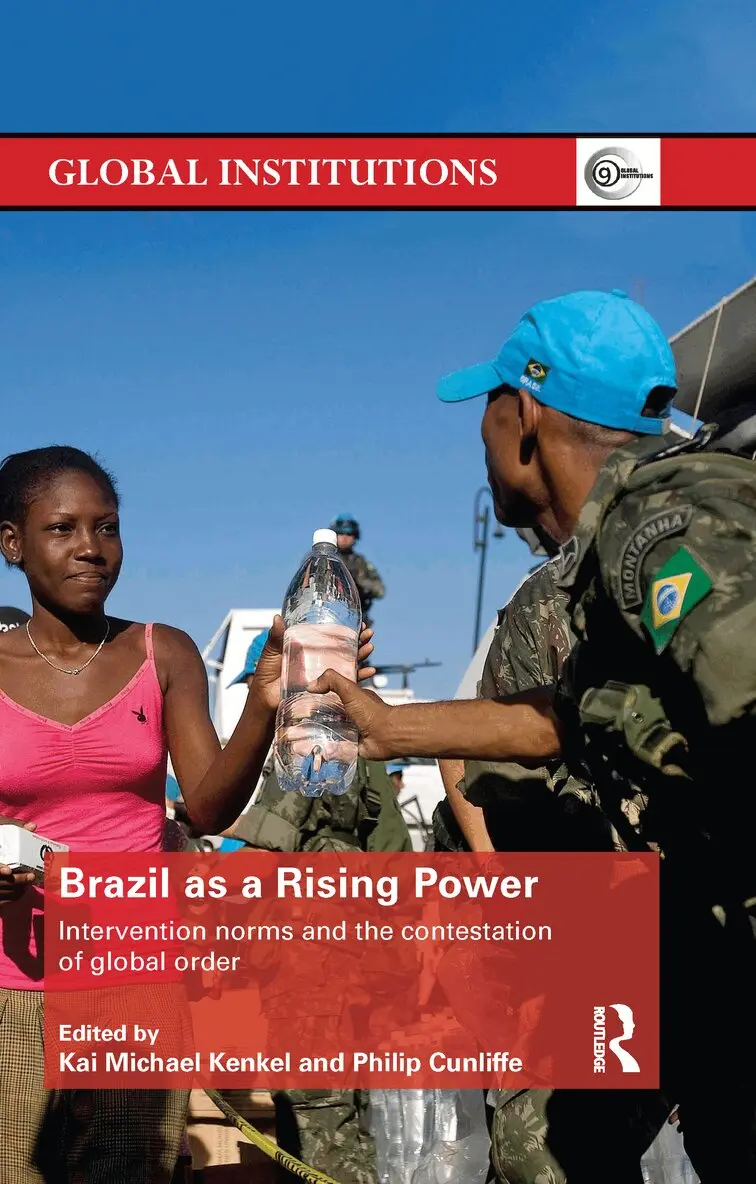
This book examines the normative tensions inherent in upward mobility within the international system, focusing particularly on the clash between sovereign self-interest and the putatively universal norms associated with international interventions. It provides extensive detail and deep analysis of Brazil’s nature as a rising power, and that nature’s implications for how the country crafts its international profile on issues such as intervention. In addition, the book proposes innovative ways of (re)organising thematic, conceptual and empirical research on the normative behaviour of emergent powers with regard to institutions of global governance and questions of intervention. In analysing what distinguishes Brazil as a rising power, the contributors begin from the assumption that participation in intervention is an increasingly crucial element in demonstrating the capacity and responsibility for which demand accrues as a state seeks increased international profile. As such, the debates around intervention serve as an indicative locus for examining the clash of norms that accompanies emergence as a global player. The book’s approach is to organise the analysis around thematic rather than chronological or praxis-based lines, using the Brazilian case as an illustrative example capable of extrapolation to other emerging powers such as Turkey, India and others.This work draws together rich empirical detail with sophisticated and varied conceptual analysis and will be of interest to scholars of international relations, Latin-American politics and global governance. - Häftad, Engelska, 2022
701 kr
Skickas inom 10-15 vardagar
Will tensions and disputes among states sharing international water courses and lakes turn into active conflicts? Addressing this question, the book shows that these concerns are more prominent due to the locations and underlying political dynamics of some of these large rivers and the strategic interests of major powers.Written by a combination of leading practitioners and academics, this book shows that states are more prone to cooperate and manage their transboundary issues over the use of their common water resources through peaceful means, and the key institutions they employ are international river basin organizations (RBOs). Far from being mere technical institutions, RBOs are key mechanisms of water diplomacy with capacity and effectiveness varying on four key interrelated factors: their legal and institutional development, and the influence of their technical and strategic resources. The basins analyzed span all continents, from both developed and developing basins, including the Columbia, Great Lakes, Colorado, Senegal, Niger, Nile, Congo, Jordan, Helmand, Aral Sea, Mekong, Danube and Rhine.Contributing to the academic discourse on transboundary water management and water conflict and cooperation, the book provides insights to policy-makers on which water diplomacy engagements can be successful, the strengths to build on and the pitfalls to avoid so that shared water resources are managed in a cooperative, sustainable and stable way. - Inbunden, Engelska, 2023
2 066 kr
Skickas inom 5-8 vardagar
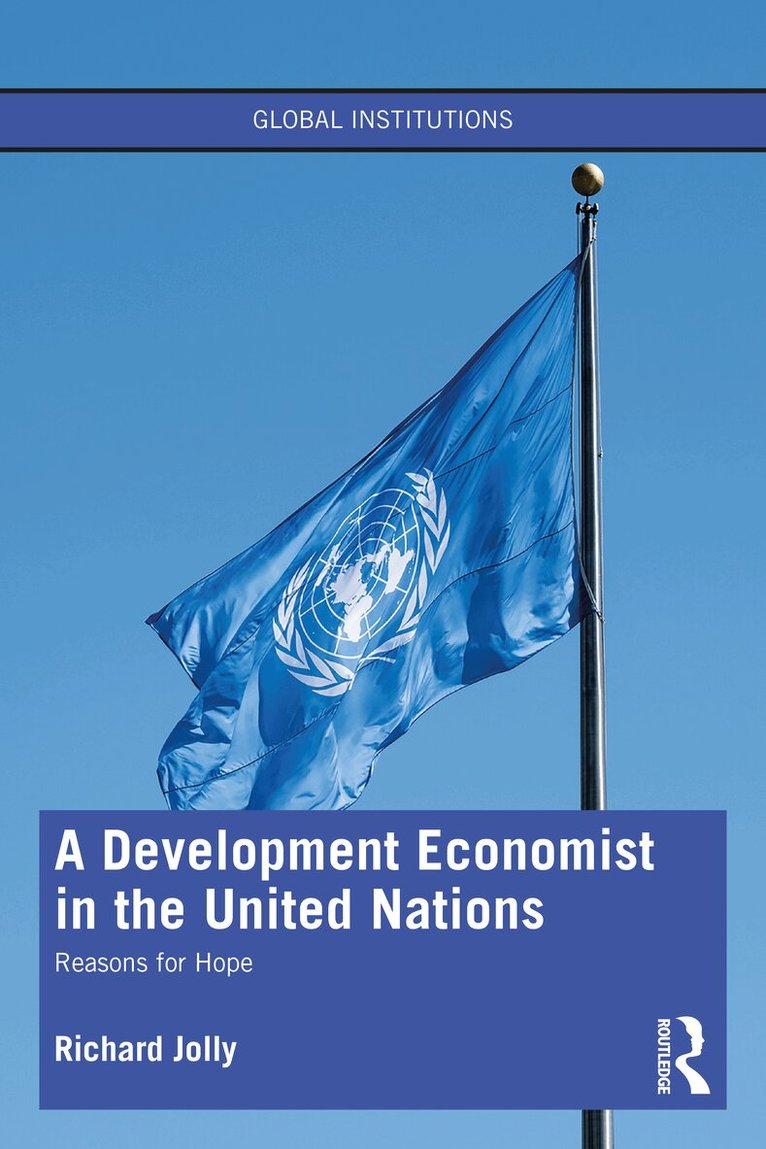
This book explores the joys and occasional frustrations of a development economist working for the United Nations.From 1982 to 2000 Richard Jolly worked in senior positions in UNICEF and UNDP on assignments that were innovative, for the UN, the countries concerned and for development. The book analyses his experiences as Deputy Director of UNICEF, Principal Coordinator and co-author of UNDP’s widely acclaimed Human Development Report and a community development officer in Kenya, as well as his involvement in the UN and country mission to Zambia and ILO employment missions to Colombia, Sri Lanka and Kenya. It shows what the UN can achieve when there is strong leadership at central and field levels, together with decentralized approaches. Jolly’s experiences lead him to conclude there are in fact three UNs: the formal UN of governments; the second UN comprising UN staff members, often the source of initiatives and action; and the third UN of NGOs, experts, consultants and others closely following the UN or working with it, and also often bringing new thinking and innovation.Reflecting on the need for international action to be more effective and the UN to be more strongly supported, this volume is a fascinating guide to students and scholars of global governance, development and international organizations and those working for them. - Häftad, Engelska, 2022
602 kr
Skickas inom 10-15 vardagar
This book explores the joys and occasional frustrations of a development economist working for the United Nations.From 1982 to 2000 Richard Jolly worked in senior positions in UNICEF and UNDP on assignments that were innovative, for the UN, the countries concerned and for development. The book analyses his experiences as Deputy Director of UNICEF, Principal Coordinator and co-author of UNDP’s widely acclaimed Human Development Report and a community development officer in Kenya, as well as his involvement in the UN and country mission to Zambia and ILO employment missions to Colombia, Sri Lanka and Kenya. It shows what the UN can achieve when there is strong leadership at central and field levels, together with decentralized approaches. Jolly’s experiences lead him to conclude there are in fact three UNs: the formal UN of governments; the second UN comprising UN staff members, often the source of initiatives and action; and the third UN of NGOs, experts, consultants and others closely following the UN or working with it, and also often bringing new thinking and innovation.Reflecting on the need for international action to be more effective and the UN to be more strongly supported, this volume is a fascinating guide to students and scholars of global governance, development and international organizations and those working for them. - Inbunden, Engelska, 2021
2 445 kr
Skickas inom 10-15 vardagar
This book shows how small countries use "big" diplomacy to advance national interests and global agendas – from issues of peace and security (the South China Sea and nuclearization in Korea) and human rights (decolonization) to development (landlocked and least developed countries) and environment (hydropower development). Using the case of Laos, it explores how a small landlocked developing state maneuvered among the big players and championed causes of international concern at three of the world’s important global institutions – the United Nations (UN), the Association of Southeast Asian Nations (ASEAN) and the Mekong River Commission (MRC).Recounting the geographical and historical origins behind Laos’ diplomacy, this book traces the journey of the country, surrounded by its five larger neighbors China, Thailand, Vietnam, Myanmar and Cambodia, and influenced by superpower rivalries, from the Cold War to the post-Cold War eras. The book is written from an integrated perspective of a French-educated Lao diplomat with over 40 years of experience in various senior roles in the Lao government, leading major groups and committees at the UN and ASEAN; and the theoretical knowledge and experience of an American-trained Lao political scientist and international civil servant who has worked for the Lao government and the international secretariats of the UN and MRC. These different perspectives bridge not only the theory-practice divide but also the government insider-outsider schism.The book concludes with "seven rules for small state diplomacy" that should prove useful for diplomats, statespersons, policymakers and international civil servants alike. It will also be of interest to scholars and experts in the fields of international relations and foreign policies of Laos, the Mekong and Asia in general. - Häftad, Engelska, 2021
574 kr
Skickas inom 10-15 vardagar
This book shows how small countries use "big" diplomacy to advance national interests and global agendas – from issues of peace and security (the South China Sea and nuclearization in Korea) and human rights (decolonization) to development (landlocked and least developed countries) and environment (hydropower development). Using the case of Laos, it explores how a small landlocked developing state maneuvered among the big players and championed causes of international concern at three of the world’s important global institutions – the United Nations (UN), the Association of Southeast Asian Nations (ASEAN) and the Mekong River Commission (MRC).Recounting the geographical and historical origins behind Laos’ diplomacy, this book traces the journey of the country, surrounded by its five larger neighbors China, Thailand, Vietnam, Myanmar and Cambodia, and influenced by superpower rivalries, from the Cold War to the post-Cold War eras. The book is written from an integrated perspective of a French-educated Lao diplomat with over 40 years of experience in various senior roles in the Lao government, leading major groups and committees at the UN and ASEAN; and the theoretical knowledge and experience of an American-trained Lao political scientist and international civil servant who has worked for the Lao government and the international secretariats of the UN and MRC. These different perspectives bridge not only the theory-practice divide but also the government insider-outsider schism.The book concludes with "seven rules for small state diplomacy" that should prove useful for diplomats, statespersons, policymakers and international civil servants alike. It will also be of interest to scholars and experts in the fields of international relations and foreign policies of Laos, the Mekong and Asia in general. - Häftad, Engelska, 2020
795 kr
Skickas inom 10-15 vardagar
Throughout the 1990s, humanitarian interventionism sat at a crossroads, where ideas about rights and duties within and beyond borders collided with an international reality of civil conflict where the most basic human rights were violated in the most brutal manner. This growing awareness of humanitarian crises has been enabled by a more globalized media which increasingly shapes public perceptions of distant crises, public opinion, and political decision-making. Clarke examines the extent to which the public discourse, and particular concepts, including those of an ethical and legal nature, influenced British newspaper coverage of the 1994 crisis in Rwanda, and, in turn, the extent to which that coverage influenced the British Parliament’s response to the crisis. Through his development and application of a broader methodological approach that combines both quantitative and qualitative analyses, the book offers a fuller understanding of the relationship between media coverage, parliamentary debate, and policy formulation, and the central role that the globalized media plays in this process. Integrating ethics, law and empirical analysis of the media to obtain a more cohesive understanding of the chemistry of the media-public policy nexus, this work will be of interest to graduates and scholars in a range of areas, including Genocide Studies, the Responsibility to Protect, the Media & Politics and International Relations. - Häftad, Engelska, 2021
701 kr
Skickas inom 10-15 vardagar
In the 21st century, as the peoples of the world grow more closely tied together, the question of real transnational government will finally have to be faced.The end of the Cold War has not brought the peace, freedom from atrocities, and decline of tyranny for which we hoped. It is also clearer now that problems like economic risks, tax havens, and environmental degradation arising with global markets are far outstripping the governance capacities of our 20th century system of distinct nation-states, even when they try to work together through intergovernmental agreements and organized bureaucracies of specialists.This work defends a cosmopolitan approach to global justice by arguing for new ways to combine the strengths of democratic nations in order to prevent mass atrocities and to secure other global public goods (GPGs). While protecting cultural pluralism, Davenport argues that a Democratic League would provide a legal order capable of uniting the strength and inspiring moral vision of democratic nations to improve international security, stop mass atrocities, assist developing nations in overcoming corruption and poverty, and, in time, potentially address other global challenges in finance, environmental sustainability, stable food supplies, immigration, and so on. This work will be of great interest to students and scholars of international relations, international organizations, philosophy and global justice. - Häftad, Engelska, 2021
645 kr
Skickas inom 10-15 vardagar
How ought scholars and students to approach the rapidly expanding and highly multidisciplinary study of international economic law? Academics in the field of international political economy used to take for granted that they worked with the overarching concepts of rules and governance, while legal scholars analyzed treaties and doctrines. However, over the past twenty years formerly disparate fields of study have converged in a complex terrain, where academic researchers and governmental policy analysts use a pluralistic set of theoretical and methodological tools to study the ongoing development of international economic law. This volume argues that the extensive development of international economic law makes it impossible to discuss international political economy and international law as if they were mutually exclusive processes, or even as if they were separate and mutually reinforcing. Rather, we must think of them as a deeply interconnected set of rapidly evolving activities. This is a paradigm shift in which we cease to think about an international system in which politics and law interact, and begin to think about an international system in which politics take place in a legal frame. Froese terms this a shift from politics and law, to the politics of international economic law.This book does for political economy what others have already done for law – introduces political scientists, economists, and other practitioners of IPE, to the potential of engaging with legal theory and method; it will be of great interest to scholars in a range of areas including IPE, global governance, IR and international law.