1 580 kr
Beställningsvara. Skickas inom 3-6 vardagar. Fri frakt över 249 kr.
Beskrivning
Publisher's Note: Products purchased from Third Party sellers are not guaranteed by the publisher for quality, authenticity, or access to any online entitlements included with the product.
Advance Your Construction Projects with CPM and this Fully Updated Guide
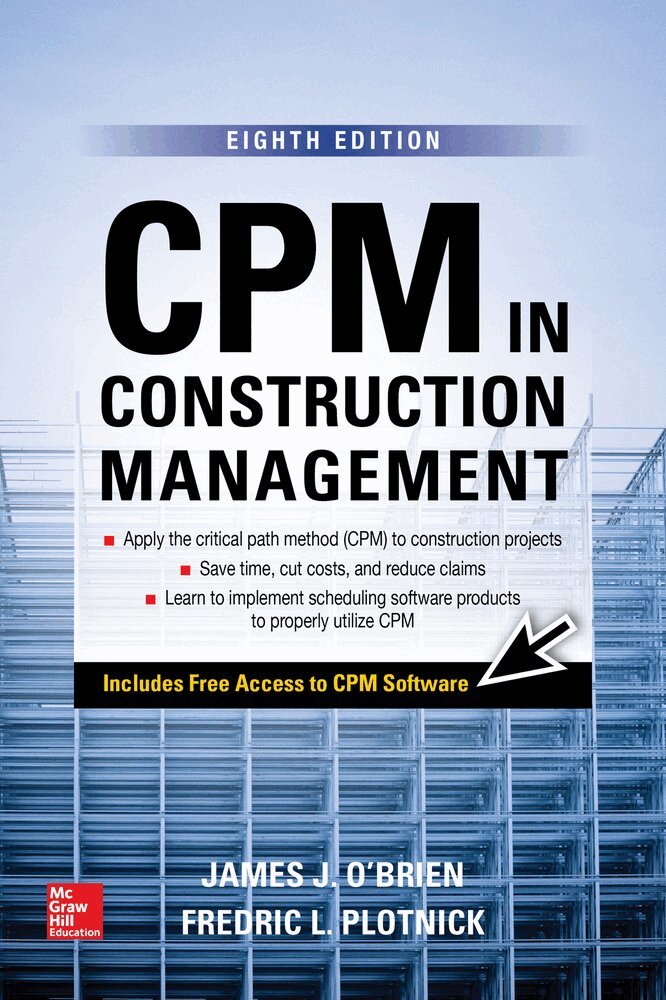
Plan, schedule, and manage construction projects using the critical path method (CPM) and the practical information contained in this thoroughly revised book. Written by two experienced engineers and authors, CPM in Construction Management, Eighth Edition, explains the evolution of CPM and fully covers the latest techniques, standards, and tools. The “John Doe” case study is used throughout to illustrate important functions, including acquiring and building the logic plan, navigation and best use of multiple software products, updating, cost control, resource planning, and delay evaluation.
This updated, hands-on guide shows how CPM:
• Works—and how to make it work for you
• Serves as the analytical tool of choice for evaluation, negotiation, resolution, and/or litigation of construction claims
• Cuts costs in a one-person operation or the most complex multinational enterprise
• Helps you stay on top of every aspect of complicated projects
• Saves big money in delay avoidance, accurate cost predictions, and claims reductions
• Multiplies the effectiveness of your instincts, experience, and knowledge
• Can be successfully implemented by properly utilizing the power of leading scheduling software products
Access to electronic content includes:
• A full-feature copy of Deltek’s Open Plan CPM software—a $2000 value
• Sample files of the “John Doe” project readable by a variety of software products
• Full color and scalable copies of all screenshots contained in the text
• Additional legacy and up-to-the-moment chapters
Produktinformation
- Utgivningsdatum:2015-12-16
- Mått:160 x 236 x 45 mm
- Vikt:1 146 g
- Format:Övrigt
- Språk:Engelska
- Antal sidor:736
- Upplaga:8
- Förlag:McGraw-Hill Education
- ISBN:9781259587276
Utforska kategorier
Mer om författaren
James J. O'Brien, PE, PMP, CVS, was vice chair of the board of O'Brien-Kreitzberg & Associates, Inc., the construction management firm that handled the renovation of San Francisco's cable car system. He was also the program manager for the redevelopment of JFK International Airport. Mr. O'Brien is the author or editor of many other books, including [italics start]Contractor's Management Handbook,[italics end] Second Edition; [italics start]Construction Management: A Professional Approach; Value Analysis in Design and Construction;[italics end] and [italics start]Scheduling Handbook,[italics end] all published by McGraw-Hill. He is a registered Professional Engineer in New York, New Jersey, Pennsylvania and many other states. Mr. O’Brien is a Fellow of the American Society of Civil Engineers, the Project Management Institute, the Construction Management Association of America and the Society of American Value Engineers International. He is also an active member of the Association for the Advancement of Cost Engineering International. Mr. O’Brien is a charter member and a vice president of the PMI College of Scheduling. Fredric Plotnick is an Adjunct Professor of Engineering in the departments of Engineering Management, Civil Engineering, and Construction Management at Drexel University's Philadelphia Pennsylvania Campus, where he has taught Engineering Law, Contracts Specifications and Law, Techniques of Project Controls, Project Scheduling and several other subjects since 1979. He has also maintained a consulting practice, Engineering and Property Management Consultants, Inc., since 1983, having previously worked for several contracting, consulting and engineering design firms. Professor Plotnick is a graduate of Drexel University College of Engineering, having a BSCE in Soil and Foundation Engineering and an MSCE in Construction Management, followed by a JD from Widener University School of Law, and returning to Drexel for his PhD in Civil Engineering. He is the co-author of CPM in Construction Management, fifth, sixth and seventh editions, also by McGraw-Hill, and numerous industry publications and presentations. Professor Plotnick is also the developer of the RDM (Relationship Diagramming Method) variant of CPM Planning and Scheduling Analysis which is currently being adopted by software vendors such as Oracle/Primavera starting with the high end, risk analysis product, Pertmaster (version 8.2 et seq.)
Innehållsförteckning
- Part 1 Introduction to CPM Planning and SchedulingChapter 1. Introduction to Logic Based Planning and Scheduling1.1 Scheduling Is for Everyone1.2 We Teach Carpentry—Not “How to Use Your New Power Saw”1.3 History of Scheduling Systems1.4 The Ordered “To-Do” List1.5 Gantt Charts and Bar Charts1.6 Development of the Critical Path Method of Scheduling1.7 Development of the PERT Method of Scheduling1.8 Comparison of CPM and PERT1.9 Precedence Diagramming Method1.10 SPERT and GERT1.11 Relationship Diagramming Method1.12 SummaryChapter 2. The Pure Logic Diagram2.0 Pure Logic Network Construction2.1 The Logic of the Logic Network2.2 Pure Logic Diagrams2.3 Technical Issues for Pure Logic Diagrams2.4 Logical Loop2.5 Form and Format for Pure Logic Networks2.6 Events2.7 Problems with Multi-Sheet Networks2.8 Form and Format for Networks in PERT2.9 Form and Format for Networks in PDM2.10 Form and Format for Networks in RDM2.11 Non-Construction Examples2.12 SummaryChapter 3. The Durations of the Logic Network3.1 Definition of an Activity3.2 Setting a Minimum and Maximum Duration3.3 Estimating versus Scheduling Durations3.4 CPM versus PERT Durations3.5 Lags in PDM and RDM—Durations between Activities3.6 SummaryChapter 4. Example Project: The John Doe Project4.1 Acquiring Information to Initial Schedule4.2 Choosing Appropriate Codes4.3 Activity List4.4 Could We Prepare a Bar Chart?4.5 Pure Network Logic4.6 John Doe Project Pure Network Logic4.7 Network Logic in ADM4.8 Network Logic in PDM4.9 Network Logic in RDM4.10 SummaryChapter 5. Output of Calculations5.1 Attributes of an Event5.2 Attributes of an Activity5.3 The Forward Pass—TE, ES, and EF5.4 The Backward Pass—TL, LF, and LS5.5 The Backward Pass—TF, FF, and IF5.6 The Backward Pass—TJ, JLF, JLS, and JTF5.7 Calculating the Attributes of an Event or Activity5.8 The Forward Pass—TE, ES, and EF5.9 The Backward Pass—TL, LF, and LS5.10 The Backward Pass—TJ, JLF, and JLS5.11 The Backward Pass—TF, FF, JTF, and IF5.12 SummaryChapter 6. Cranking the Engine6.1 Manual and Computer Solutions for PERT and ADM—The Matrix Method6.2 Manual and Computer Solution for PERT and ADM—The Intuitive Method6.3 Activity Start and Finish Times6.4 Critical Activities6.5 Total Float6.6 Free Float6.7 Independent Float6.8 Time Scale Network6.9 Computation Time6.10 Writing Your Own CPM Software6.11 Manual and Computer Solution for PDM with Durations between Activities6.12 SummaryChapter 7. Adding Complexity7.1 Enhancements to the Basic System7.2 Original versus Remaining Durations7.3 Percent Complete7.4 Defined Subtasks and Check-Off Updating7.5 Calendar versus Work Period Conventions7.6 Multiple Calendars7.7 Multiple Starting and Ending Activities7.8 Artificial Constraints to Dates7.9 Artificial Constraints to Algorithms7.10 Negative Float7.11 Definition of Criticality7.12 Continuous versus Interruptible Performance7.13 Actual Start and Finish Dates7.14 Retained Logic versus Progress Overrides7.15 Events and Milestones7.16 Hammocks and Summary Network Logic7.17 Summary Activity Bars7.18 User-Defined Code Fields7.19 Adding Resources to Activities7.20 Adding Costs and Cost Codes to Activities7.21 Resource-Driven Scheduling7.22 Master Schedules: Local versus System-Wide Updating7.23 Activity Types7.24 Hierarchical Codes7.25 SummaryChapter 8. PERT, SPERT, and GERT8.1 PERT8.2 SPERT8.3 GERT8.4 Computers Add Power8.5 SummaryChapter 9. PDM and Precedence Networks9.1 Precedence Logic9.2 Work Package Calculations9.3 Computer Calculation9.4 Project Example9.5 SummaryReferenceChapter 10. Respecting the Power of PDM10.1 Durations between Activities: Percent Lead/Lag Relationships10.2 Defining Overlapping Activities: Durations between Activities10.3 Negative Durations between Activities10.4 Remaining Durations between Activities10.5 Impact of Percent Complete upon Durations between Activities10.6 PDM and Hammocks10.7 Continuous versus Interruptible Progress10.8 Undefined Subtasks and Relationships to Other Activities10.9 Multiple Calendars10.10 Retained Logic versus Progress Override10.11 Total Float Calculation10.12 Erroneous Loop Errors10.13 SummaryChapter 11. RDM Networks Restore the Promise11.1 Relationship Logic11.2 Design of the Methodology for Calculation11.3 Additional Attributes of RDM—TJ, JLF, JLS, and JTF11.4 The Backward Pass—TJ, JLF, JLS, and JTF11.5 Implementation by Oracle Primavera Pertmaster Risk Analysis11.6 The Road Ahead for RDM11.7 SummaryChapter 12. Overview of Prevalent Software Products12.1 Overview of Primavera Project Planner P312.2 Overview of SureTrak Project Planner12.3 Overview of Primavera P612.4 P6 Navigation12.5 P6 Reflection Change Maintenance Feature12.6 P6 Multiple Float Paths12.7 Overview of Primavera Pertmaster aka Oracle Primavera Risk Analysis12.8 Overview of Deltek Open Plan Enterprise Project Management Software12.9 Overview of Microsoft Project Professional 200712.10 Other Software Products12.11 Summary of OverviewsPart 2 The Tools of CPM Planning and SchedulingChapter 13. Measure Twice—Cut Once13.1 Preparing to Collect the Input13.2 The Pure Logic Diagram13.3 A Team Effort … on the Blackboard or Sketch pad13.4 Format for Ease of Data Collection versus for Ease of Data Entry to Chosen Software13.5 Bar Chart: May Be Based upon Logic, but Is Not a Logic Network13.6 Logic-Restrained Bar Chart13.7 Freehand13.8 PERT, GERT, PDM, and RDM13.9 SummaryChapter 14. Choosing Codes14.1 Calendar14.2 Deliverable and Responsible Entity: SHT1, SHT2, RESP, and SUBC14.3 Key Resources: CRTY, CRSZ, MHRS, SUPV, and EQUIP14.4 Overtime, Night Work, Special Supervision, and Inspection14.5 Quantities and Rates of Productivity14.6 Location, Location, Location14.7 Budget Codes for Cost: Labor, Equipment, and Materials14.8 A Word about Codes Tied to the Activity ID14.9 A Word about Aliases14.10 SummaryChapter 15. Acquiring Information for Initial Schedule15.1 The Activity Description—A Gross Abbreviation15.2 Activity ID, Activity Codes, and Logs15.3 The Activity Further Defined by Resources Assigned15.4 The Activity Further Defined by Predecessors and Successors15.5 The Checklist of Subtasks15.6 The Checklist of Subdeliverables (Events)15.7 SummaryChapter 16. Specifying Restraints16.1 Mandatory and Discretionary Physical Restraints16.2 Mandatory and Discretionary Resource Restraints16.3 Mandatory and Discretionary Timing Constraints16.4 The Misuse of Restraints and Constraints: “Nailing the Bar Down Where It Belongs”16.5 The Need to Document the Basis of Each Restraint and Constraint16.6 Choosing the Type of Relationship between Activities16.7 The Case for Restricting Relationships to Traditional “FS” without Lag16.8 The Need for Nontraditional Relationships16.9 The Desire for Nontraditional Relationship and Resulting Misuse16.10 Nontraditional Relationships Supported by Popular Software16.11 Minimum Restrictions for Proper Usage of PDM16.12 Review the Strengths of ADM: Expand the Definitions16.13 Start of Each Activity Must Have Predecessor16.14 Finish of Each Activity Must Have Successor16.15 Real World Relationships between Activities16.16 The Final Forward Pass16.17 The Final Backward Pass16.18 Choosing the Algorithm for the Initial Schedule16.19 SummaryChapter 17. Acquiring the Durations17.1 Best Estimate with Utilization of Resources Envisioned17.2 Compare with PERT Durations: Optimistic, Most Likely, Pessimistic17.3 Schedule Durations versus Estimating Durations17.4 Estimated Durations versus Calculated Durations17.5 Do We Add Contingency Here?17.6 Estimated Durations versus Expected Completion Dates: “As Good as the Promise”17.7 Productivity17.8 Durations and the Project Calendar or Calendars17.9 Durations between Activities17.10 SummaryPart 3 The Practice of CPM Planning and SchedulingChapter 18. Evolution of the Project Schedule18.1 Preliminary Schedule18.2 Preconstruction Analysis18.3 Contractor Preconstruction Analysis18.4 Milestones18.5 The John Doe Schedule18.6 Resources18.7 Fast Track18.8 Responsibility18.9 Schedule versus Calendar18.10 Contingency18.11 Schedule Manipulation18.12 Working Schedule18.13 SummaryChapter 19. Equipment and Workforce Planning19.1 Workforce Leveling19.2 Computerized Resources Planning19.3 Resource Leveling and Smoothing19.4 Limitations of Algorithms19.5 Driving Resources19.6 Resource Calendars19.7 Practical Solutions19.8 Summary of Resource Leveling19.9 Turnaround Application19.10 Examples of Resource Loading on John Doe Project19.11 Resource Leveling Significance19.12 SummaryChapter 20. Procurement and Preconstruction20.1 Scheduling Materials Procurement20.2 RDM Just-in-Time to the Rescue20.3 John Doe Example20.4 Preconstruction20.5 Predesign Phase20.6 Design20.7 SummaryChapter 21. CPM and Cost Control21.1 CPM Cost Estimate21.2 Progress Payments21.3 Cost Forecasting21.4 Network Time Expediting21.5 Minimum Cost Expediting21.6 Earned Value Management21.7 SummaryChapter 22. Enterprise Scheduling22.1 Multiproject Scheduling22.2 Multiproject Leveling22.3 Summarization by Enterprise Organization22.4 The Dashboard22.5 Program and Portfolio Management22.6 Enterprise Software22.7 SummaryPart 4 The Practice of CPM SchedulingChapter 23. Converting the Team Plan to the Calculated Schedule23.1 Data Entry Made Easy23.2 Check and Set Schedule Algorithm Options23.3 First Run and Debugging the Logic23.4 Loop Detection and Correction23.5 Technical Review: The Primavera Diagnostic Report23.6 Beyond the Primavera Diagnostic23.7 First Review of Calculated Output: Reality Check 123.8 Detail Views of Output of Schedule Calculations23.9 Timescaled Logic Diagram23.10 Tailoring Initial Output to the Chosen Audiences23.11 Whatever Owner Wants, Owner Gets23.12 “You Can’t Always Get What You Want, But … You Get What You Need”23.13 Reports and Views for the Foreman Performing the Work23.14 Reports and Views for the Contractor’s Superintendent23.15 Reports and Views for the Contractor’s Upper Management23.16 The Narrative Report for Each Audience23.17 SummaryChapter 24. Engineer’s Review of the Submitted Initial CPM24.1 Legal Aspects of a Review24.2 Reviewing the Plan24.3 Technical Review24.4 Reschedule and Review the Diagnostic Report24.5 But Is the Logic Realistic? The Smell Test24.6 Metrics24.7 Project Calendar or Calendars24.8 SummaryChapter 25. Updating the Schedule25.1 Why Update the Schedule?25.2 Acquiring the Data for an Update25.3 Distinguishing Updates from Revisions25.4 Purpose of an Update25.5 The Purpose of a Revision25.6 Who Should Collect Data for an Update?25.7 Who Should Prepare Data for a Revision?25.8 Information Required for Schedule Control: AS, RD, AF25.9 Determination of Actual Start and Actual Finish Dates25.10 Determination of Remaining Duration of Activities: Repeat the Steps of the Master25.11 Expected Completion and Renewing Promises25.12 Automatic Updates25.13 The Forgotten Step: Determination of Remaining Duration between Activities25.14 Save and Rename: Naming Strategies25.15 Reports and Views to Assist Acquiring Data for an Update25.16 Electronic Tools to Assist Acquiring Data for an Update25.17 Choosing the Correct Algorithm for Updates25.18 Scheduling the Update: Interpreting the Results25.19 Technical Review: The Primavera Diagnostic Report25.20 What to Look for When Reviewing the Update25.21 Tailoring Update Output to the Chosen Audiences25.22 The Narrative Report for Each Audience25.23 SummaryChapter 26. Revising the Logic Network26.1 “What If” versus Committed Changes26.2 Changes: Approved, Constructive, and at Contractor’s Cost26.3 Revised Baseline26.4 Update Then Revise26.5 SummaryChapter 27. Engineer’s Review of the Submitted Update or Revision27.1 Is This an Update or a Revision?27.2 The Technical Review27.3 The Critical Path27.4 What to Accept and What to Reject27.5 Metrics for Updates27.6 Revisions Are Not Updates27.7 Minor Revision27.8 Major Revision27.9 Recovery Schedule27.10 SummaryChapter 28. Case Histories28.1 Chicago Courthouse28.2 Times Tower28.3 Airport Construction28.4 High-Rise Construction28.5 NASA28.6 Housing28.7 Manufacturing Facilities28.8 SEPTA Rail Works28.9 New Jersey Turnpike Authority 1990–1995 Widening Program28.10 JFK Redevelopment28.11 Toronto Transit’s “Let’s Move” Program28.12 Phoenixville-Mont Clare Bridge28.13 Graduate Hospital Diagnostic Building28.14 Interstate 76, 202, and 422 Interchange28.15 Port Authority of New York and New Jersey28.16 Maricopa County Jail Design and Construction Program28.17 TXDOT SH45 Highway with Five High Bridge28.18 SummaryPart 5 Legal IssuesChapter 29. Specifying the CPM29.1 Attorney’s Viewpoint on Writing a CPM Specification29.2 Pure Logic Drawing29.3 Content of the Logic Network29.4 Updates and Revisions29.5 Standard References29.6 Sample CPM Specification29.7 SummaryChapter 30. Sample CPM Specification: A Guideline for Preparing Your Own Specification30.1 Project Cpm Logic Plans, Schedules, and Reports30.2 Project Preliminary Schedule30.3 Project Management and Coordination30.4 Payment Procedures30.5 Contract Modification ProceduresChapter 31. Unified Facilities Guide SpecificationChapter 32. CPM in Claims and Litigation32.1 Introduction32.2 Early Legal Recognition32.3 Evidentiary Use of CPM32.4 Summary32.5 ReferencesChapter 33. Delay Analysis33.1 Delay versus Disruption33.2 Responsibility/Types/Force Majeure33.3 As-Planned Logic Network33.4 As-Should-Have-Been CPM Network33.5 As-Planned Schedule33.6 Validation of the As-Planned Logic Network and Calculated Schedule33.7 As-Built Schedule33.8 Validation of the As-Built Schedule33.9 As-Built Logic Network33.10 Causative Factors33.11 As-Impacted Logic Network33.12 As-Impacted Schedule33.13 Time Impact Evaluations33.14 Zeroing to a Collapsed As-Impacted Logic Network33.15 Zeroing Out to an As-Should-Have-Been CPM33.16 Limitations of the TIE Methodology33.17 TIE Example of John Doe Project33.18 Windows Analysis33.19 Zeroing Out within the Windows Analysis33.20 Windows Example of John Doe Project33.21 SummaryChapter 34. Disruption Analyses34.1 Traditional Methodologies34.2 The Measured Mile Methodology34.3 CPM Out-of-Sequence Methodology34.4 Adoption by the Industry34.5 SummaryChapter 35. Other Claim Methods35.1 Frye versus Daubert35.2 AACEi 29RP-0335.3 Comparison of Three Methods for John Doe Project35.4 Evolve or Die35.5 The 50 Ways35.6 Summary of Other Delay Claim MethodologiesChapter 36. ConclusionAppendix Navigating the Virtual CD-ROMIndex
Mer från samma författare
Building Better Relationships for Clinical Success and Personal Growth
Justin B Leaf, Amy Bukszpan, James O'Brien
1 406 kr
Sustainable Communities on a Sustainable Planet
Brent Yarnal, Colin Polsky, James O'Brien
823 kr
Du kanske också är intresserad av
Performance Management in Education
Jenny Reeves, Pauline V Smith, James O'Brien, Harry Tomlinson, Christine Forde
685 kr
Building Better Relationships for Clinical Success and Personal Growth
Justin B Leaf, Amy Bukszpan, James O'Brien
1 406 kr