Häftad, Engelska, 2007
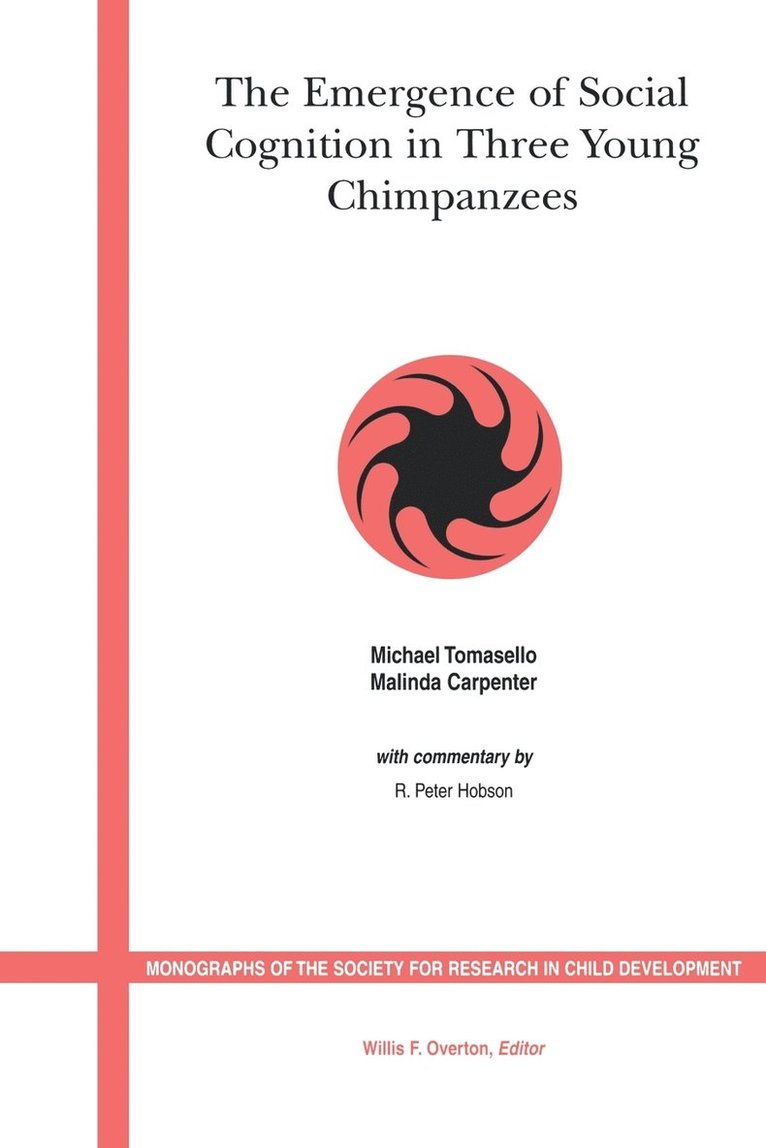
Emergence of Social Cognition in Three Young Chimpanzees
Av Michael Tomasello, Malinda Carpenter, Willis F. Overton
563 kr
Beställningsvara. Skickas inom 5-8 vardagar. Fri frakt över 249 kr.
Beskrivning
This Monograph reports a series of ten studies on the social-cognitive abilities of three young chimpanzees, ages to four years. Compares outcomes to similar studies conducted on human infacts for a comparative understanding.Looks at chimpanzees' abilities to understand and imitate goal-directed actions.Results suggest that the ontogeny of human social cognition comprises two relatively distinct trajectories: one for understanding intentional action and perception, common to all apes, and another for sharing psychological states with others in collaborative acts involving joint intentions and attentions, unique to the human species.
Produktinformation
- Utgivningsdatum: 2007-01-03
- Mått: 155 x 229 x 9 mm
- Vikt: 236 g
- Format: Häftad
- Språk: Engelska
- Serie: Monographs of the Society for Research in Child Development
- Antal sidor: 176
- Förlag: John Wiley and Sons Ltd
- ISBN: 9781405147262
Utforska kategorier
Betyg & recensioner
0 recensioner
Inga recensioner tillgängliga.