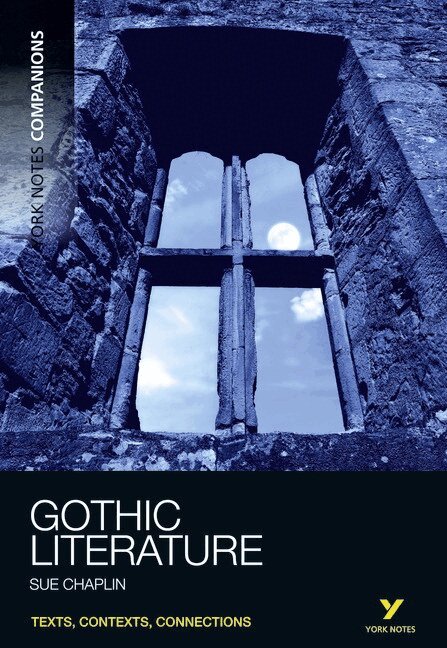
An exploration of Gothic literature from its origins in Horace Walpole’s 1764 classic The Castle of Otranto, through Romantic and Victorian Gothic to modernist and postmodernist takes on the form.
Sue Chaplin is a Senior Lecturer in English, and Course Leader for the BA English and History at Leeds Metropolitan University. She is also Executive Officer to the International Gothic Association, Commissioning Editor of the Romanticism Division of the online journal Literature Compass and member of the editorial board for Gothic Studies. She is the author of two monographs – The Gothic and the Rule of Law, 1764-1820 (Palgrave, 2007) and Law, Sensibility and the Sublime in Eighteenth-century Women’s Fiction (Ashgate, 2004) – and editor of the forthcoming Romanticism Handbook (Continuum).
Innehållsförteckning
Part One: IntroductionPart Two: A Cultural OverviewPart Three: Texts, Writers and ContextsEighteenth-century Gothic: Walpole, Radcliffe and LewisRomantic-era Gothic: Coleridge, Byron and Mary ShelleyNineteenth-century Gothic: Emily Bronte, Poe, Collins and StevensonFrom the Fin de Siecle to Modern Gothic: Stoker, Wells, M.R. James and LovecraftTwentieth-century American Gothic: Faulkner, King, Rice and BriteBritish Gothic in the Late Twentieth Century: Carter, Ballard, Mantel and WatersPart Four: Critical Theories and DebatesNarrative Instability and the Gothic NarratorFemale GothicGothic BodiesNation and EmpirePart Five: References and ResourcesTimelineFurther ReadingIndex