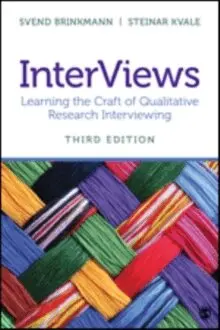
InterViews
Learning the Craft of Qualitative Research Interviewing
AvSvend Brinkmann,Steinar Kvale
1 079 kr
Beställningsvara. Skickas inom 5-8 vardagar. Fri frakt över 249 kr.
Beskrivning
Produktinformation
- Utgivningsdatum:2014-05-22
- Mått:152 x 228 x 19 mm
- Vikt:570 g
- Format:Häftad
- Språk:Engelska
- Antal sidor:424
- Upplaga:3
- Förlag:SAGE Publications
- ISBN:9781452275727
Utforska kategorier
Mer om författaren
Svend Brinkmann is professor of psychology in the Department of Communication and Psychology at the University of Aalborg, Denmark, where he serves as co-director of the Center for Qualitative Studies with Lene Tanggaard. His research is particularly concerned with philosophical, moral, and methodological issues in psychology and other human and social sciences. He is author and co-author of numerous articles and books, including John Dewey: Science for a Changing World, Qualitative Inquiry in Everyday Life, and Qualitative Interviewing.Steinar Kvale (1938-2008) was professor of educational psychology and director of the Centre of Qualitative Research at the University of Aarhus, and adjunct faculty at Saybrook Institute, San Francisco. He was born in Norway and graduated from the University of Oslo. He continued his studies at the University of Heidelberg with an Alexander von Humboldt scholarship and was a visiting professor at Duquesne University, Pittsburgh, and West Georgia University, Carrolton, and the University of Bergen. His long-term concern was with the implications of such continental philosophies as phenomenology, hermeneutics, and dialectics for psychology and education.
Recensioner i media
"I greatly value [this book] because [it] articulates the philosophical and methodological approach to validity in qualitative interview research like no other text . . . We consider it our qualitative interview method bible."
Innehållsförteckning
- List of Boxes, Figures, and TablesPreface to the Third EditionAcknowledgmentsAbout the AuthorIntroduction1. Introduction to Interview ResearchConversation as ResearchThree Interview SequencesInterview Research in History and in the Social SciencesThe Interview SocietyMethodological and Ethical Issues in Research InterviewingOverview of the BookInterviewing as a CraftInterviewing as a Social Production of KnowledgeInterviewing as a Social PracticePart I: Conceptualizing the Research InterviewPart II: Seven Stages of Research InterviewingConcluding PerspectivesPART I. Conceptualizing the Research Interview2. Characterizing Qualitative Research InterviewsA Qualitative Research Interview on LearningPhenomenology and the Mode of Understanding in a Qualitative Research InterviewPower Asymmetry in Qualitative Research InterviewsPhilosophical Dialogues, Therapeutic Conversations, and Research InterviewsTherapeutic Interviews and Research InterviewsQualitative Interviews as Research Instruments and Social Practices3. Epistemological Issues of InterviewingThe Interviewer as a Miner or as a TravelerInterviews in a Postmodern AgeSeven Features of Interview KnowledgeKnowledge and Interviews in a Positivist ConceptionA Rehabilitation of Classical Positivism?Methodological PositivismQualitative Interviewing Between Method and CraftResearch Interviewing: Method or Personal SkillsThe Craft of Research InterviewingLearning the Craft of Research Interviewing4. Ethical Issues of InterviewingInterviewing as a Moral InquiryEthical Issues Throughout an Interview InquiryEthical Positions: Rules and Procedures or Personal Virtues?Ethical GuidelinesInformed ConsentConfidentialityConsequencesThe Role of the ResearcherLearning Ethical Research Behavior5. The Qualitative Research Interview as ContextInterviewers and IntervieweesThe InterviewerThe IntervieweeBodies and NonhumansNonhumans and SurroundingsPART II. Seven Stages of an Interview Investigation6. Thematizing and Designing an Interview StudySeven Stages of an Interview InquiryThematizing an Interview StudyDesigning an Interview StudyMixed Methods7. Conducting an InterviewA Class Interview About GradesSetting the Interview StageScripting the InterviewInterviewer QuestionsThe Art of Second Questions8. Interview VariationsInterview SubjectsInterviewing Subjects Across CulturesInterviews With ChildrenInterviews With ElitesInterview FormsComputer-Assisted InterviewsFocus Group InterviewsFactual InterviewsConceptual InterviewsNarrative InterviewsDiscursive InterviewsConfrontational Interviews9. Interview QualityHamlet’s InterviewInterview QualityThe Interview SubjectInterviewer QualificationsStandard Objections to the Quality of Interview ResearchLeading Questions10. Transcribing InterviewsOral and Written LanguageRecording InterviewsTranscribing InterviewsTranscription Reliability, Validity, and Ethics11. Preparing for Interview AnalysisThe 1,000-Page QuestionA Method of Analyzing the Question?Steps and Modes of Interview AnalysisComputer Tools for Interview AnalysisCoding12. Interview Analyses Focusing on MeaningMeaning CondensationMeaning InterpretationThe Issue of Multiple InterpretationsHermeneutical Interpretation of MeaningThe Primacy of the Question in InterpretationAnalytic Questions Posed to an Interview TextThe Quest for the “Real Meaning”13. Interview Analyses Focusing on LanguageLinguistic AnalysisConversation AnalysisNarrative AnalysisDiscourse AnalysisDeconstruction14. Eclectic and Theoretical Analyses of InterviewsInterview Analysis as BricolageInterview Analysis as Theoretical Reading15. The Social Construction of ValidityObjectivity of Interview KnowledgeReliability and Validity of Interview KnowledgeValidity as Quality of CraftsmanshipCommunicative ValidityPragmatic ValidityGeneralizing From Interview Studies16. Reporting Interview KnowledgeContrasting Audiences for Interview ReportsBoring Interview ReportsEthics of ReportingInvestigating With the Final Report in MindStandard Reports and Ways of Enhancing ThemMethodResultsEnriching Interview ReportsJournalistic InterviewsDialoguesTherapeutic Case HistoriesNarrativesMetaphorsVisualizingCollagePublishing Qualitative Research17. Conversations about InterviewsCritiques of the Quality of Interview KnowledgeDeveloping the Craft of Research InterviewingAn Epistemology of Interview KnowledgeThe Object Determines the MethodThe Social Science Dogma of QuantificationResearch Interviewing as Social PracticeResearch Interviewing in a Social ContextInterview Ethics in a Social ContextAppendix: Learning TasksGlossaryReferencesIndex