• Fri frakt över 249 kr
  • •
  • Snabba leveranser
  • •
  • Billiga böcker
Kundservice

Du är på sajten för privatpersoner.

Företag, bibliotek eller offentlig verksamhet?

Du handlar på classic.bokus.com, där alla dina funktioner finns intakta.
Till classic.bokus.com
Bokus logotyp. Gå till startsidan.
  • Erbjudanden
  • Student
  • Topplistor
  • Barn & ungdom
  • Bokus Play
  • E-böcker
  • Ljudböcker
  • Pocketböcker
  • Spel och pussel

Pocketfynda! Hundratals böcker för 49 kr/st →

Sidfot

Mina sidor

    Hjälp

    • Kundservice
    • Vanliga frågor och svar
    • Frakt och leverans
    • Retur vid ångerrätt
    • Reklamera vara
    • Betalning
    • Köpvillkor
    • Allmänna villkor
    • Information om webbplatsens tillgänglighet

    Om Bokus

    • Om oss
    • Pressrum
    • För studenter
    • För företag
    • För bibliotek och offentlig verksamhet
    • För leverantörer
    • Hållbarhet

    Populärt

    • Aktuella erbjudanden
    • Presentkort
    • Studentlitteratur
    • Nya böcker
    • Topplistor
    • Signerade böcker
    • Engelska böcker

    Inspiration

    • Boktips
    • BookTok
    • Barnbokskaraktärer
    • Populära författare
    Logotyp för Bokus
    Följ oss på Facebook (extern länk)Följ oss på Instagram (extern länk)Följ oss på YouTube (extern länk)Följ oss på TikTok (extern länk)
    bokus @ CookiesAnpassa cookiesIntegritetspolicyKöpvillkor
    Till Citymail hemsida (extern länk)Till Budbee hemsida (extern länk)Till Postnord hemsida (extern länk)Till Schenker hemsida (extern länk)Till Early Bird hemsida (extern länk)Till Walleys hemsida (extern länk)
    1. Filosofi och religion
    2. Filosofi
    3. Filosofiska discipliner

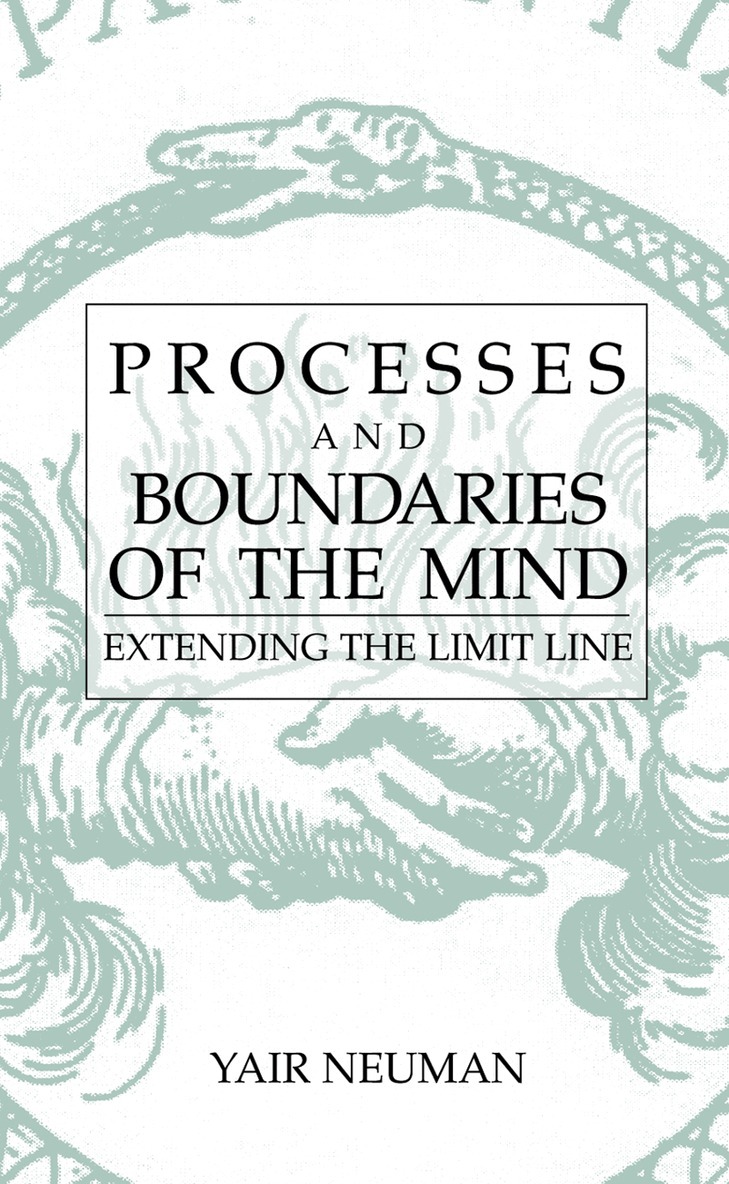
    Processes and Boundaries of the Mind

    Extending the Limit Line

    AvYair Neuman

    Häftad, Engelska, 2012

    Del i serien Contemporary Systems Thinking

    542 kr

    Beställningsvara. Skickas inom 10-15 vardagar. Fri frakt över 249 kr.

    Fler format och utgåvor

    Inbunden

    839 kr

    E-bok

    710 kr

    Beskrivning

    How is it that the world is conceived as exclusively populated by objects (e.g. books, cars, numbers, and people) while cognition is first and foremost a dynamic process? Inquiring into the `reified universe' Dr. Neuman explores questions of mind, reality, knowledge and signification in a provocative, stimulating and humorous way. Drawing on various domains such as systems research, semiotics, philosophy, and complexity sciences, Dr. Neuman is touching basic questions of our Being-in-the-World as cognate creatures, and presents a novel theory of the mind as a boundary phenomenon. Following the footsteps of Gregory Bateson and Valentine Volosinov, the book propagates a process-oriented theory of the mind, in a way that has never been presented before. In this context, new and creative solutions are presented for a variety of old philosophical problems such as: What is the Mind? Why do we use different signs for the same object across different cultures? and how is it possible to think on our thinking without getting into problems such as an infinite regression.

    Produktinformation

    • Utgivningsdatum:2012-10-23
    • Mått:152 x 229 x 11 mm
    • Vikt:276 g
    • Format:Häftad
    • Språk:Engelska
    • Serie:Contemporary Systems Thinking
    • Antal sidor:170
    • Förlag:Springer-Verlag New York Inc.
    • ISBN:9781461347842

    Utforska kategorier

    • Filosofiska discipliner inom Filosofi och religion
    • Maskinteknik och material inom Naturvetenskap och teknik

    Recensioner i media

    "Can the ancient riddles of cognition, consciousness, and identity be approached from viewpoints other than that of one or another area of specialization? In his book Dr. Neuman undertakes to do this, taking a seamless systems approach - one that makes use, in seamless conjunction, of findings from a variety of fields: philosophy, psychology, anthropology, religious studies, and literary criticism among others. The fertile ideas in this work are not intended to be a last word on this difficult subject, but a first word. They are excellent springboards for thought for solitary thinkers, as well as those who come together to grapple with profound enigmas that lie at the very essence of human existence." (Joe Engelberg, Emeritus Professor of Biophysics, Chandler Medical Center, University of Kentucky, author of "The Nature of Integrative Study") "This is a witty, erudite and multi-faceted approach to "the hole in the bagel" - the fact that mind, as Dr. Neuman argues, is not so much an entity, but a boundary phenomenon with mental operations lying in a recursive system of which it is a part and on which it reflects. Others, like Gregory Bateson have advanced this argument but Bateson did not explore his ideas in relation to other key linguists or modern philosophers with similar ideas - at least in print. Neuman has brought them together, Bateson, Volosinov, Merleau-Ponty and others with great clarity, pondering on the logic and meaning of a process determined by the dynamic of its units but which also includes the dynamics of the whole as part of its operation. This book is a considerable accomplishment, thorough in its scope, original in its presentation and eminently readable." (Peter Harries-Jones, Professor of Anthropology, York University, Toronto, author of: "A Recursive Vision: Ecological Understanding and Gregory Bateson")

    Innehållsförteckning

    • 1. Introduction.- On What There Is.- In the Beginning was the Act.- Cat-logue 1: The Cheshire Cat and Descartes.- 4. Beyond the Curtain or into the Looking Glass.- 5. A Guided Tour in the Kingdom of Signs.- Cat-logue 2: Are There Jewish Cats?.- 6. Saussure and Semiotics as a Social System.- 7. The Mind as a Semiotic Interface.- Cat-logue 3: It Means Nothing.- 8. We Have Never Been Too Abstract.- Cat-logue 4: Where Does the Frame End?.- 9. A Snake that Bites Its Tail.- 10. The Demon of Circularity.- 11. Origins.- Cat-logue 5: The Hole in the Bagel.- 12. Laws of Form.- Cat-logue 6: Inside the Outside.- 13. Toward a Phenomenology of Boundaries.- Cat-logue 7: How Deep is the Surface?.- 14. Peter Pan’s Shadow and the Empty Observer.- 15. On Turing’s Carnal Error.- 16. What is so Complex about Complexity?.- Cat-logue 8: Speaking with the Cat about Spinoza.- 17. Toward a Dialogical Complexity.- 18. The Architectonics of the Mind.- Cat-logue Which Is an Epilogue: Where a Blind Man Ends.- References.- Endnotes.- Name Index.