Häftad, Engelska, 2012
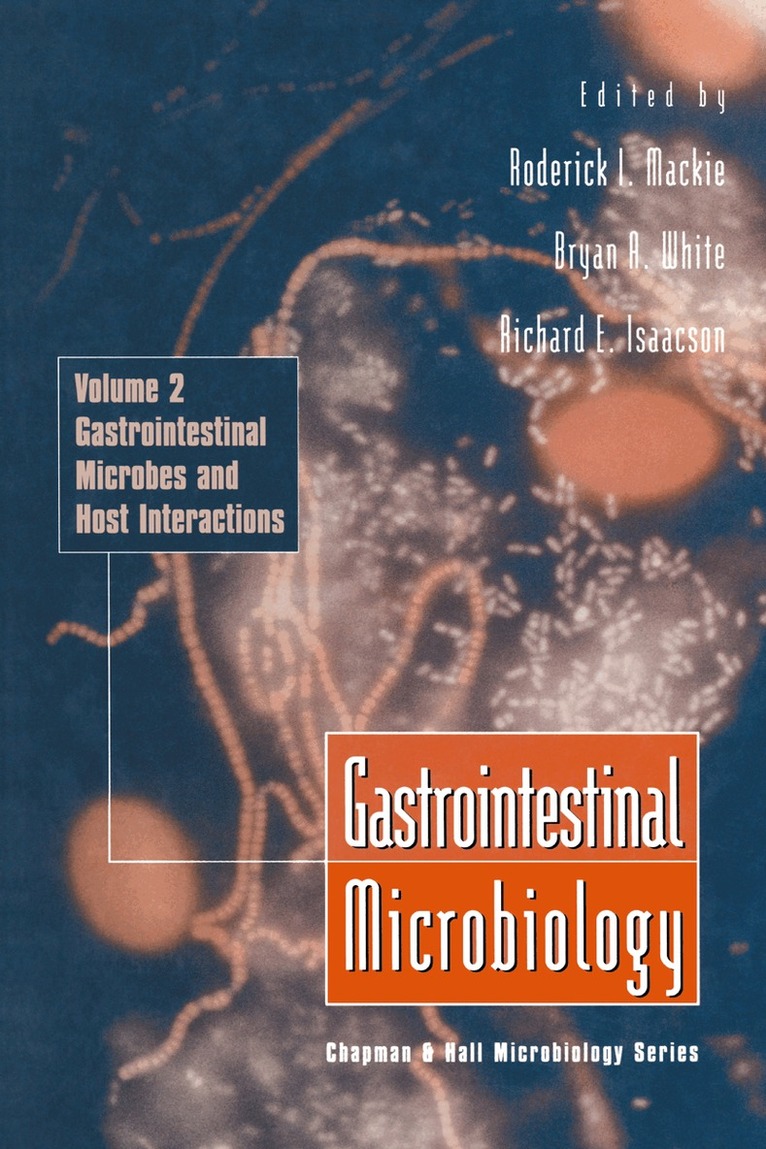
Gastrointestinal Microbiology
Av Roderick Mackie, Bryan White, Richard E. Isaacson
1647 kr
Skickas inom 10-15 vardagar
Beskrivning
The gastrointestinal tract is a complex anaerobic microbial ecosystem containing a vast assemblage of resident microorganisms performing a multitude of metabolic activities that play a key role in health and disease of humans and animals. Furthermore, the gastrointestinal microbes have a dominant impact on the growth and productivity of both ruminant and non-ruminant animals. This two-volume series on Gastrointestinal Microbiology reviews the literature and provides a comprehensive account of the biological significance of the microbiota present in the alimentary tract of a wide range of animals, in terms of their nutritional ecology, biochemical activities, development and composition, interactions and role in host health and disease. Recent developments in the areas of molecular ecology, bacterial genetics, immunological aspects of host microbe interactions at the level of the intestinal mucosa, bacterial translocation and intestinal disease are included. Although emphasis is placed on domestic ruminants and man, systems which have been extensively researched, this series also provides a full and integrated account of the nutritional ecology and microbial ecology in the gut of many diverse mammals, birds, fish, amphibians, reptiles and insects. This broad perspective allows more realistic interpretation, and better evaluation of, as well as greater insight into, the evolution, ecology, and function of the gastrointestinal ecosystem. These volumes contain contributions from a multidisciplinary group of internationally recognized authors, all active researchers in their particular fields.
Produktinformation
- Utgivningsdatum: 2012-05-06
- Mått: 152 x 229 x 38 mm
- Vikt: 991 g
- Format: Häftad
- Språk: Engelska
- Serie: Chapman & Hall Microbiology Series
- Antal sidor: 680
- Förlag: Springer-Verlag New York Inc.
- ISBN: 9781475703245
Utforska kategorier
Betyg & recensioner
0 recensioner
Inga recensioner tillgängliga.