• Fri frakt över 249 kr
  • •
  • Snabba leveranser
  • •
  • Billiga böcker
Kundservice

Du är på sajten för privatpersoner.

Företag, bibliotek eller offentlig verksamhet?

Du handlar på classic.bokus.com, där alla dina funktioner finns intakta.
Till classic.bokus.com
Bokus logotyp. Gå till startsidan.
  • Erbjudanden
  • Student
  • Topplistor
  • Barn & ungdom
  • Bokus Play
  • E-böcker
  • Ljudböcker
  • Pocketböcker
  • Spel och pussel

5% studentrabatt – använd koden KURSBOK27 →

Sidfot

Mina sidor

    Hjälp

    • Kundservice
    • Vanliga frågor och svar
    • Frakt och leverans
    • Retur vid ångerrätt
    • Reklamera vara
    • Betalning
    • Köpvillkor
    • Allmänna villkor
    • Information om webbplatsens tillgänglighet

    Om Bokus

    • Om oss
    • Pressrum
    • För studenter
    • För företag
    • För bibliotek och offentlig verksamhet
    • För leverantörer
    • Hållbarhet

    Populärt

    • Aktuella erbjudanden
    • Presentkort
    • Studentlitteratur
    • Nya böcker
    • Topplistor
    • Signerade böcker
    • Engelska böcker

    Inspiration

    • Boktips
    • BookTok
    • Barnbokskaraktärer
    • Populära författare
    Logotyp för Bokus
    Följ oss på Facebook (extern länk)Följ oss på Instagram (extern länk)Följ oss på YouTube (extern länk)Följ oss på TikTok (extern länk)
    bokus @ CookiesAnpassa cookiesIntegritetspolicyKöpvillkor
    Till Citymail hemsida (extern länk)Till Budbee hemsida (extern länk)Till Postnord hemsida (extern länk)Till Schenker hemsida (extern länk)Till Early Bird hemsida (extern länk)Till Walleys hemsida (extern länk)
    1. Samhälle och politik
    2. Samhälle och kultur
    3. Sociala och etiska frågor
    4. Diskriminering och rättvisa

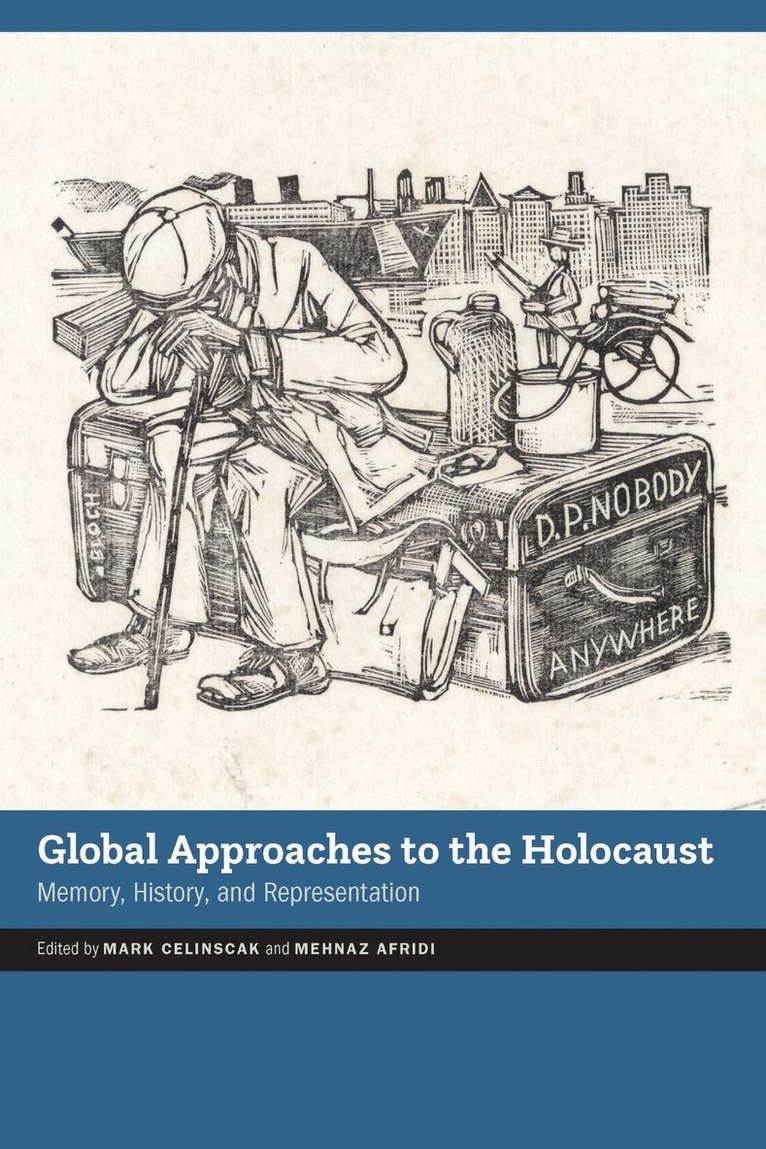
    Global Approaches to the Holocaust

    Memory, History, and Representation

    AvMark Celinscak,Mark Celinscak

    Häftad, Engelska, 2025

    Del i serien Contemporary Holocaust Studies

    377 kr

    Skickas . Fri frakt över 249 kr.

    Beskrivning

    The field of contemporary Holocaust studies is increasingly international in perspective. These approaches do not detach themselves from European history; rather, they incorporate perspectives and voices not always considered in more traditional Holocaust studies.The contributors to this volume take such an approach as they examine the Holocaust, adding to the historical and memorial reach of the subject through an international range of voices. Global Approaches to the Holocaust asks: What happens when scholars shift their focus from an exclusively European perspective of the Holocaust? What new insights are gained from exploring the impact of the Holocaust from outside the European milieu? How do countries that were not directly affected by Nazi policies of occupation and extermination remember the Holocaust? What consequences does an expansive approach to the Holocaust entail?With essays about North and South Africa, Mauritius, Japan, Argentina, Mexico, Chile, the Philippines, the United States, Australia, Canada, India, Pakistan, Palestine, Columbia, New Zealand, and more, Global Approaches to the Holocaust seeks to create a critical voice in Holocaust studies that encompasses not only Europe but also Asia, Africa, South and North America, Australia, and the Middle East.

    Produktinformation

    • Utgivningsdatum:2025-11-01
    • Mått:152 x 229 x 25 mm
    • Vikt:474 g
    • Format:Häftad
    • Språk:Engelska
    • Serie:Contemporary Holocaust Studies
    • Antal sidor:322
    • Förlag:University of Nebraska Press
    • ISBN:9781496230683

    Utforska kategorier

    • Diskriminering och rättvisa inom Samhälle och politik
    • Socialhistoria och kulturhistoria inom Historia och arkeologi
    • Etnicitet inom Samhälle och politik

    Mer om författaren

    Mark Celinscak is the Louis and Frances Blumkin Professor of Holocaust and Genocide Studies and the executive director of the Sam and Frances Fried Holocaust and Genocide Academy at the University of Nebraska at Omaha. He is the author of Kingdom of Night: Witnesses to the Holocaust and Distance from the Belsen Heap: Allied Forces and the Liberation of a Nazi Concentration Camp. Mehnaz Afridi is a professor of religious studies and director of the Holocaust, Genocide, and Interfaith Education Center at Manhattan University. She is the author of Shoah through Muslim Eyes.

    Recensioner i media

    “This collection of essays offers a timely, thought-provoking account of the global history of the Holocaust. [Its] chapters provide groundbreaking insights not only on the impact of the Holocaust outside of Europe, most importantly through the global Jewish refugee streams it unleashed, but also on the complex Holocaust memory cultures that evolved around the world after the tragedy. Bringing together scholars from around the world, Global Approaches to the Holocaust is a crucial addition to the field of Holocaust studies.”—David Motadel, associate professor of international history at the London School of Economics and Political Science “This thematically and geographically wide-ranging collection of essays is a significant contribution to the ongoing discussion about how our understanding of the Holocaust should relate to global histories of colonialism, slavery, apartheid, and migration.”—Alan E. Steinweis, Raul Hilberg Distinguished Professor of Holocaust Studies at the University of Vermont “This remarkable volume offers scholars new and vibrant perspectives on the history and memory of the Holocaust from across six continents. In the process, it illuminates the myriad ways that the Holocaust continues to reverberate far beyond the lands where it occurred.”—Tomaz Jardim, professor of history at Toronto Metropolitan University“Undoubtedly, this is an impressive book that weaves a revelatory quilt of the history, meanings, and symbolisms of the Holocaust beyond Europe. Global Approaches to the Holocaust reaffirms that a purely European focus of Holocaust history disentangles this transformative event of the twentieth century from its wider geographical context, and complex chronological and thematic connections.”—Edward Kissi, School of Interdisciplinary Global Studies, University of South Florida

    Innehållsförteckning

    • AcknowledgmentsIntroduction: Series of Concentric CirclesMark Celinscak and Mehnaz AfridiPart 1. Memory1. Holocaust Memory in South AfricaShirli Gilbert2. Remembering the Holocaust in Mauritius: Legacies of Slavery, Colonial Violence, and Jewish DisplacementRoni Mikel-Arieli3. Japan and the Holocaust: Domesticating Others’ HorrorRotem Kowner and Ran Zwigenberg4. Holocaust Memory: Temporalities, Actors, and Practices in Two National Cases, Argentina and MexicoEmmanuel Kahan and Yael Siman5. Resonances of the Holocaust in the Memory of Nazi Victims and Survivors Living in ChileNancy Nicholls LopeandÍaPart 2. History6. From Ominous to Miracle Poems: North African Musical Prophecies and Histories of the HolocaustAomar Boum7. Open Doors and Open Hearts: President Manuel Quezon’s Holocaust Sanctuary in the PhilippinesBonnie M. Harris8. Fort Ontario and American Debates over Refugee AdmissionRebecca L. Erbelding9. Limiting the Undesirables: Jewish Refugee Migration to Australia in 1938 and 1939Paul R. Bartrop10. Reviewing the Past, Re-Viewing the Nation: Early Canadian Responses to Abella and Troper’s None Is Too ManyRichard Menkis11. Mexico and the Holocaust: The Contradictions of Postrevolutionary Immigration PolicyDaniela GleizerPart 3. Representation12. Holocaust Education in South Asia: The Much-Needed Response to Holocaust Denial, Trivialization, and InversionNavras J. Aafreedi13. Approaches to Holocaust Education in the Arab World: Obstacles and SolutionsMohammed S. Dajani Daoudi and Zeina M. Barakat14. “When This Happens, Whoever Can Write”: The Testimonial Representation of the Holocaust in ColombiaLorena Cardona GonzÁlez15. Holocaust Education in Australia: History, Importance, and ChallengesSuzanne D. Rutland16. Aotearoa New ZealandAnn Beaglehole17. Representing the Holocaust in a Museum Setting in Post-Apartheid South Africa and AfricaTali NatesConclusionMark Celinscak and Mehnaz AfridiEpilogueMark Celinscak, Mehnaz Afridi, and Ilan StavansContributorsIndex