Differentiating Instruction in the Regular Classroom
How to Reach and Teach All Learners (Updated Anniversary Edition)
Del i serien Free Spirit Professional®
427 kr
Skickas . Fri frakt över 249 kr.
Beskrivning
Produktinformation
- Utgivningsdatum:2012-08-28
- Mått:216 x 279 x 12 mm
- Vikt:447 g
- Format:Häftad
- Språk:Engelska
- Serie:Free Spirit Professional®
- Antal sidor:176
- Förlag:Teacher Created Materials, Inc
- ISBN:9781575424163
Utforska kategorier
Mer om författaren
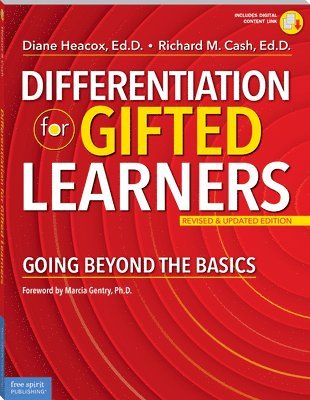
Diane Heacox, Ed.D., is a consultant and professional development trainer focusing on strategies to increase learning success for all students. She is professor emerita at St. Catherine University in St. Paul, Minnesota. She is a national and international consultant and professional development trainer to both public and private schools on a variety of topics related to teaching and learning.Dr. Heacox has taught at both elementary and secondary school levels and has served as a gifted education teacher and administrator, as well as an instructional specialist in public education. Dr. Heacox is also the author of four books. Her first book for Free Spirit Publishers was Up From Underachievement: How Teachers, Students, and Parents Can Work Together. Her second book, Differentiating Instruction in the Regular Classroom: How to Reach and Teach All Learners was updated and re-released in 2012. Making Differentiation a Habit earned the 2010 Association of Education Publishers Distinguished Achievement Award and was updated in 2017.Her book coauthored with Richard Cash, Differentiation for Gifted Learners: Going Beyond the Basics, received the 2014 Legacy Book Award for Educators by the Texas Association for Gifted and Talented. Dr. Heacox’s books have been translated into Dutch, Hungarian, Korean, Arabic, and Portuguese.Her Differentiation Classroom Practices Inventory was used by the Ministry of Education in Portugal for conducting a national survey of classroom practices. Dr. Heacox serves on the Board of Directors of the Minnesota Association of Supervision and Curriculum Development (MN ASCD) and the Minnesota Department of Education Gifted Education Advisory Board.She is the past chair for the Middle Level Network and the Education committee for National Association for Gifted Children and the current facilitator of the Higher Education Division for international ASCD.Dr. Heacox was recognized by the Minnesota Educators of Gifted and Talented as a Friend of the Gifted for service to gifted education. She is also in the University of St. Thomas Educators Hall of Fame for contributions to the field of education.
Innehållsförteckning
- List of Reproducible Pages List of Figures Foreword to This Anniversary Edition Introduction Part 1 — Getting ReadyChapter 1: What Is Differentiation? Differentiated Instruction: One Size Doesn’t Fit AllYou May Be Differentiating AlreadyOur Diverse ClassroomsWhat Do We Differentiate?What Is the Teacher’s Role?Questions and Answers About Differentiating InstructionHow Differentiated Is Your Classroom?Chapter 2: Who Are Your Students?Discovering Your StudentsFinding Out What Students KnowThe Importance of Knowing Your StudentsChapter 3: What Do You Teach? Essential QuestionsUnit QuestionsUsing Essential and Unit Questions to Differentiate Instruction 56Choosing a Unit of Your OwnMapping Your CurriculumPart 2: Differentiation in ActionChapter 4: How Do You Teach?Planning for Challenge and VarietyChallenge: Bloom’s Levels of ThinkingVariety: Gardner’s Nine Ways of Thinking and LearningHow Differentiated Is Your Current Unit?The Matrix PlanA Sample Matrix PlanDifferentiating Your Unit Using a Matrix PlanThe Integration MatrixMany Uses for Your MatrixChapter 5: What Do Students Need?Flexible Instructional GroupingPersonalizing Learning with Flexible GroupingFlexible Grouping at Exit PointsFlexible Grouping Compared with OtherGrouping StrategiesQuestions and Answers About Flexible GroupingTips on Managing Flexible GroupsStudent Independence and Flexible GroupsChapter 6: What Do Students Need?Tiered AssignmentsSix Ways to Structure Tiered AssignmentsDeciding When and How to Tier an AssignmentGuidelines for Designing Tiered AssignmentsHow to Organize Groups and Give DirectionsMaking Tiering InvisibleChapter 7: What Do Students Need?ChoicesPathways PlansProject MenusChallenge CentersSpin-OffsChapter 8: What About Grading? Establishing Quality Criteria for DifferentiatedActivitiesGrades Are CumulativeDon’t Grade EverythingGrades = RigorTotally 10Chapter 9: How Do You Manage Differentiation? Preparing to DifferentiatePreparing Your Students and ClassroomManaging Student WorkChapter 10: How Do You Differentiate for Special Populations? Differentiated Instruction and Special Needs StudentsAn Idea from Your Special EducationColleaguesOther Differentiation Strategies for Special NeedsStudentsDifferentiated Instruction for Gifted and TalentedStudentsCurriculum CompactingIndividual PlanningThe Importance of MentorsFinal Thoughts: Teaching as a Creative Activity Appendix A:Letter to Families Appendix B:Differentiating Classroom Discussions Using Classroom Questions to Differentiate LearningBrainstormingLearning DialoguesAppendix C: Content Catalysts, Processes, and Products (CCPP) Toolkit References and ResourcesIndex About the Author
Mer från samma serie
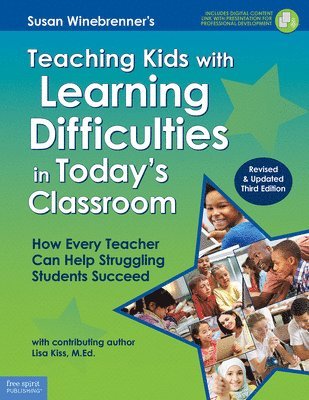
Teaching Kids with Learning Difficulties in Today's Classroom
Susan Winebrenner, Lisa Kiss
427 kr
Du kanske också är intresserad av
Teaching Kids with Learning Difficulties in Today's Classroom
Susan Winebrenner, Lisa Kiss
427 kr
Start Seeing and Serving Underserved Gifted Students
Jennifer Ritchotte, Chin-Wen Lee, Amy Graefe
427 kr