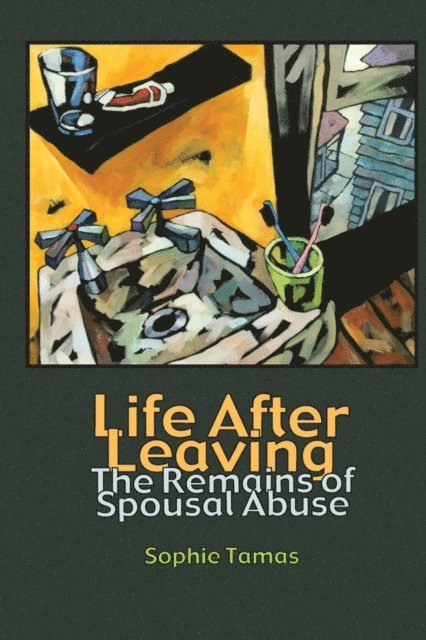
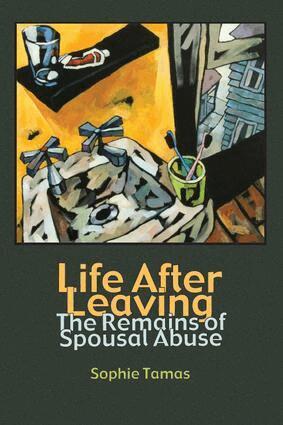
"This is one of the most innovative, subtle and creative pieces of qualitative work I have read for some time. Tamas' work is rich in meaning and theoretical intent, while remaining sensitive to the experience of women recovering from spousal abuse. The book is an excellent read, reminding us of the different and powerful ways in which research can be presented.--Karl Atkin, University of York "An original, smart, well-crafted, and heartfelt analysis of recovery--or not--from spousal abuse. Tamas brilliantly and passionately dialogues with postmodernists, feminists and clinicians. A must read for those interested in trauma and recovery."--Laurel Richardson, Professor Emeritus, The Ohio State University "Bold in form and content, Tamas presents a transfixing account of life after leaving an abusive relationship. In examining the complexities, uncertainties and chaos in her own journey and in the experiences of other women, her work exposes the cracks in the story of the recovery process that has dominated the field of intimate partner violence. Hers is a work to pay attention to.--Janice Ristock, Associate Vice-President (Research) and Professor, Women's and Gender Studies Program, University of Manitoba "Life after Leaving represents the best in autoethnographic writing. Sophie Tamas turns her lens inward to show the passion, complexity, and emotionality in living with abuse; sideways to examine the relational aspects of abuse; then outward to show how personal narrative can be an effective tool to better understand and confront complex social issues. This is a bold, personal, performative, creative, and theoretically-rich story that will fully engage your heart, mind, and activist spirit."--Carolyn Ellis, University of South Florida "Life after Leaving is an amazing, brilliant work, hard to put down, charts new territory!"--Norman K Denzin, University of Illinois, Champaign-Urbana "Life after Leaving is an innovative, creative, and amazing autoethnographic work in which Tamas explores how women st ruggle to make sense of loss, get recovery, and experience the loving, longing, fear, uncertainties, trust, hope, and frustration after leaving spousal abuse in the form of a performative and arts-based dramatic story. Tamas uses an attractive and coherent story with five acts to not only skillfully address the complete five sections required by a traditional dissertation respectively, but also involve her thoughts changes and daily lives, even some seemingly private things, into the every act of this story... For qualitative researchers and our doctoral students in education or social studies, the success of this book would encourage all of us to bravely use various and more advanced approach to present our studies and dissertations." --Mo Xue, The Qualitative Report