• Fri frakt över 249 kr
  • •
  • Snabba leveranser
  • •
  • Billiga böcker
Kundservice

Du är på sajten för privatpersoner.

Företag, bibliotek eller offentlig verksamhet?

Du handlar på classic.bokus.com, där alla dina funktioner finns intakta.
Till classic.bokus.com
Bokus logotyp. Gå till startsidan.
  • Erbjudanden
  • Nyheter
  • Student
  • Topplistor
  • Barn & ungdom
  • Bokus Play
  • E-böcker
  • Pocketböcker
  • Spel & pussel

10% rabatt på allt med kod NYSTART10 →

Sidfot

Mina sidor

    Hjälp

    • Kundservice
    • Vanliga frågor och svar
    • Frakt och leverans
    • Retur vid ångerrätt
    • Reklamera vara
    • Betalning
    • Köpvillkor
    • Allmänna villkor
    • Information om webbplatsens tillgänglighet

    Om Bokus

    • Om oss
    • Pressrum
    • För studenter
    • För företag
    • För bibliotek och offentlig verksamhet
    • För leverantörer
    • Hållbarhet

    Populärt

    • Aktuella erbjudanden
    • Presentkort
    • Studentlitteratur
    • Nya böcker
    • Topplistor
    • Signerade böcker
    • Engelska böcker

    Inspiration

    • Boktips
    • BookTok
    • Populära bokserier
    • Barnbokskaraktärer
    • Populära författare
    Logotyp för Bokus
    Följ oss på Facebook (extern länk)Följ oss på Instagram (extern länk)Följ oss på YouTube (extern länk)Följ oss på TikTok (extern länk)
    bokus @ CookiesAnpassa cookiesIntegritetspolicyKöpvillkor
    Till Citymail hemsida (extern länk)Till Budbee hemsida (extern länk)Till Postnord hemsida (extern länk)Till Schenker hemsida (extern länk)Till Early Bird hemsida (extern länk)Till Walleys hemsida (extern länk)
    1. Medicin
    2. Andra medicinska specialiteter
    3. Neurologi och klinisk neurofysiologi
    4. Alzheimer, demens

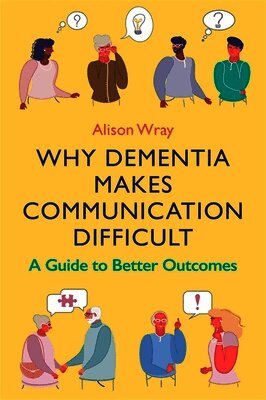
    Why Dementia Makes Communication Difficult

    A Guide to Better Outcomes

    AvAlison Wray

    Häftad, Engelska, 2021

    384 kr

    Skickas . Fri frakt över 249 kr.

    Fler format och utgåvor

    E-bok

    411 kr

    Beskrivning

    Selected for Reading Well for Dementia 2024: endorsed by health experts, charities and people affected by dementia.Dementia brings many challenges, not least its ability to disrupt effective communication. The quality of communication plays a major role in how well people living with a dementia manage. When communication doesn't work well, the complications of dementia are compounded.Rather than only offering tips on what to say and how to say it, this book explores the underlying motivations of communication, so we can better understand why we say what we do, why we say it the way we do, what can go wrong, and how attempts to fix things can go awry.As well as considering why communication goes wrong in day-to-day conversations, the chapters offer advice on dealing with awkward moments, the question of deception, and the things we can and can't control in dementia. Readers are asked to reflect on their own role, and how they can manage their own behaviours to avoid unintentionally blocking routes to productive communication.Including clear action points for carers, bystanders and people with a dementia diagnosis, this book shows how to approach communication to improve outcomes.

    Produktinformation

    • Utgivningsdatum:2021-08-19
    • Mått:152 x 228 x 14 mm
    • Vikt:298 g
    • Format:Häftad
    • Språk:Engelska
    • Antal sidor:192
    • Förlag:Jessica Kingsley Publishers
    • ISBN:9781787756069

    Utforska kategorier

    • Alzheimer, demens inom Medicin
    • Språkvetenskap och lingvistik inom Språk och ordböcker
    • Sociala grupper och identitet inom Samhälle och politik

    Mer om författaren

    Alison Wray is a Research Professor in Language and Communication at Cardiff University. Building on her career as an internationally renowned researcher on formulaic language, since 2007 her research has focused on language and dementia. Alison regularly presents to and works with dementia training and dementia care organisations to disseminate and explain her work.

    Recensioner i media

    A state of relatedness is vital for our social and emotional health, coping, and existential well-being. The changes in communication brought on by neurocognitive disorders pose a palpable threat to these critical elements of our lives. In her accessible and empowering book, Dr. Wray offers hopeful insights and practical strategies to help accommodate. Her perspective is honest, human, and, most remarkably, inclusive of the person living with neurocognitive disorder as a member of its audience. Having managed these issues clinically for 15 years, I can say, without a doubt, that this text is a very welcome addition to the field.