• Fri frakt över 249 kr
  • •
  • Snabba leveranser
  • •
  • Billiga böcker
Kundservice

Du är på sajten för privatpersoner.

Företag, bibliotek eller offentlig verksamhet?

Du handlar på classic.bokus.com, där alla dina funktioner finns intakta.
Till classic.bokus.com
Bokus logotyp. Gå till startsidan.
  • Erbjudanden
  • Nyheter
  • Student
  • Topplistor
  • Barn & ungdom
  • Bokus Play
  • E-böcker
  • Pocketböcker
  • Spel & pussel

10% rabatt på allt med kod: NYSTART10 →

Sidfot

Mina sidor

    Hjälp

    • Kundservice
    • Vanliga frågor och svar
    • Frakt och leverans
    • Retur vid ångerrätt
    • Reklamera vara
    • Betalning
    • Köpvillkor
    • Allmänna villkor
    • Information om webbplatsens tillgänglighet

    Om Bokus

    • Om oss
    • Pressrum
    • För studenter
    • För företag
    • För bibliotek och offentlig verksamhet
    • För leverantörer
    • Hållbarhet

    Populärt

    • Aktuella erbjudanden
    • Presentkort
    • Studentlitteratur
    • Nya böcker
    • Topplistor
    • Signerade böcker
    • Engelska böcker

    Inspiration

    • Boktips
    • BookTok
    • Populära bokserier
    • Barnbokskaraktärer
    • Populära författare
    Logotyp för Bokus
    Följ oss på Facebook (extern länk)Följ oss på Instagram (extern länk)Följ oss på YouTube (extern länk)Följ oss på TikTok (extern länk)
    bokus @ CookiesAnpassa cookiesIntegritetspolicyKöpvillkor
    Till Citymail hemsida (extern länk)Till Budbee hemsida (extern länk)Till Postnord hemsida (extern länk)Till Schenker hemsida (extern länk)Till Early Bird hemsida (extern länk)Till Walleys hemsida (extern länk)
    1. Psykologi och pedagogik
    2. Pedagogik
    3. Högskola och universitet

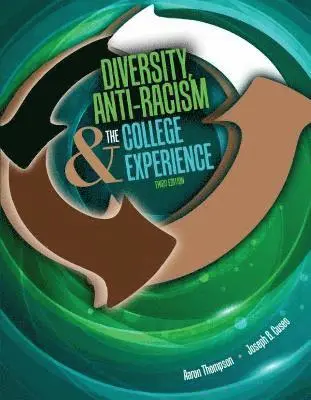
    Diversity, Anti-Racism and the College Experience

    AvAaron Thompson,Joseph B Cuseo

    Häftad, Engelska, 2021

    1 156 kr

    Beställningsvara. Skickas inom 5-8 vardagar. Fri frakt över 249 kr.

    Beskrivning

    Diversity, Anti-Racism, & The College Experience examines diversity, equity, and inclusion from a multidisciplinary perspective that integrates historical, sociological, psychological, and political factors. Blending hard empirical data with poignant personal stories, the book provides research-based practices for appreciating diversity, detecting and countering racist arguments, and engaging in anti-racism on both an individual and collective level.More specifically, this book:Defines diversity and delineates its various forms and dimensionsArticulates how diversity is an integral element of the college experience and documents its multiple benefits (personal, educational, and vocational) for college studentsAnalyzes and synthesizes common barriers to diversity appreciation, including bias (explicit and implicit), stereotyping, prejudice, and discriminationOffers a systematic, 4-step process for gaining awareness of personal biases and initiating interaction with members of diverse groupsIdentifies key forms of individual, institutional, and systemic racism (housing, education, employment, criminal justice, etc.) and unearths their root causesSupplies concrete, action-based strategies for: (a) refuting racist arguments with statistical evidence and compelling counterarguments, (b) forming alliances with victims of racial discrimination, and (c) taking civic action to dismantle societal systems that preserve racial inequities and perpetuate social injustice

    Produktinformation

    • Utgivningsdatum:2021-12-30
    • Format:Häftad
    • Språk:Engelska
    • Antal sidor:354
    • Upplaga:3
    • Förlag:Kendall/Hunt Publishing Co ,U.S.
    • ISBN:9781792465765

    Utforska kategorier

    • Högskola och universitet inom Psykologi och pedagogik
    • Utbildningsstrategier och utbildningspolitik inom Psykologi och pedagogik
    • Företagsekonomi inom Ekonomi och Ledarskap

    Mer om författaren

    Aaron Thompson is a nationally recognized leader in higher education with a focus on policy, student success and organizational leadership and design. He serves as President of the Kentucky Council on Postsecondary Education and as professor of sociology in the Department of Educational Leadership and Policy Studies at Eastern Kentucky University. He recently served as interim president of Kentucky State University. Thompson holds a doctorate in sociology in areas of organizational behavior and race and gender relations.His leadership experience spans 27 years across higher education, business and numerous non-profit boards. Thompson has researched, taught and consulted in areas of diversity, leadership, ethics, multicultural families, race and ethnic relations, student success, first-year students, retention, cultural competence and organizational design throughout his career.As a highly sought after national speaker, Thompson has presented more than 800 workshops, seminars and invited lectures in areas of race and gender diversity, living an unbiased life, overcoming obstacles to gain success, creating a school environment for academic success, cultural competence, workplace interaction, leadership, organizational goal setting, building relationships, the first-year seminar, and a variety of other topics. He continues to serve as a consultant to educational institutions (elementary, secondary and postsecondary), corporations, non-profit organizations, police departments and other governmental agencies.Thompson has published more than 30 publications and numerous research and peer reviewed presentations. He has authored or co-authored the following books: Changing Student Culture from the Ground Up, The Sociological Outlook, Infusing Diversity and Cultural Competence into Teacher Education, Peer to Peer Leadership: Changing Student Culture from the Ground Up. He also co-authored Thriving in College and Beyond: Research-Based Strategies for Academic Success, Thriving in the Community College and Beyond: Research-Based Strategies for Academic Success and Personal Development, Diversity and the College Experience, Focus on Success and Black Men and Divorce.Joe Cuseo holds a doctoral degree in Educational Psychology and Assessment from the University of Iowa and is Professor Emeritus of Psychology. For more than 25 years, he directed the first-year seminar—a core college success course required of all new students.He’s a 14-time recipient of the “faculty member of the year award” on his home campus—a student-driven award based on effective teaching and academic advising; a recipient of the “Outstanding First-Year Student Advocate Award” from the National Resource Center for The First-Year Experience and Students in Transition; and a recipient of the “Diamond Honoree Award” from the American College Personnel Association (ACPA) for contributions made to student development and the Student Affairs profession.Currently, Joe serves as an educational advisor and consultant for AVID—a nonprofit organization whose mission is to promote the college access and college success of underserved student populations. He has delivered hundreds of campus workshops and conference presentations across North America, as well as Europe, Asia, Australia, and the Middle East.

    Innehållsförteckning

    • PrefacePreview of ContentChapter SequenceContent Presentation Style and RationaleChapter Purpose and PreviewRe¬flectionsPersonal ExperiencesSidebar QuotesInternet ResourcesChapter Summary and HighlightsChapter Re¬flections and ApplicationsAcknowledgmentsAbout the AuthorsCHAPTER 1 What Is Diversity, Equity, and Inclusion? Chapter Purpose and PreviewDiversity: Definition and DescriptionDiversity and CultureDiversity and HumanityDiversity and IndividualityWhat Is Inclusion? Equity? Diversity and the College ExperienceChapter Summary and HighlightsInternet ResourcesReferencesReflections and ApplicationsCHAPTER 2 Forms and Varieties of DiversityChapter Purpose and PreviewRacial DiversityEthnic DiversityNative Americans (American Indians) Hispanic Americans (Latinos and Latinas or Latinx) African Americans (Blacks) Asian AmericansThe Growth of Racial and Ethnic Diversity in AmericaSocioeconomic DiversityThe Widening Income Gap between the Rich and the PoorDeclining Socioeconomic MobilityGender Diversity: WomenSexual-Orientation and Gender-Identity DiversityReligious DiversityGenerational DiversityChapter Summary and HighlightsInternet ResourcesReferencesReflections and ApplicationsCHAPTER 3 The Benefits of DiversityChapter Purpose and PreviewWhat Are the Educational Benefits of Diversity? Diversity Increases Self-Awareness and Self-KnowledgeDiversity Widens, Deepens, and Accelerates LearningDiversity Strengthens Our Ability to ink Critically from Multiple PerspectivesDiversity Enhances Creative inking and Problem-SolvingDiversity Expands Social Networks and Builds Emotional IntelligenceDiversity Enhances Career PreparationDiversity Reduces Group Prejudice and DiscriminationDiversity Preserves DemocracyChapter Summary and HighlightsInternet ResourcesReferencesReflections and ApplicationsCHAPTER 4 Barriers to Diversity Appreciation: Implicit Bias, Stereotypes, Prejudice, and DiscriminationChapter Purpose and PreviewIntroductionStereotyping and Implicit BiasPrejudiceDiscriminationMicroaggressionNativismHate GroupsHate CrimesCauses of Prejudice and DiscriminationDiscomfort with the Unknown or UnfamiliarSelective Perception and Selective MemoryCategorizing People into “In” Groups and “Out” GroupsPerceiving Members of Unfamiliar Groups as More Alike than Members of One’s Own GroupMajority Group Members Overestimating the Frequency of Negative Behavior Exhibited by Minority Group MembersRationalizing Prejudice and Discrimination as JustifiableStrengthening Self-Esteem by Identifying or Associating with a “Superior” GroupChapter Summary and HighlightsInternet ResourcesReferencesReflections and ApplicationsCHAPTER 5 Overcoming Bias, Combating Prejudice, and Developing Cultural CompetenceChapter Purpose and PreviewA Model for Overcoming Biases and Appreciating DiversityStage 1. AwarenessStage 2. AcknowledgmentStage 3. AcceptanceStage 4. ActionSpecific Strategies for Developing and Demonstrating Cultural CompetenceStrategies for Increasing Personal Contact and Interpersonal Interaction with Members of Diverse GroupsChapter Summary and HighlightsInternet ResourcesReferencesReflections and ApplicationsCHAPTER 6 Racism: Current Forms, Historical Roots, and Underlying CausesChapter Purpose and PreviewIntroductionRacism DefinedOrigins and Root Causes of RacismEconomic ExploitationPolitical RacismStrategic Racism (a.k.a. White Identity Politics) Scientific RacismReligious RacismCultural RacismUnderlying Psychological Causes of RacismCurrent Forms and Varieties of RacismRacial SegregationMiscegenation LawsColorismChapter Summary and HighlightsInternet ResourcesReferencesReflections and ApplicationsCHAPTER 7 Understanding Systemic Racism, Part I: Housing, Education, and EmploymentChapter Purpose and PreviewWhat Is Systemic Racism? The Economic System: Systemic Racism in Employment, Income, and WealthEmployment and IncomeWealthRoot Causes for Racial Gaps in Income and WealthThe Great MigrationDeindustrializationCurrent Racial Gaps in EmploymentHiring BiasConclusionThe Housing System: Residential Choice and Home Ownership OpportunitiesWhite Resistance to Residential IntegrationRacial Zoning OrdinancesRestrictive CovenantsThe Federal Government’s Role in Promoting Racial Segregation in HousingThe New Deal and RedliningGovernment-Sanctioned Housing Discrimination during World War II and the Postwar YearsThe GI Bill and the Development of Racially Segregated SuburbsRacially Segregated Public Housing ProjectsPolicies and Practices Leading to the Development of Urban Slums and Black GhettosUrban Renewal and Slum Clearance ProjectsRelationship between Past Governmental Housing Policies and Current Gaps in Racial WealthDiscriminatory Private Real Estate PracticesWhite FlightThe Education System: Quality of Schools and Equality of Learning OpportunitiesRoots of Systemic Racism in EducationInequitable School Funding PoliciesRacial Gaps in Educational AchievementThe Role of Racially Integrated Schools in Closing the Educational Achievement GapConclusionChapter Summary and HighlightsInternet ResourcesReferencesReflections and ApplicationsCHAPTER 8 Understanding Systemic Racism, Part II: Health Care, Voting Rights, and Criminal JusticeChapter Purpose and PreviewHealth Care System: Access to Quality Medical Care and Equal Medical TreatmentThe Electoral System: Voting Rights and Political RepresentationThe Criminal Justice System: Policing Practices, Legal Representation, and Sentencing PoliciesMonitoring and ArrestPretrial DetentionLegal RepresentationConviction and SentencingIncarcerationPost-Incarceration PunishmentLong-Term Impact of Incarceration on Employment and IncomeHow the “War on Drugs” Has Contributed to Systemic Racism in Criminal Arrests and Incarceration RatesImplicit Racial Bias in the Perception, Detection, and Reaction to CrimeRacial Bias in Police Arrest PracticesConclusionChapter Summary and HighlightsInternet ResourcesReferencesReflections and ApplicationsCHAPTER 9 Engaging in Anti-Racism and Advocating for Social JusticeChapter Purpose and PreviewWhat Is Anti-Racism? Challenging Racist Remarks and MicroaggressionsCountering Common Racist Arguments with Evidence-Based CounterargumentsTaking Collective Action to Combat Systemic RacismUsing the Electoral Process to Combat Systemic RacismElecting Diverse Political RepresentativesJoining, Donating to, or Volunteering for Anti-Racist OrganizationsEngaging in Anti-Racist Allyship, Activism, or ProtestChapter Summary and HighlightsInternet ResourcesReferencesReflections and ApplicationsGLOSSARY OF DIVERSITY AND ANTI-RACISM TERMINOLOGY INDEX