Inbunden, Engelska, 2022
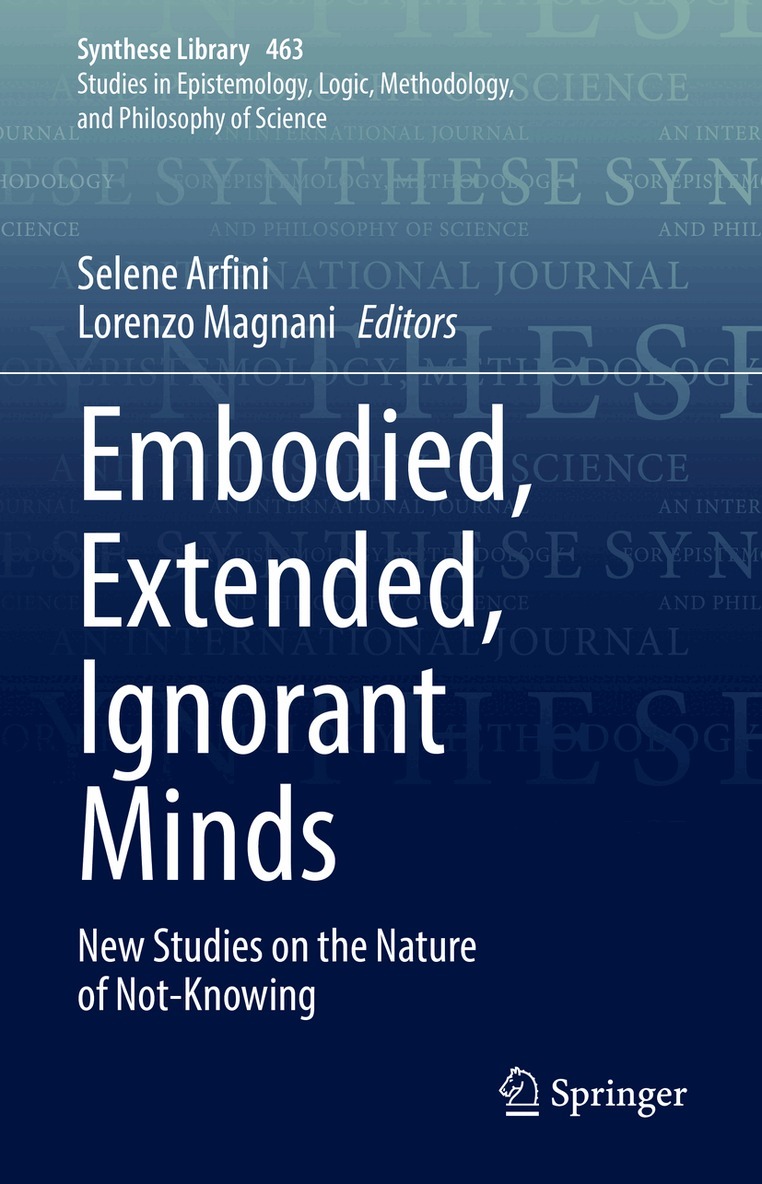
Embodied, Extended, Ignorant Minds
Av Selene Arfini, Lorenzo Magnani
1534 kr
Beställningsvara. Skickas inom 10-15 vardagar. Fri frakt över 249 kr.
Beskrivning
This book offers a new and externalist perspective in ignorance studies. Agnotology, the epistemology of ignorance, and, more generally, ignorance studies have grown to cover and explore different phenomena and subjects of research, from known events in history and sociology of science to the investigation of ordinary reasoning and cognitive processing. Nonetheless, although interested scholars have discussed ignorance phenomena and their impact on cognition, most of them have only adopted an internalist perspective to approach this theme. Meanwhile, even though externalist perspectives on cognition flourished in recent literature, authors have paid little attention to the emerging field of ignorance studies. Ignorance has been generally left out from the inquiries on the extension of cognitive states, cognitive processes, and predictive reasoning. Thus, in this volume, we seek to merge the two growing areas of research and to fill this research gap fruitfully. By addressing the uncomfortable themes that pertain to ignorance and related phenomena through an externalist perspective, this book aims to provide much food for thoughts to cognitive scientists and philosophers alike, enriching the current range and reach of both ignorance studies and externalist approaches to cognition.
Produktinformation
- Utgivningsdatum: 2022-05-24
- Mått: 155 x 235 x 19 mm
- Vikt: 472 g
- Format: Inbunden
- Språk: Engelska
- Serie: Synthese Library
- Antal sidor: 230
- Förlag: Springer International Publishing AG
- ISBN: 9783031019210
Utforska kategorier
Betyg & recensioner
0 recensioner
Inga recensioner tillgängliga.