Häftad, Engelska, 2024
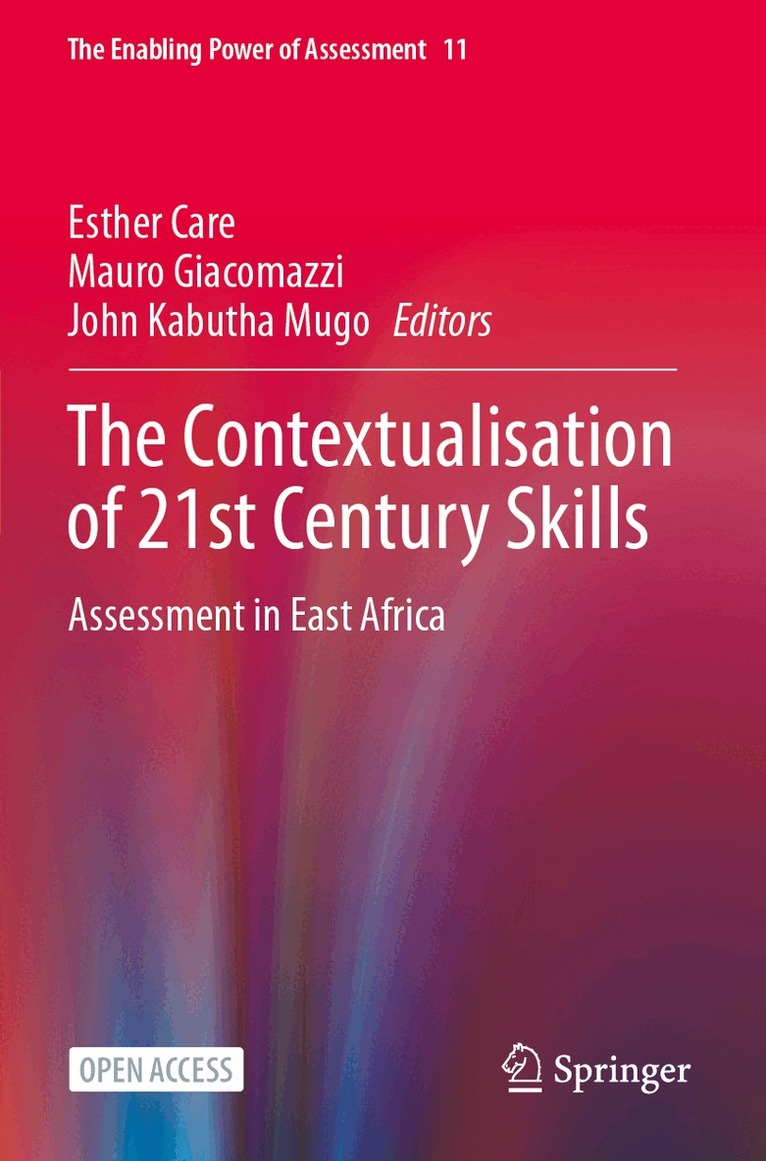
Contextualisation of 21st Century Skills
Av Esther Care, Mauro Giacomazzi, John Kabutha Mugo
427 kr
Beställningsvara. Skickas inom 10-15 vardagar. Fri frakt över 249 kr.
Beskrivning
This open access book is written for educators and policymakers who seek to empower young people with competencies necessary for fulfilling lives in the 21st century. It reports how a large group of educators from government and civil society organisations, together with researchers from universities, used their curriculum, assessment, and social economy expertise to develop contextualised definitions of life skills and values, and associated assessment tools. The book also reports on levels of these competencies of over 45,000 adolescents, from a household-based assessment conducted in Kenya, Tanzania, and Uganda. The results describe how these adolescents vary in proficiency by region, age, and other factors, providing a resource for national education ministries to factor into policy decisions. Given the technical requirements of measuring individuals’ social-emotional and related competencies, how is it possible to capture an adolescent’s life skills across varied contexts? The book provides readers with a pragmatic yet technically robust process for undertaking a large-scale assessment program designed to inform policy.
Produktinformation
- Utgivningsdatum: 2024-02-20
- Mått: 155 x 235 x 13 mm
- Vikt: 359 g
- Format: Häftad
- Språk: Engelska
- Serie: Enabling Power of Assessment
- Antal sidor: 211
- Förlag: Springer International Publishing AG
- ISBN: 9783031514920
Utforska kategorier
Betyg & recensioner
0 recensioner
Inga recensioner tillgängliga.