Mauro Giacomazzi – författare
Visar alla böcker från författaren Mauro Giacomazzi. Handla med fri frakt och snabb leverans.
2 produkter
2 produkter
Del 11 - Enabling Power of Assessment
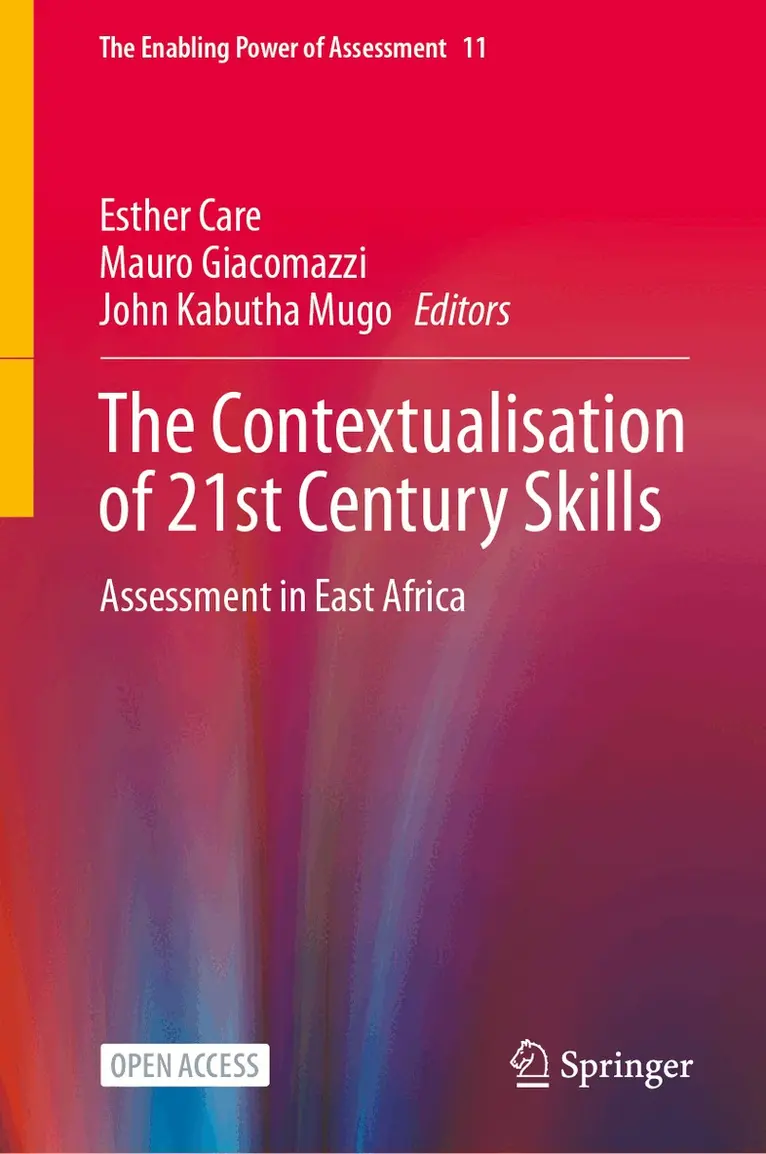
Contextualisation of 21st Century Skills
Assessment in East Africa
Inbunden, Engelska, 2024
529 kr
Skickas inom 10-15 vardagar
This open access book is written for educators and policymakers who seek to empower young people with competencies necessary for fulfilling lives in the 21st century. It reports how a large group of educators from government and civil society organisations, together with researchers from universities, used their curriculum, assessment, and social economy expertise to develop contextualised definitions of life skills and values, and associated assessment tools. The book also reports on levels of these competencies of over 45,000 adolescents, from a household-based assessment conducted in Kenya, Tanzania, and Uganda. The results describe how these adolescents vary in proficiency by region, age, and other factors, providing a resource for national education ministries to factor into policy decisions. Given the technical requirements of measuring individuals’ social-emotional and related competencies, how is it possible to capture an adolescent’s life skills across varied contexts? The book provides readers with a pragmatic yet technically robust process for undertaking a large-scale assessment program designed to inform policy.
Del 11 - Enabling Power of Assessment
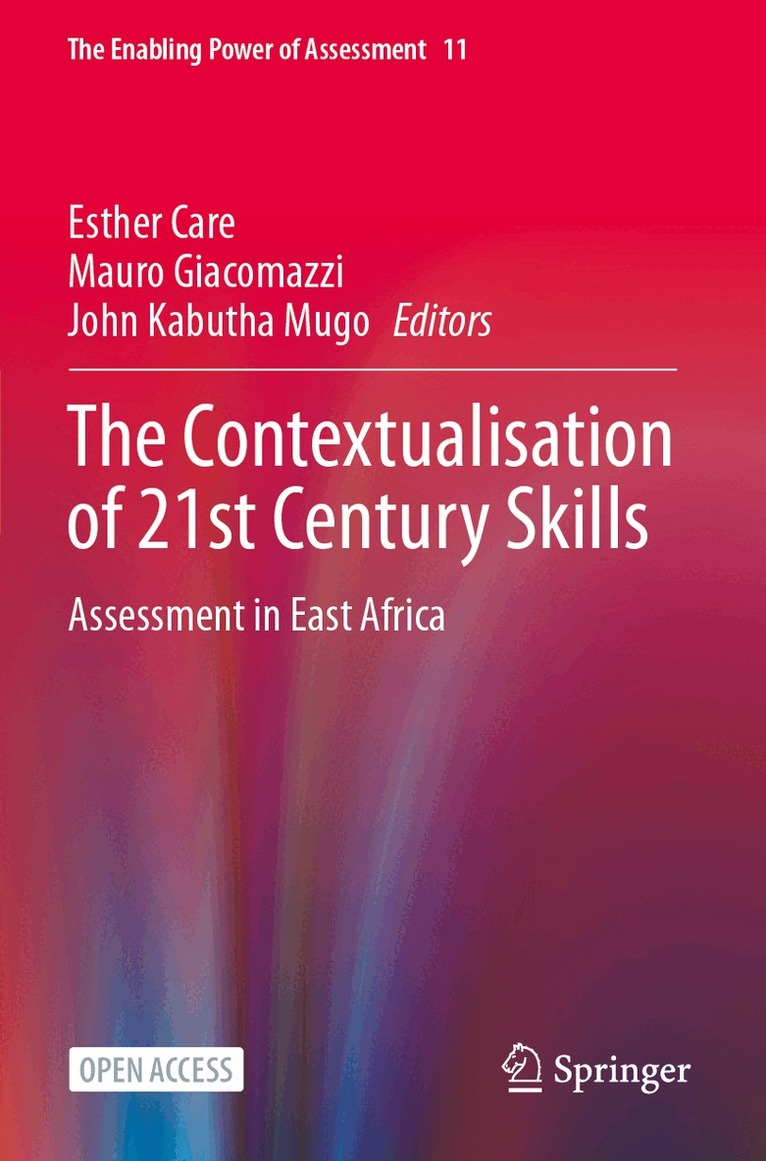
Contextualisation of 21st Century Skills
Assessment in East Africa
Häftad, Engelska, 2024
425 kr
Skickas inom 10-15 vardagar
This open access book is written for educators and policymakers who seek to empower young people with competencies necessary for fulfilling lives in the 21st century. It reports how a large group of educators from government and civil society organisations, together with researchers from universities, used their curriculum, assessment, and social economy expertise to develop contextualised definitions of life skills and values, and associated assessment tools. The book also reports on levels of these competencies of over 45,000 adolescents, from a household-based assessment conducted in Kenya, Tanzania, and Uganda. The results describe how these adolescents vary in proficiency by region, age, and other factors, providing a resource for national education ministries to factor into policy decisions. Given the technical requirements of measuring individuals’ social-emotional and related competencies, how is it possible to capture an adolescent’s life skills across varied contexts? The book provides readers with a pragmatic yet technically robust process for undertaking a large-scale assessment program designed to inform policy.