Inbunden, Engelska, 2027
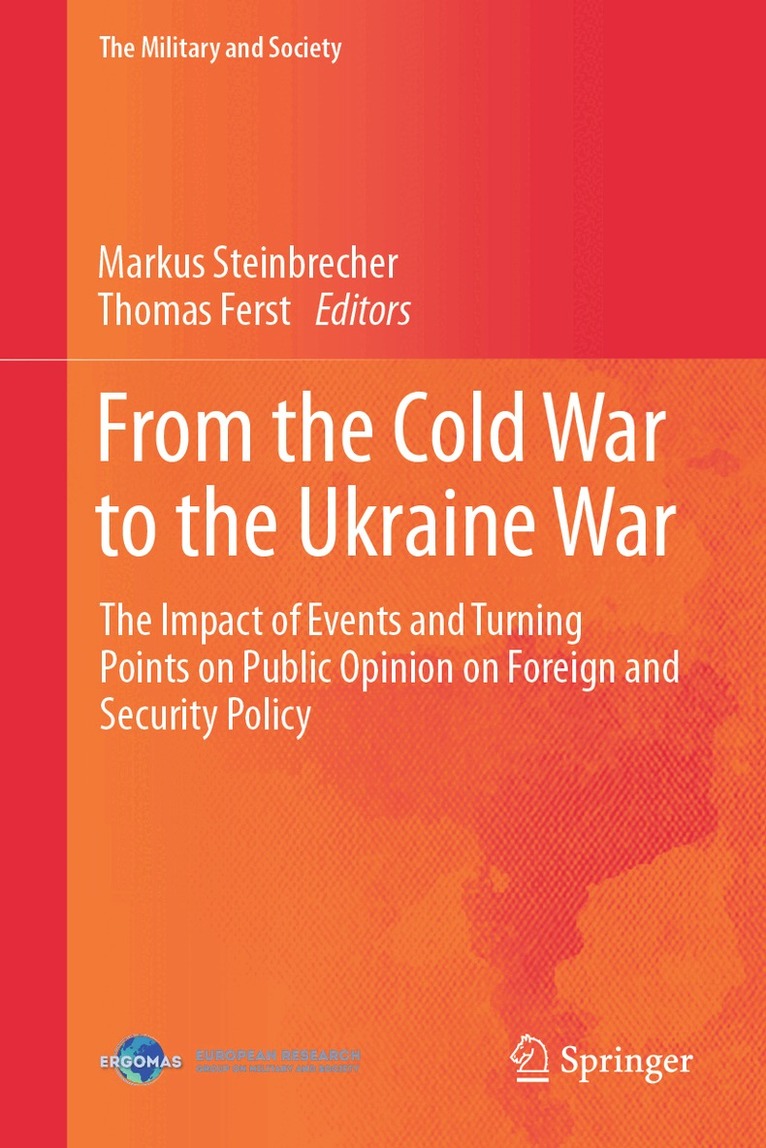
From the Cold War to the Ukraine War
Av Markus Steinbrecher, Thomas Ferst
1645 kr
Kommande
Beskrivning
Russia’s war against Ukraine in 2022 has prompted a historic shift in the foreign and security policies of numerous countries, termed a “Zeitenwende” (epochal turning point) in German discourse, and acknowledged similarly elsewhere. Comparable to significant historical events such as the end of the Cold War, 9/11, or the Covid-19 pandemic, this conflict has had profound and far-reaching effects on policies. Yet, the long-term impact of such epochal turning points on public opinion remains underexplored by researchers. This volume, edited by the Chairs of the European Research Group on Military and Society (ERGOMAS) Working Group (WG) “Public Opinion, Mass Media, and the Military”, offers definitions, discussions, and empirical findings on epochal turning points and their impact on public opinion. The contributions propose methods for measuring the long-term effects of such turning points. The analyses and results presented herein offer substantial empirical evidence on the impact and consequences of epochal turning points on public opinion across different countries.This volume presents diverse perspectives on its themes, including:various academic disciplines (such as political science, psychology, anthropology, and military sociology)different methodological approaches (including public opinion surveys, content analyses, in-depth interviews, and field research employing participant observation)single-country studies (Estonia, Finland, Germany, Japan, Latvia, Norway, Poland, Sweden, and Switzerland), as well as comparative analyses (Germany and Poland; Indonesia, the Philippines, and Thailand in their attitudes towards Japan)various epochal turning points, events, or external shocks.The methodological propositions and empirical results underscore the significance of public opinion in democratic states. Political decisions in democracies cannot overlook public opinion or the preferences of their citizens in the long run.
Produktinformation
- Utgivningsdatum: 2027-02-07
- Mått: 155 x 235 x undefined mm
- Format: Inbunden
- Språk: Engelska
- Serie: Military and Society
- Antal sidor: 274
- Förlag: Springer Nature Switzerland AG
- ISBN: 9783032280893
Utforska kategorier
Betyg & recensioner
0 recensioner
Inga recensioner tillgängliga.