Inbunden, Engelska, 2027
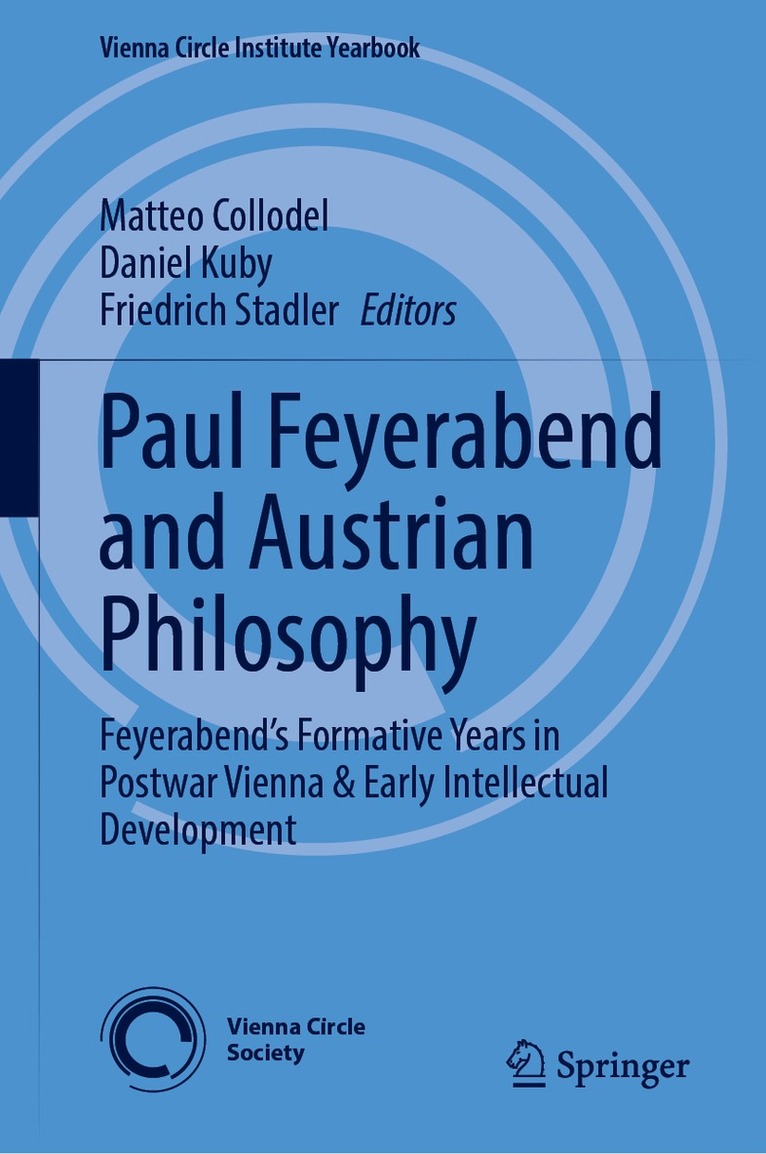
Paul Feyerabend and Austrian Philosophy
Av Matteo Collodel, Daniel Kuby, Friedrich Stadler
2730 kr
Kommande
Beskrivning
This book provides new perspectives on the history of the philosophy of science in the twentieth century, through the exploration of the intellectual roots of the thought of Paul K. Feyerabend (1924-1994) in Austrian philosophy. In addition to new research papers on the connection between Feyerabend and thinkers such as Boltzmann, Mach, Wittgenstein, Frank, Neurath, and Popper, the volume offers rich and as yet unpublished manuscripts and correspondence of archival origins by Feyerabend, Naess, Shapere and Finocchiaro. This collection pays specific attention to Feyerabend’s problematic reception of Wittgenstein and Ordinary Language Philosophy; influences, convergences and resonances of Feyerabend’s evolving philosophical work with different trends within the Vienna Circle; and the controversial Feyerabend-Popper relationship. Following Feyerabend’s 2024 centennial, the volume provides historians of the philosophy of science and intellectual historians with a deeper, more articulated and stimulating view of the far-reaching ramifications and global impact of Austrian philosophy in the twentieth century.
Produktinformation
- Utgivningsdatum: 2027-02-27
- Mått: 155 x 235 x undefined mm
- Format: Inbunden
- Språk: Engelska
- Serie: Vienna Circle Institute Yearbook
- Antal sidor: 685
- Förlag: Springer Nature Switzerland AG
- ISBN: 9783032298447
Utforska kategorier
Betyg & recensioner
0 recensioner
Inga recensioner tillgängliga.