Inbunden, Engelska, 2017
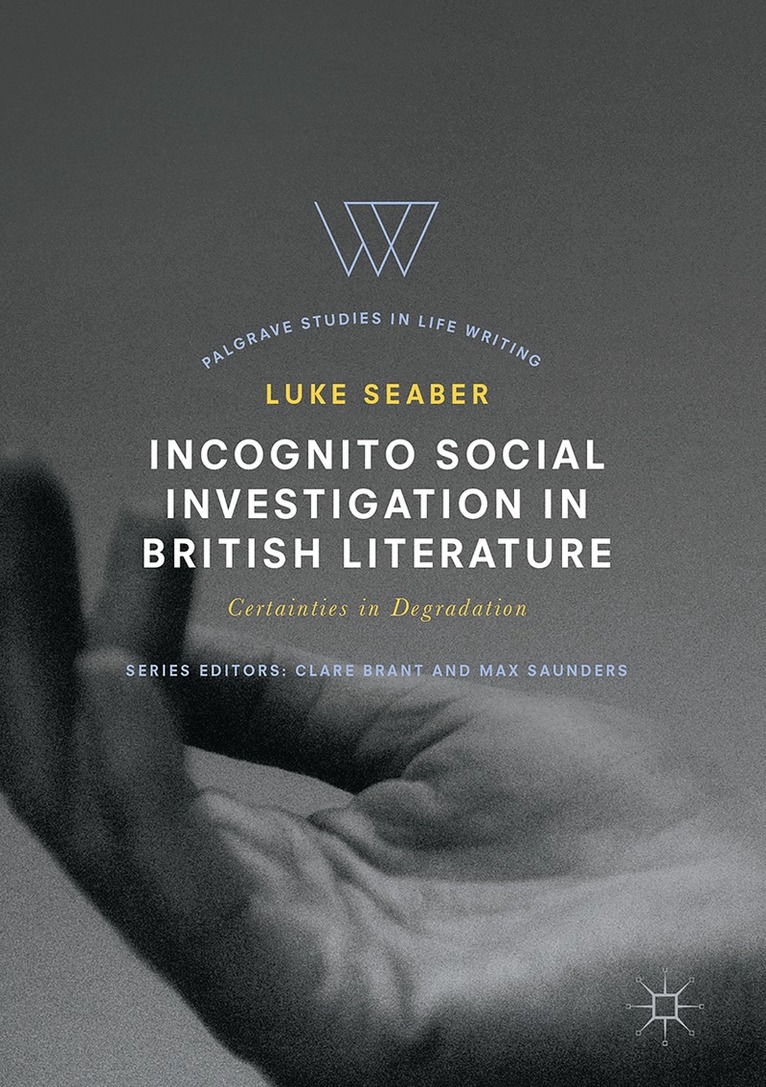
Incognito Social Investigation in British Literature
Av Luke Seaber
1015 kr
Beställningsvara. Skickas inom 10-15 vardagar. Fri frakt över 249 kr.
Beskrivning
This book is the first full critical history of incognito social investigation texts – in other words, works detailing their authors’ experiences whilst pretending to be poor. The most famous example is Down and Out in Paris and London, but there has been a vast array of other works in the genre since it was created in 1866 by James Greenwood’s ‘A Night in a Workhouse’.It draws up a classification of incognito social investigation texts, dividing them into four subtypes. The first comprises those texts following most narrowly in James Greenwood’s footsteps, taking the extreme poor as their object of study. The next is the investigation of poverty through walking, for pedestrianism and poverty are fascinatingly linked. The third is that of people looking at relative poverty rather than absolute, where authors take on badly-paid work in order to report on it, which is when incognito social investigation becomes very much something carried out by women. We end looking at those incognito social investigators who settled in the areas they explored. Not only will this book recover the history of a genre that has long been ignored, however, but it will also offer significant close reading of many of the texts that it places within the tradition(s) it discovers.
Produktinformation
- Utgivningsdatum: 2017-05-16
- Mått: 148 x 210 x 20 mm
- Vikt: 444 g
- Format: Inbunden
- Språk: Engelska
- Serie: Palgrave Studies in Life Writing
- Antal sidor: 274
- Upplaga: 17001
- Förlag: Springer International Publishing AG
- ISBN: 9783319509617
Utforska kategorier
Betyg & recensioner
0 recensioner
Inga recensioner tillgängliga.