Häftad, Engelska, 2018
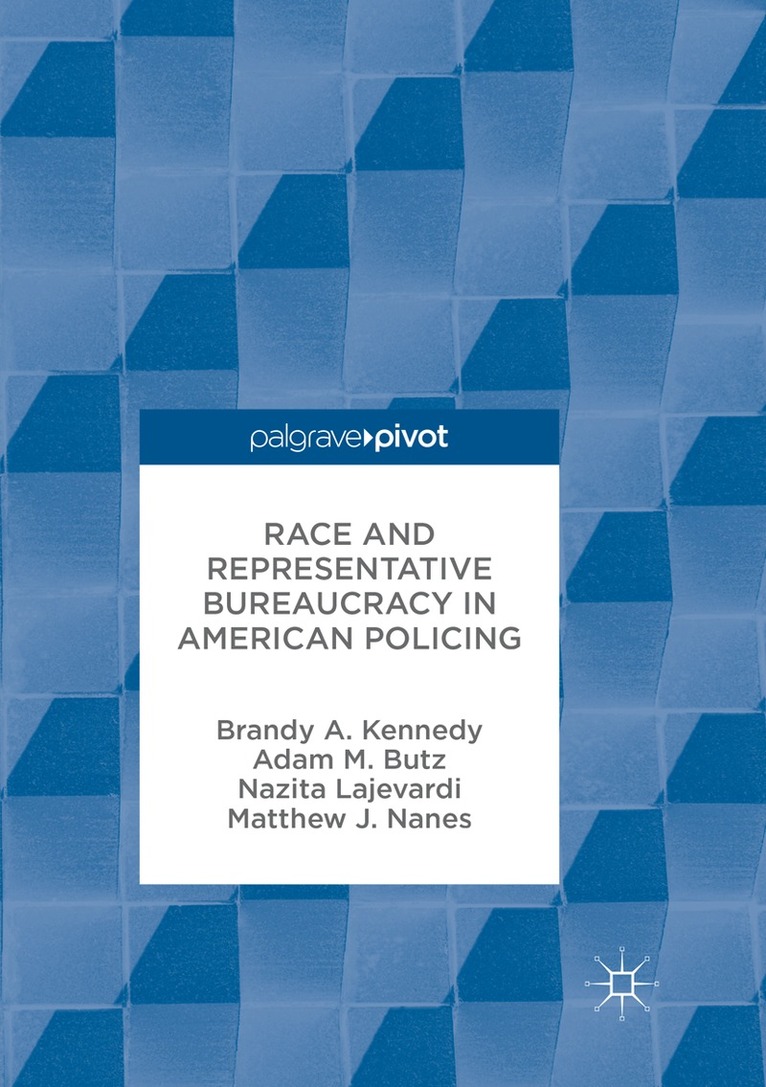
Race and Representative Bureaucracy in American Policing
Av Brandy A. Kennedy, Adam M. Butz, Nazita Lajevardi, Matthew J. Nanes
606 kr
Beställningsvara. Skickas inom 10-15 vardagar. Fri frakt över 249 kr.
Beskrivning
This book examines issues of race and policing through the lens of representative bureaucracy theory. According to representative bureaucracy theory, demographic correspondence between government employees and the local population can lead to more favorable outcomes for minority groups. It argues that police forces with higher minority composition will have more positive outcomes across measures such as fewer excessive force complaints and fewer fatal encounters with officers. Additionally, the book asserts that more representative forces will demonstrate responsiveness and accountability by implementing policies such as citizen review boards for excessive force complaints. It does this by first providing a brief overview of issues surrounding race and policing in America, documenting racial representation occurring in local police forces nationwide, and exploring the potential causes and consequences of underrepresentation. It concludes by discussing the implications of our findings and offer potential policy remedies and solutions that local law enforcements can pursue in order to reduce minority underrepresentation and improve policing outcomes.
Produktinformation
- Utgivningsdatum: 2018-08-01
- Mått: 148 x 210 x undefined mm
- Format: Häftad
- Språk: Engelska
- Antal sidor: 127
- Förlag: Springer International Publishing AG
- ISBN: 9783319852928
Utforska kategorier
Betyg & recensioner
0 recensioner
Inga recensioner tillgängliga.