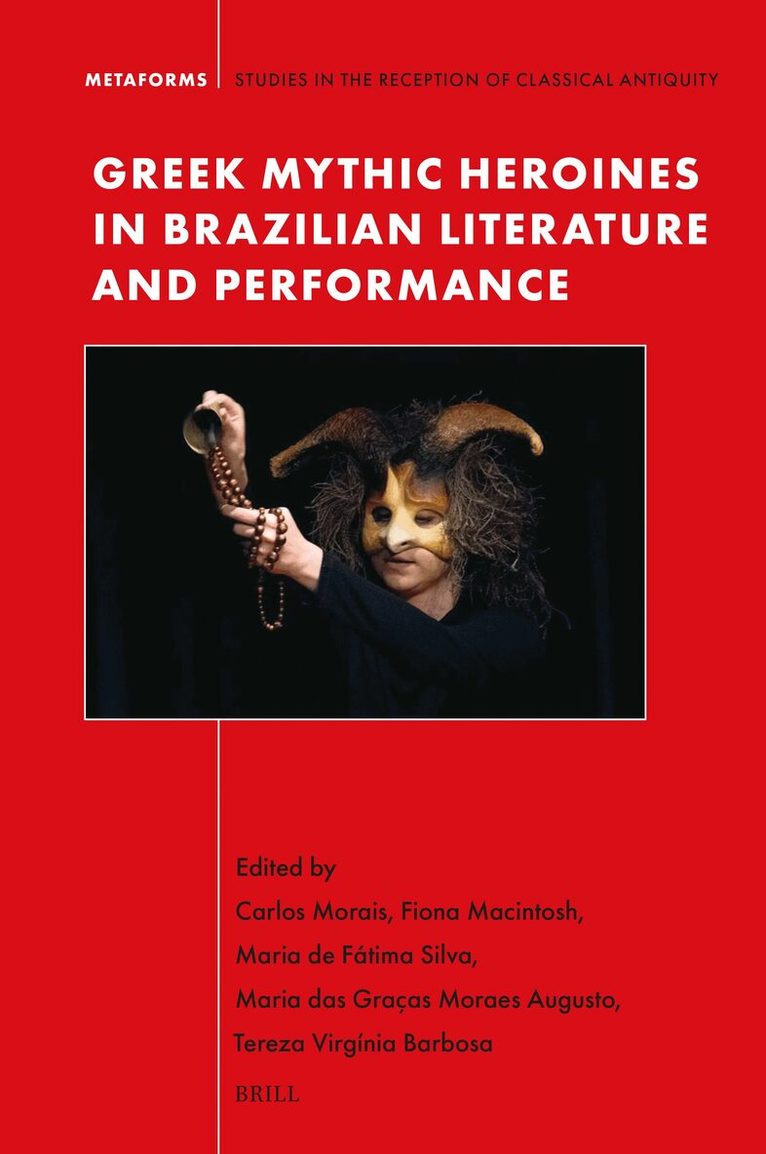
Greek Mythic Heroines in Brazilian Literature and Performance
Del 23 i serien Metaforms
2 581 kr
Beställningsvara. Skickas inom 5-8 vardagar. Fri frakt över 249 kr.
Beskrivning
Produktinformation
- Utgivningsdatum:2023-08-07
- Mått:155 x 235 x 48 mm
- Vikt:1 223 g
- Format:Inbunden
- Språk:Engelska
- Serie:Metaforms
- Antal sidor:642
- Förlag:Brill
- ISBN:9789004678460
Utforska kategorier
Mer om författaren
Carlos Morais, PhD in ancient Greek Literature by the University of Aveiro (UA), is now Professor of the Department of Languages and Cultures at the UA. He has published articles and books, including Portuguese Masks of Antigone (Aveiro, 2001), António Sérgio: Antigone(s) – Four Variations on a Myth (Lisbon, 2020).Fiona Macintosh is a Professor of Classical Reception, Director of the Archive of Performances of Greek and Roman Drama (APGRD) and Fellow of St Hilda’s College, University of Oxford. She has published numerous articles and books, including more recently Epic Performances from the Middle Ages into the Twenty-First Century (2018). Maria de Fátima Silva is Full Professor at the Institute of Classical Studies at the University of Coimbra. She focused in Reception Studies, coordinated and collaborated in volumes such as Portrayals of Antigone in Portugal, Portraits of Medea in Portugal (Brill), The Classical Tradition in Portuguese and Brazilian Poetry.Maria das Graças Moraes Augusto is Full Professor at the Department of Philosophy, at the Federal University of Rio de Janeiro. She published numerous articles and books on Logics and Metaphysics, mainly focused on Plato’s Politeia.Tereza Virgínia Ribeiro Barbosa, PhD from the State University of São Paulo (UNESP), published books and translations, and adapted Homer's poems into comic books, included within the Basic Books Collection by the National Foundation of the Children's and Juvenile's Book, in Brazil 2014.Contributors are : Adélia Silva Carvalho, Alexandre Costa, Alice Carvalho Diniz Leite, Ana Grossi Araújo, Andreia Garavello, António Carlos Hirsh, Carlinda Fragale Pate Nuñez, Carlos Eduardo Lima Gomes, Carlos Morais, Delfim Leão, Fábio Viana, Felipe Cordeiro, Fernando Santoro Moreira, Flávia Vieira Resende, Francisca Luciana Sousa da Silva, Gilson Moraes Mota, Jorge Deserto, Kathrin Rosenfield, Lawrence Flores Pereira, Luísa Severo Buarque de Holanda, Manuela Ribeiro Barbosa, Marcos António Alexandre, Maria António Hörster, Maria de Fátima Silva, Marina Pelluci Duarte Mortoza, Orlando Luiz de Araújo, Renato Cândido da Silva, Sara del Carmen Rojo de la Rosa, Sónia Aparecida dos Anjos, Tereza Virgínia Barbosa, Vanessa Ribeiro Brandão.
Innehållsförteckning
- List of FiguresNotes on ContributorsIntroductionMaria de Fátima Silva and Tereza Virgínia BarbosaPart 1: Rewriting Ancient Greek MythsSection 1: Antigone1 Antigone’s Myth in Brazilian Theater: Brief NotesRenato Cândido da Silva and Orlando Luiz de Araújo2 Antigone – the Eternal ReturnGilson Moraes Motta3 Pedreira das Almas (Quarry of the Souls), by Jorge AndradeTereza Virgínia Ribeiro Barbosa and Marina Pelluci Duarte Mortoza4 As Confrarias (The Fraternities) by Jorge Andrade: A Path to FreedomAndreia Garavello Martins and Vanessa Ribeiro Brandão5 Maria das Almas, by Rodrigo Estramanho de Almeida. A Tropical and Vicentian AntigoneCarlos Morais6 Ismene, the Princess of Thebes and the (Post-)modern PáthosCarlinda Fragale Pate Nuñez and Tereza Virgínia Ribeiro BarbosaSection 2: Medea7 Castro Alves: Medea in the Slave QuartersCarlos Eduardo de Souza Lima Gomes and Tereza Virgínia Ribeiro Barbosa8 Nelson Rodrigues’ Anjo Negro (Black Angel) or the Mirror Image of Euripides’ MedeaSônia Aparecida dos Anjos9 “I Killed Your Children, I Felt Hatred and Passion for You”: Euripides in RodriguesFernando Santoro Moreira10 Submission and Transgression: A Black Medea in BrazilTereza Virgínia Ribeiro Barbosa, Marcos Antônio Alexandre and Adélia Silva Carvalho11 Drop of WaterEuripides’ Medea and Its Brazilian Adaptation: A Brief ComparisonLuisa Severo Buarque de Holanda12 From Exile to Exile: A Dialogue between Euripides and Clara de Góes in the Play Medea en PromenadeFrancisca Luciana Sousa da Silva and Orlando Luiz de Araújo13 Jocy de Oliveira’s Medea: A Poetic Gesture by a Strange Foreigner – KseniFábio Henrique Viana, Francisca Luciana Sousa da Silva and Manuela Ribeiro BarbosaSection 3: Electra14 Electra in Terra Incognita: An Analysis of Lady of the Drowned by Nelson RodriguesAntonio Carlos HirschSection 4: Perfect Heroines: Alcestis15 The Invisible Power of Death. Let the Lady in, by Jacyntho Lins BrandãoJorge DesertoSection 5: Bacchae16 Recycling and Profanation in the Dramatic Aesthetics of Flávia, Cabeça, Tronco e Membros (Flavia, Head, Trunk and Limbs) by Millôr FernandesTereza Virgínia Ribeiro Barbosa and Alice Carvalho Diniz LeitePart 2: Translating and Performing the Classics17 Convergent Interpretations in Divergent Translations: Brazilian Translations of Antigone and the Juridical Reading of the PlayFlávia Almeida Vieira Resende and Ana Ribeiro Grossi Araújo18 The Construction of Antigone in Klássico (com K) (Klassic (with K)): A Dialogical ProcessFlávia Almeida Vieira Resende and Sara del Carmen Rojo de la Rosa19 Reading, Translating and Staging Antigone with the Help of Hölderlin’s InsightsKathrin Rosenfield20 Translating Antigone for a Brazilian Stage ProductionLawrence Flores Pereira21 Ói Nóis Aqui Traveiz (Look at Us Here Again): Utopia and Contradiction in the Voices of Passion and Death in Antigone and MedeaFelipe Cordeiro and Tereza Virgínia Ribeiro Barbosa22 A Contemporary Medeia by Fátima Saadi: A Pop-culture AdaptationVanessa Ribeiro Brandão and Marina Pelluci Duarte Mortoza23 DeadzoneMedea and the Experimental Space of MiseryVanessa Ribeiro Brandão and Marina Pelluci Duarte Mortoza24 The Dynamics of a Brazilian Collective Appropriation of Euripides’ Medea: The ΤRUΠΕRSΑ ExperimentMaria António Hörster and Delfim F. Leão25 Transgression/Tribute: Love … (Anti-academic Pro-witchcraft Manifesto without Conceptual Rigor of my Western Side That Is Unknown to Euripides)Sara Rojo and Felipe Cordeiro26 From Aeschylus’ Oresteia to the Brazilian Oresteia of 2012–2013: The Translation and Reinvention of the TragedyAlexandre CostaConclusionSelected Bibliography and ReferencesIndex
Du kanske också är intresserad av
Hero's Life Choice. Studies on Heracles at the Crossroads, the Judgement of Paris, and Their Reception
Malcolm Davies
2 635 kr
Exemplary Hercules from the Renaissance to the Enlightenment and Beyond
Valerie Mainz
2 414 kr
Reception of Aeschylus’ Plays through Shifting Models and Frontiers
Stratos Constantinidis
2 758 kr