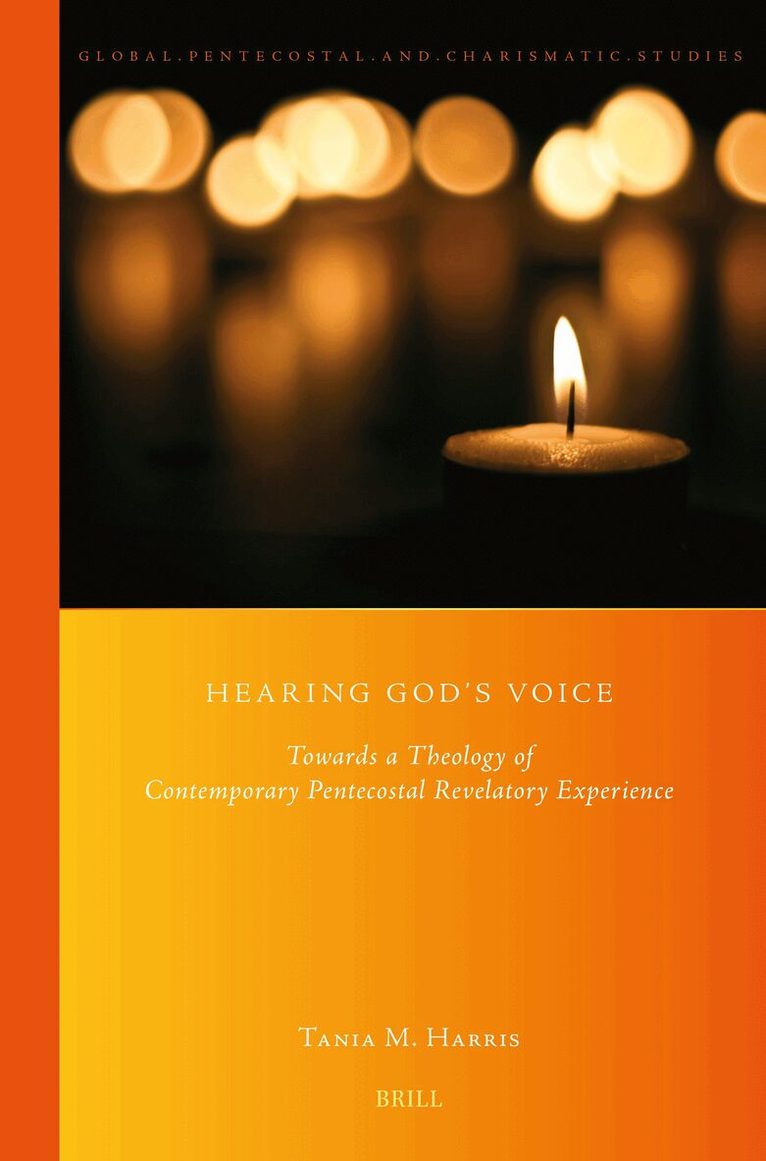
Hearing God’s Voice: Towards a Theology of Contemporary Pentecostal Revelatory Experience
Del 47 i serien Global Pentecostal and Charismatic Studies
895 kr
Beställningsvara. Skickas inom 5-8 vardagar. Fri frakt över 249 kr.
Beskrivning
Produktinformation
- Utgivningsdatum:2023-10-04
- Mått:155 x 235 x 18 mm
- Vikt:522 g
- Format:Häftad
- Språk:Engelska
- Serie:Global Pentecostal and Charismatic Studies
- Antal sidor:292
- Förlag:Brill
- ISBN:9789004682405
Utforska kategorier
Mer om författaren
Tania M. Harris, Ph.D. (2020) Alphacrucis College, is the founding director of God Conversations, a global ministry that equips people to recognise and respond to God’s voice. She consults with and trains ministers in Spirit-led discipleship and is an ordained minister with the Australian Christian Churches.
Recensioner i media
In Hearing God’s Voice Tania Harris joins biblical, epistemological, sociological, and theological perspectives on the human experience of hearing God speak and tests the ideas with a case study on the ordinary theology of revelatory experiences in different Australian Pentecostal churches. The result is not only one of the first Pentecostal proposals on the understanding of revelation but a passionately argued and praxis-oriented guide for hearing, recognizing, and responding to the experience culminating with a call for developing more sustainable communities attuned to hearing the voice of God today. - Wolfgang Vondey, Professor of Christian Theology and Pentecostal Studies, University of Birmingham, UK Tania Harris addresses a surprisingly neglected area of practical theology in the pentecostal tradition: revelatory experience. Considering Pentecostals prioritize encounter with God, especially hearing God’s voice, this theoretical and applied exploration is much needed for the global church today. Based on her fieldwork among Australian pentecostal churches, Harris provides practicable solutions for local church leaders seeking to facilitate the prophetic voice of God in their communities. This book will be of great interest to pastors, students and professors alike. - Jacqueline N. Grey, Professor of Biblical Studies, Alphacrucis University College, Australia Many Christians are profoundly suspicious of others telling them “God said…..”, and often with good reason. But Tania Harris is a passionate follower of Jesus whose life has been inspired by such encounters with God. In this book, you will find a practical and profoundly theological discussion of what it means to ‘hear God’s voice’ and how this should be outworked in life and local churches. You will be impressed with the study of how three Australian churches have managed this tricky area, as well as challenged by the theological discussion and sometimes surprising conclusions Tania has come to. - Jon K. Newton, Associate Professor of New Testament and Pentecostalism, Alphacrucis University College, Australia Tania Harris richly defends the bold claim that God speaks today to ordinary Christians in a way that is personal and unmediated, just as God did in the narrative of scripture. Without denying the need for scripturally-informed discernment, she convincingly overturns theological assumptions that limit revelatory experiences to that which is mediated through scripture or prophetic ministry. Anyone interested in ecclesiology or practical ministry will benefit greatly from her penetrating insights. I found her book to be a compelling read from beginning to end. - Frank D. Macchia, Professor of Systematic Theology, Vanguard University “Hearing God’s voice,” is a regular part of Pentecostal and charismatic testimony. Tania Harris has taken this problematic experience seriously, and by employing the methodology of empiric and constructive theology has provided the Christian community with a well-researched explanation of why such a religious phenomenon is important, and even more significantly how to properly discern the voice of God. Such an important and noteworthy work is a timely contribution to the ongoing understanding and further development of pentecostal-charismatic theology and spirituality. - Kenneth J. Archer, Professor of Theology and Pentecostal Studies, School of Divinity, Barnett College of Ministry & Theology, Southeastern University, Lakeland, FL, USA
Innehållsförteckning
- AcknowledgementsAuthor's NoteList of FiguresPart 1Introduction to the Revelatory Experience1 God Speaks Back: Hearing God’s Voice in the Pentecostal Tradition1 What Do Pentecostals Mean by Hearing God’s Voice?1.1 Experiential, Extrabiblical, Unmediated and “High-Level” Revelation1.2 Phenomenological Equivalency with the Biblical Experience1.3 Universal Accessibility Distinct from Specialist Gift of Prophecy2 The Ministry Impact of Contemporary Pentecostal Revelatory Experience2.1 Ministry Outcomes2.2 Pastoral Fallout2.3 Institutional Instability3 The Theological Problem of Spirit versus Scripture4 Neglect in the Academy4.1 Lack of Connection to the Spirit’s Outpouring at Pentecost4.2 Focus on the Gift of Prophecy4.3 Rejection of Dream-Visions as a Revelatory Mode5 Aim of the Study6 Outline of the Book2 Cessationism Meets Continuationism: Four Theological Frameworks for Contemporary Revelatory Experience1 The Pentecostal Tradition1.1 Pentecostalism in Australia1.2 Pentecostal Distinctives2 The Evangelical Tradition3 Four Theological Frameworks3.2 Acceptance in the Pentecostal-Charismatic Tradition3.3 Alternate Distinctions3.4 Problems with the Phenomenologically Inferior Position3.5 Summary3 Bridging the Gap between Theology and Practice: a Study in 3 Churches1 The ‘Ordinary Theology’ of Revelatory Experience1.1 Mark Cartledge’s Concept of Dialectic1.2 Jeff Astley’s “Ordinary Theology”1.3 David Martin’s Concept of “Rescripting”1.4 Epistemological Assumptions1.5 An Insider Perspective2 Study Design2.1 Data Collection2.2 The Sample2.3 Data Presentation and Analysis2.4 Study LimitationsPart 2Hearing God in Sociological Perspective4 From Acquaintance to Partner: the Social Dynamics of Revelatory Experience1 The Content of Revelatory Experiences among Australian Pentecostals1.1 Personal and Particular1.2 New and Previously Unknown Information2 Charles Glock and Rodney Stark’s Taxonomy of Religious Experience2.1 Glock and Stark’s Theory and Other Pentecostal Studies3 The Sociological Nature of Revelatory Experience3.1 The Relational Development of Revelatory Experience3.2 The Disruptive Nature of Revelatory Experience3.3 Power Shifts in Relational Development3.4 The Role of Discernment in Maintaining Institutional Stability3.5 Discernment as an Act of Power4 Reflection on Glock and Stark’s Theory5 Summary5 A World in Continuity with the Early Church: Hearing God in the Local Community1 Approach to Revelatory Experience in Three Pentecostal Churches1.1 Introducing Church a1.2 Introducing Church b1.3 Introducing Church c1.4 The Frequency of High-Level Revelatory Experiences2 Peter Berger’s Theory of World Construction3 The Social World of Three Churches3.1 A World in Continuity with the Early Church3.2 The Language of Pentecostal Revelatory Experience3.3 Legitimations in the Pentecostal World3.4 Regulatory Controls in the Pentecostal World4 Reflection on Berger’s Theory5 SummaryPart 3A Close Theological Analysis of Revelatory ExperienceIntroduction to Part 36 Does God have anything More to Say? The Content and Function of Revelatory Experience1 The Content and Function of Revelatory Experiences among Australian Pentecostals1.1 Build “Personal Relationship” with God1.2 A Vehicle of Divine Presence1.3 Provision of Divine Care and Protection1.4 Personal Transformation and Sanctification1.5 Revelation of “God’s Plan”1.6 Mobilisation to Ministry and Mission2 Niels Hvidt: Christological Content and Function2.1 Material and Formal Revelation2.2 The Actualisation of Doctrine3 Rescripting Ordinary Theology3.1 The Limits of “New” Revelatory Content3.2 The Future-Orientation of Revelatory Content3.3 The Christocentric Function of Revelatory Experience3.4 The Role of Revelatory Experience in the Development of Doctrine4 Summary7 Hearing God’s Voice: Dream-Visions, Voices and Senses1 Revelatory Modes among Australian Pentecostals1.1 Voices1.2 Dreams and Visions1.3 Sensory Impressions1.4 Scripture1.5 “Creative/Experiential” Use of Scripture1.6 Teaching via Sermons, Books and Religious Material1.7 Prophecy1.8 The Counsel of Others1.9 Circumstances1.10 Nature2 Niels Hvidt: Historic Concepts of Revelation3 Rescripting Ordinary Theology3.1 Modes of Revelation3.2 Legitimacy of Revelatory Modes4 Summary8 Recognising God’s Voice: How Did They Know It Was God?1 The Epistemological Reliability of Revelatory Experience1.1 Epistemological Reliability of Revelatory Experience among Australian Pentecostals1.2 Niels Hvidt: the Mixed Nature of Revelatory Experience1.3 Rescripting Ordinary Theology2 Discernment Criteria for Revelatory Experience2.1 Discernment Criteria for Revelatory Experience among Australian Pentecostals2.2 Niels Hvidt: Three Criteria for Discernment in the Catholic Tradition2.3 Rescripting Ordinary Theology3 Responsibility for Discernment3.1 Responsibility for Discernment among Australian Pentecostals3.2 Niels Hvidt: Responsibility for Discernment in the Catholic Tradition3.3 Rescripting Ordinary Theology4 Summary9 Responding to God’s Voice: the Faithfulness of God and the Unfaithfulness of Humanity1 Responses to God’s Voice among Australian Pentecostals2 Niels Hvidt: Experience as Divine Imperative3 Rescripting Ordinary Theology3.1 The Response of Obedience3.2 Interaction of Divine Fulfilment and Human Free Will4 SummarySummary: the Theology and Practice of Revelatory Experiences among Australian PentecostalsPart 4The Relationship of Contemporary Revelatory experience to the Theology of ScriptureIntroduction to Part 410 The Communicating Spirit: Inspired Experiences and Inspired Scripture1 Charles Kraft’s Communication Model for Inspiration2 Rescripting Ordinary Theology2.1 Efficacy of Divine Communication2.2 The Personalised Nature of Revelatory Experiences2.3 Use of Biblical Narratives as Models3 Summary11 Is This a Trick Question? The Site of Divine Authority1 James K.A. Smith’s Work on Textualization and Orality2 Rescripting Ordinary Theology2.1 The Authority of Revelatory Experience2.2 The Tension between Orality and Textuality in Pentecostal Communities2.3 The Meaning of the Phrase “Word of God”3 Summary12 The Epistemological Role of Revelatory Experience in Spiritual Development1 James K.A. Smith’s Work on the Epistemology of Pentecostal Experience2 Rescripting Ordinary Theology2.1 The Role of Revelatory Experience in Relational and Spiritual Development2.2 The Element of Divine Authority in Transformation2.3 The Epistemology of Revelatory Experience and the Study of Scripture3 SummarySummary: the Relationship of Revelatory Experience to the Theology of ScripturePart 5Hearing God’s Voice Today13 The Theology and Practice of “Hearing God’s Voice”1 Towards a Theology of Contemporary Pentecostal Revelatory Experience1.1 The Basis for Phenomenological Equivalency1.2 The Content and Function of Revelatory Experience1.3 The Process of Revelatory Experience2 The Relationship of Revelatory Experience to the Theology of Scripture2.1 Contemporary Revelatory Experience and Existing Pentecostal-Charismatic Bibliologies2.2 A Bibliology for the Phenomenologically Equivalent Approach2.3 An Expanded Role for the Community3 Recommendations for Ministry Praxis4 Evaluation of the Study4.1 Opportunities for Further Study5 ConclusionAppendicesBibliographyIndex
Mer från samma serie
Worship and Social Engagement in Urban Aboriginal-led Australian Pentecostal Congregations
Tanya Riches
1 031 kr
Megachurches and Social Engagement
Mark J. Cartledge, Sarah Dunlop, Heather Buckingham, Sophie Bremner
1 204 kr
Du kanske också är intresserad av
Worship and Social Engagement in Urban Aboriginal-led Australian Pentecostal Congregations
Tanya Riches
1 031 kr