E-bok, Engelska, 2012
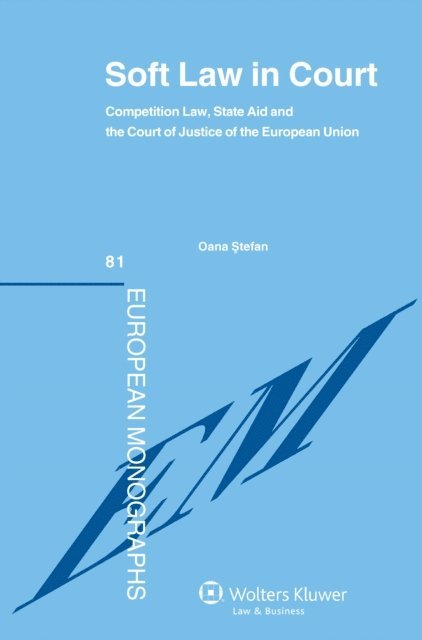
Soft Law in Court
Av Oana Stefan
1847 kr
Läs direkt i Bokus Reader – eller ladda ned till din enhet (PDF kräver ofta zoom och scroll på små skärmar).
Beskrivning
Known under the generic term of soft law, instruments that are not legally binding but can produce legal and practical effects are proliferating in European competition and state aid law. This soft law has been taken into account by the Eu Courts at an increasing rate over the years, to the point where such instruments were recognized as regulatory instruments in their own right. The Courts have required member states to comply with soft law, and demanded that national courts take soft law into consideration when deciding on cases. The courts have even annulled Commission decisions for failure to comply with soft law.
Drawing on a data set of 696 documents – competition and state aid judgments, orders and opinions of the European Courts, and advocates’ general opinions referring to various soft law instruments – this detailed textual and doctrinal analysis investigates the way in which the Eu Courts deal with soft law, how the normative status of these instruments is acknowledged, and how their effects are recognized. It reveals that several ‘champion’ instruments feature frequently in the case law: the guidelines on fines and the leniency notice in competition law, the state aid instruments on aid to be granted to enterprises in difficulty, regional aid, de minimis aid, and aid to be granted to SMEs – all of them having in common the fact that they regulate highly litigated areas.
The analysis treats issues such as the following:
- – the pathway from judicial ignorance to judicial acknowledgement of soft law;
- – the judicial creation of legal ‘hybrids’;
- – the judicial review of soft law;
- – the potential use of soft law as a ‘sword’ or as a ‘shield’ in a court of law;
- – the distinction between legally binding force and legal effects;
- – how soft law can produce legal effects through the operation of general principles of law such as legitimate expectations, legal certainty, or human rights; and
- – how the Courts locate soft law on a strong constitutional pluralist background.
Although the analysis might appear to relate to a fairly narrow spectrum of Eu law, in fact the interaction of soft law and legal principles reaches into many diverse areas of law, and increasingly so in the twenty-first century. Consequently, this ground-breaking book will prove immeasurably valuable to any practitioner, academic, or policymaker interested in how the Eu Court is fulfilling once again its constitutionalizing role, even in an area traditionally lacking formalism and conventions: that of soft instruments of governance.
Produktinformation
- Utgivningsdatum: 2012-11-27
- Språk: Engelska
- Filformat: PDF
- Kopieringsskydd: LCP
- ISBN: 9789041181879
- Förlag: Wolters Kluwer
Utforska kategorier
Betyg & recensioner
0 recensioner
Inga recensioner tillgängliga.