Häftad, Engelska, 2023
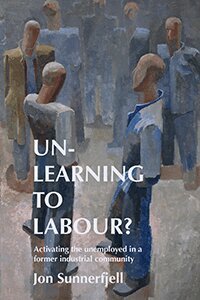
Un-learning to labour? : activating the unemployed in a former industrial community
246 kr
Skickas tisdag 13/10. Fri frakt över 249 kr.
Beskrivning
Today's flexible Western labour markets place new demands on the workforce. Whereas industrial society fostered individuals who found dignity in performing long-term, manual labour, few people can now expect to go through working life without engaging in continuous updating of knowledges and skills. However, there are environments on both sides of the Atlantic where the workforce is still adapted to an economy of production. Industrial restructuring has led to islands of unemployment, whereby the labour force has been unable to reorganise into other sectors.
In light of automation and a globalised economy, Jon Sunnerfjell presents a study that explores how a once-flourishing industrial community seeks to manage the challenges of post-industrial society and flexible capitalism. What is at hand is the adaptation to what scholars have labelled the 'active society', reconceptualising structural inequality in terms of individual exclusion. This is a society that seeks to mitigate public expenditures on social welfare by fostering active and employable individuals able and willing to navigate life responsibly.
Drawing on ethnographic data, Sunnerfjell analyses what becomes of policy concepts such as lifelong learning, employability and entrepreneurship when they are put to work in an environment imbued with industrial history and working-class culture. Ultimately, he shows the tensions that pervade the active society and what forms of resistance it produces.
Produktinformation
- Utgivningsdatum: 2023-02-20
- Mått: 138 x 210 x 14 mm
- Vikt: 268 g
- Format: Häftad
- Språk: Engelska
- Antal sidor: 220
- Förlag: Arkiv förlag/A-Z förlag
- ISBN: 9789179243739
Utforska kategorier
Betyg & recensioner
0 recensioner
Inga recensioner tillgängliga.