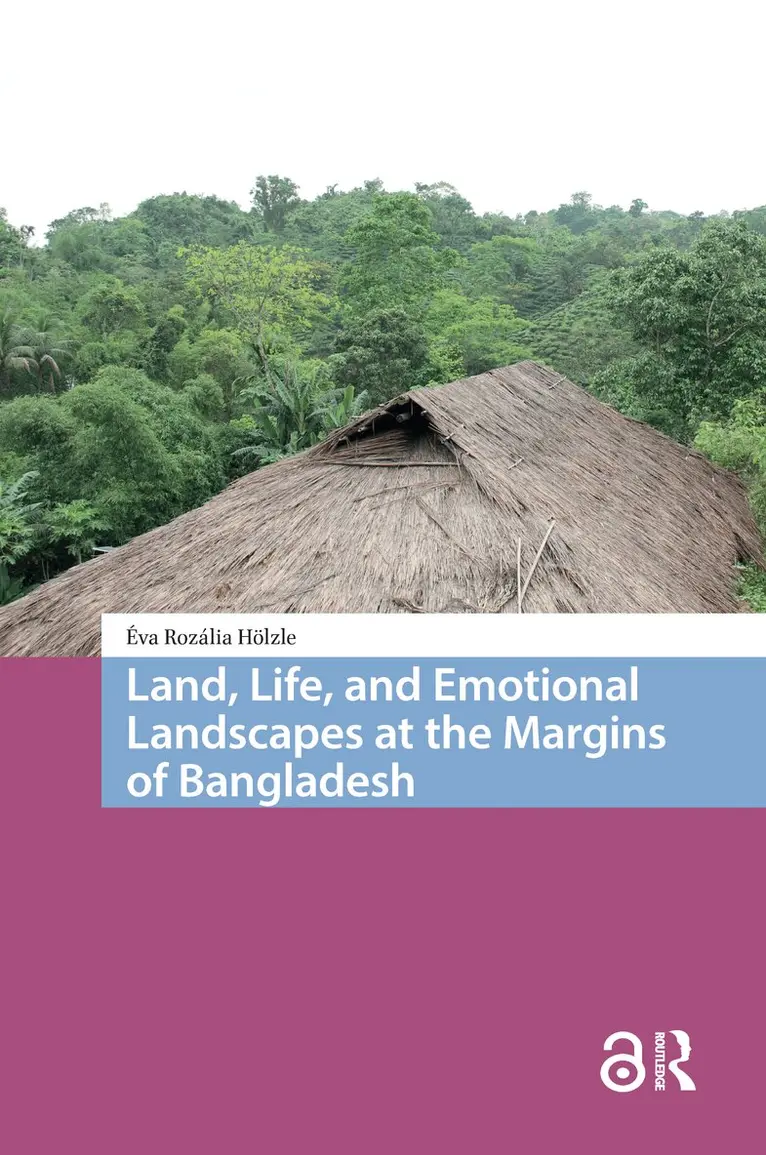
Drawing on two years of ethnographic research in the north-eastern borderlands of Bangladesh, this book focuses on the everyday struggles of indigenous farmers threatened with losing their land due to such state programmes as the realignment of the national border, ecotourism, social forestry and the establishment of a military cantonment.
Éva Rozália Hölzle is a social anthropologist working as a research associate and lecturer at the Faculty of Sociology, Bielefeld University, Germany since 2011. She studied sociology and social anthropology at Eötvös Lóránd University in Hungary and at Bielefeld University, Germany. For this book she did extensive 24 months of ethnographic fieldwork in Bangladesh along the border to Meghalaya, Assam and Tripura.
Recensioner i media
''This book is poised to receive recognition among academics and policymakers alike, particularly those engaged in the study of land dispossession dynamics in South Asia. It serves as an important resource for young scholars planning to work within the realms of envi ronmental anthropology and anthropology of the state. Additionally, it will be of interest to those concerned with the dimensions of emotions and violence, aspects that are often marginalized in broader discussions of political anthropology, but are critical for understanding the global practices of land dispossession.''-Javed Kaisar, Anthropos , July , 2024
Innehållsförteckning
Introduction: Land and Life, State Formation and Land Tenure in Bangladesh - A Historical Sketch, Between Fear and Hope at the Bangladesh-Assam Border, The Intolerable Dullness of Ecotourism in Sylhet, Triggers of Wrath and Revenge in Madhupur Forest, Land Loss Lamentations next to Sylhet Cantonment, Violence, Agency, and Life in the Fabric of Power, Bibliography, Index of Subjects.