Häftad, Engelska, 2023
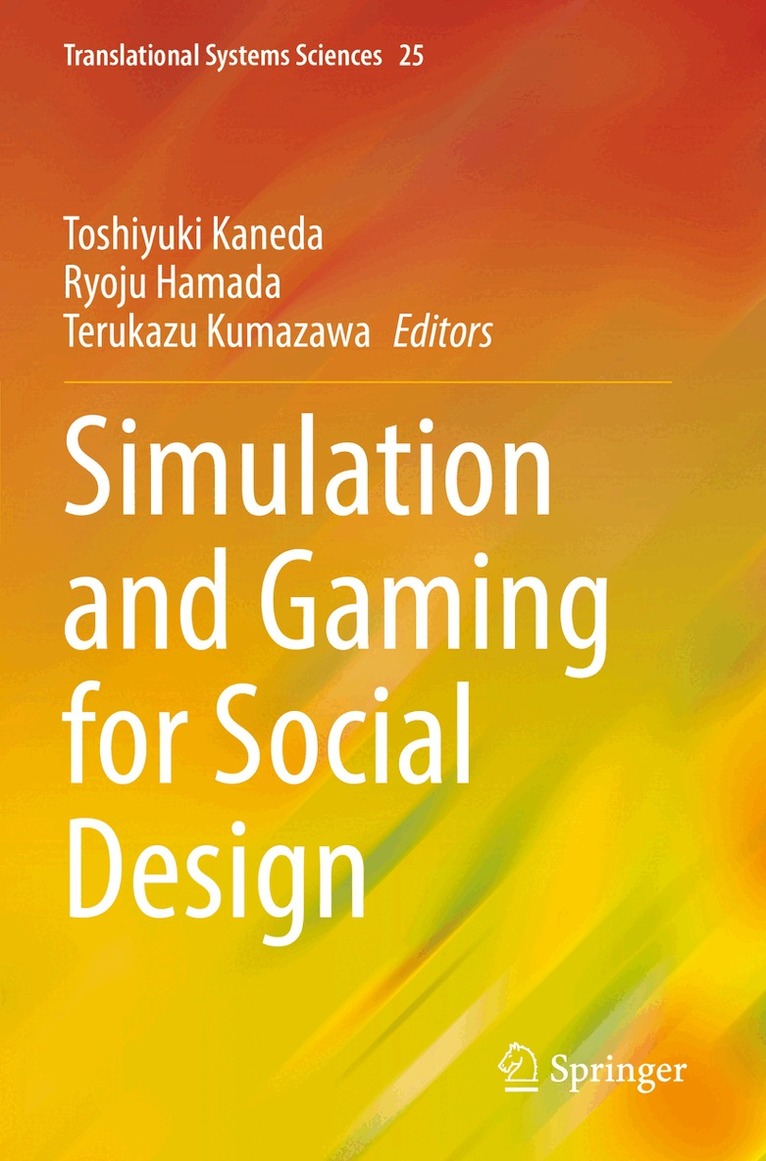
Simulation and Gaming for Social Design
Av Toshiyuki Kaneda, Ryoju Hamada, Terukazu Kumazawa
1481 kr
Skickas inom 5-8 vardagar
Beskrivning
This book is a collection of research articles that deal with three aspects of simulation and gaming for social design: (1) Theory and methodology, including game system theory and agent-based modeling; (2) Sustainability, including global warming and the energy–food nexus);; and (3) Social entrepreneurship, including business, ethnic, and ethical understanding. The latter two especially form two major areas of clinical knowledge in contemporary life.Simulation and gaming, with its participatory approach, provides participants with a seamless integration of problem solving and education. It has been known as a tool for interdisciplinary communication since the 1960s, and now it is being developed to contribute to global society in the twenty-first century. This is the first book on simulation and gaming for social design that covers all aspects from the methodological foundations to practical examples in the fields of sustainability and social entrepreneurship.Regardless of the size of the problematics, societal system design involves (1) The visioning and conception aspects due to the long-term, overall nature of the goal; (2) Interdisciplinary thinking and communication for the exploration of new states of accommodation with technological systems; and (3) The “human dimension” aspect including education that must be dealt with, thus academic developments of simulation and gaming for social design as system thinking and practice methodologies are anticipated. Simulation and gaming has great potential for development as a tool to facilitate the transfer between theoretical and clinical knowledge.
Produktinformation
- Utgivningsdatum: 2023-01-06
- Mått: 155 x 235 x 18 mm
- Vikt: 499 g
- Format: Häftad
- Språk: Engelska
- Antal sidor: 307
- Förlag: Springer Verlag, Singapore
- Serie: Translational Systems Sciences (del 25)
- ISBN: 9789811620133
Utforska kategorier
Betyg & recensioner
0 recensioner
Inga recensioner tillgängliga.