Inbunden, Engelska, 2024
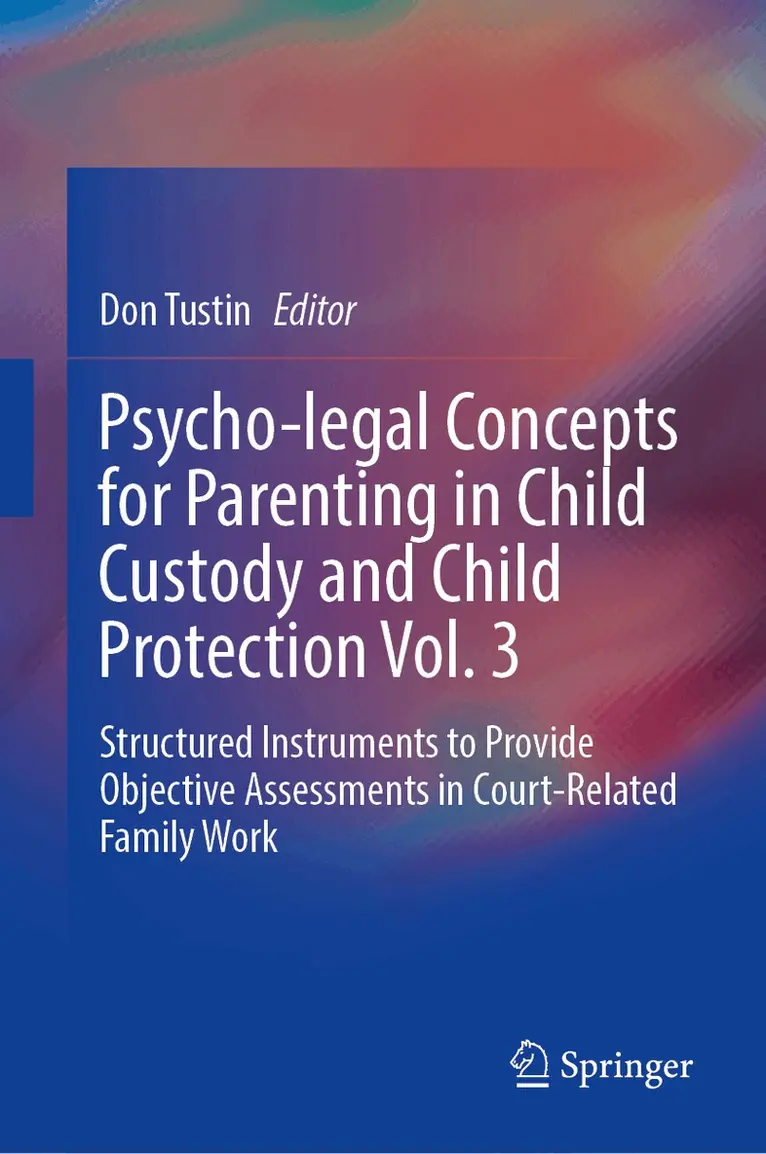
Psycho-Legal Concepts for Parenting in Child Custody and Child Protection Vol. 3
Av Don Tustin
1599 kr
Beställningsvara. Skickas inom 10-15 vardagar. Fri frakt över 249 kr.
Beskrivning
This book identifies a number of topics that arise in child protection where assessments of individual families are required. The author opines that it is essential to use structured instruments when making assessments on complex topic about risk to reduce bias and to maximise objectivity. The author summarises criteria that are required for an assessment instrument to be viewed by scientists as being objective. The book proposes that introducing more objective assessment instruments into the field of child protection will: improve the focus and brevity of assessment reports; and enable setting of thresholds that distinguish between families who provide good-enough parenting from families who should be referred for parenting education, and from parents who are unfit parents. The author identifies a number of topics that commonly arise in cases where maltreatment of children is alleged, reviews literature, and proposes checklists that can be used to gather data and to form a basis for developing validated assessment instruments for use in child protection. The topics identified are relevant both to therapists as parenting practices can be changed using focused therapy, and for legal assessment purposes as topics have been shown to be related to legal concerns about the safety and welfare of children. The overall aim of this book is to encourage greater use of scientific assessment approaches in the field of child protection.
Produktinformation
- Utgivningsdatum: 2024-12-03
- Mått: 155 x 235 x 27 mm
- Vikt: 706 g
- Format: Inbunden
- Språk: Engelska
- Antal sidor: 382
- Förlag: Springer Verlag, Singapore
- ISBN: 9789819758579
Betyg & recensioner
0 recensioner
Inga recensioner tillgängliga.