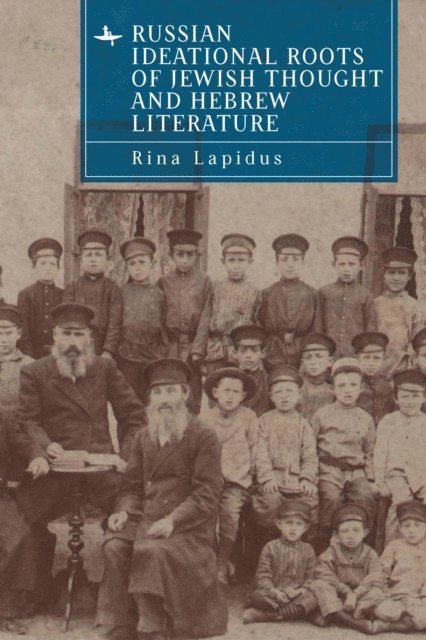
Russian Ideational Roots of Jewish Thought and Hebrew Literature
1 244 kr
Skickas . Fri frakt över 249 kr.
Beskrivning
Produktinformation
- Utgivningsdatum:2024-03-07
- Mått:155 x 233 x 9 mm
- Vikt:367 g
- Format:Inbunden
- Språk:Engelska
- Antal sidor:140
- Förlag:Academic Studies Press
- ISBN:9798887194011
Utforska kategorier
Mer om författaren
Rina Lapidus was born in Moscow, former Soviet Union; she studied at the Hebrew University of Jerusalem, Israel, earning a BA in Hebrew language, an MA in Hebrew literature, and a PhD in Talmud. Since 1984 Lapidus has worked at the Department of Comparative Literature of Bar-Ilan University, Israel. She has authored and edited 15 books and has published numerous academic articles. Lapidus’s scholarly investigations center around the reciprocal relationship between Russian and Jewish literature and thought, a field in which she is the leading researcher today.
Recensioner i media
"This is an interesting contribution to Jewish literary and intellectual history and is recommended for academic libraries." — Shmuel Ben-Gad, AJL News and Reviews“This book by Rina Lapidus contains deep and insightful research on the emergence of the set of Jewish national ideas and concepts of Jewish national identity as they were reflected in Jewish thought and Hebrew literature of the late nineteenth and early twentieth century, here examined within the broad context of the ideologies of Eastern European and mainly Russian nationalisms.As Lapidus has earnestly demonstrated, most Jewish thinkers and writers of that epoch perceived Russian ideological and literary tradition as their own, rather than alien, and simultaneously as the epitome of the highest cultural values.Of exceptional interest is her innovative analysis of the influence that the nationalistic doctrines of the Russian Lovers of Wisdom, early Slavophiles (especially Khomiakov), later Slavophiles (like Strakhov), post-Slavophiles (like Viach. Ivanov and Berdiaev), and representatives of the “Soil” Movement (Dostoevsky and others) had on multiple Jewish thinkers and writers.”— Vladimir Paperni, Professor Emeritus, Department of Hebrew and Comparative Literature, The University of Haifa“Russian thought and literature exerted enormous influence on Jewish nationalism, modern thought, ideology, and Hebrew literature. This vital cultural impact was sometimes assumed, imagined, or surmised but mostly overlooked or neglected by scholarship. This new groundbreaking book by Rina Lapidus offers both a penetratingly nuanced and splendidly comprehensive picture of Russian influence on the Jewish intellectual and psychic world and reveals categorically new phenomena, that were totally unknown nor previously intuitively construed. It is a major and trailblazing work; through extensive research it greatly enriches our understanding of contemporary secular Judaism, paving the way for future productive research in the field.”—Dov-Ber Kerler, Indiana University
Innehållsförteckning
- Introduction: Russian Ideational Roots of the Jewish Enlightenment and Hebrew LiteraturePart One: Russian Roots of the National Ideas of the Jewish Enlightenment and Zionist Movements in the Russian Empire: Y. L. Gordon, Peretz Smolenskin, Y. L. Pinsker, Eliezer Ben-YehudaChapter 1: Roots of the National Ideas of the Haskalah in the Russian Empire1.1. Introduction1.2. Awakening of National Movements in Eastern Europe and in the Russian Empire1.3. National Ideas in the Wake of the Napoleonic Wars in Europe and in Russia1.4. “Lovers of Wisdom” (Lyubomudry) Movement in Russia1.5. The Slavophile Movement, the Russian “Soul,” and A. A. Khomiakov1.6. The Slavophiles, Peter the Great, and the Russian Orthodox Church1.7. The Intellectual Circles of A. N. Ostrovsky and A. A. Grigoryev1.8. The Russian “Soil” Movement1.9. The Nationalistic Movements of Poles and Other Ethnic Minorities1.10. SummaryChapter 2: The Development of Jewish Nationalist Consciousness as Reflected in Scholarly Literature 2.1. European Nationalist Tendencies as the Background of Jewish National Awakening: Peretz Smolenskin, Eliezer Ben-Yehuda, Y. L. Pinsker2.2. Jews as Seen by the Slavophiles 2.3. Alienation between the Russians and the Jews after the Pogroms of the 1880sChapter 3: A Comparison of the Views of Y. L. Gordon and Russian Thinkers 3.1. Y. L. Gordon as a Leading Figure of the Haskalah and His National Views 3.2. “A Flask of Feuilletons,” by Y. L. Gordon3.3. The Jewish National Question in Y. L. Gordon’s View3.4. Parallels between the National Ideas of the Haskalah and Those of the Nationalist Movements in Russia3.5. The Uniqueness of the Russian People and of the Jewish People: Parallel Concepts3.6. The Soul of the Nation Is Concealed and Unknowable to Foreigners3.7. National Pride that Our People Feel due to Their Spiritual Power and Moral Strength3.8. Foreigners—a Factor Causing Lack of Understanding between Peoples3.9. Other Nations’ Lack of Understanding towards Us Leads, in the Final Analysis, to Animosity3.10. The Role of the Russians and of the Jews in Creating Negative Images in the Eyes of Foreign Nations3.11. The Blind Wish to Imitate Everything Foreign, Both in Russian Society and among the Jewish Public 3.12. The Need to Preserve the Authentic National Language and to Develop It as a Basic Component of Nationalism 3.13. The Disaster of the Tower of Babel Confronts Every Nation that Foregoes the Preserving of Its Original National Language3.14. The Need to Adopt the Accomplishments and Wisdom of Other Nations for the Benefit of Our People and to Advance Our National Goals3.15. “Our People Is Unable to Close the Gaps as Quickly as We Hoped” 3.16. Seeking the Proper Balance between the National and the Universal Dimension3.17. Criticism of the Conservative Elements within Our People Who Are Not Prepared to Progress Towards the Enlightened Europe 3.18. SummaryChapter 4: A Comparison between the National Views of Y. L. Pinsker and Those of Petr Chaadayev, Nikolai Berdyaev, and Vyacheslav Ivanov 4.1. L. S. Pinsker and His National Aspirations4.2. The Geographical Factor as the Most Important Factor in the Development of Every Nation4.3. The Degradation of Every People without a Clear National Agenda in the Eyes of Other Peoples 4.4. Lack of Solid Cultural Basis Related to the Lack of a National Agenda 4.5. Place of a Nation among Other Nations4.6. The Recognition of a Nation among Other Nations4.7. The Weakness of National Consciousness in Different Peoples4.8. A Nation’s Lack of Self-Respect 4.9. False Expectations of a Miracle: Passivity, Nonintervention in Politics, and Subjection to the Influence of Others 4.10. Nikolai Berdyaev about the National Rights of the Russians and the Jews 4.11. Ways of National Revival 4.12. Conclusion: the Worldview of Chaadayev, Khomiakov, and the Slavophiles versus That of PinskerPart Two: Russian Ideational Influences as Expressed in Hebrew Literary WorksChapter 5: The Russian Theological Novel and Its Ideological Incarnation in Hebrew Literature5.1. The Primary Genres of the Novel in Nineteenth- and Twentieth-Century Russian Literature5.2. The Theological Novel in Russian Literature of the Nineteenth and Early Twentieth Centuries 5.3. The Theological Novel in Comparison to the Ideological Novel in Hebrew Literature5.4. The Theological Novella in Hebrew Literature: Chayyim Hazaz’s Shemuel Frankfurter5.5. The Ideological Elements in Hebrew Prose of the Nineteenth and Early Twentieth Centuries 5.6. The Tendency to Replace Theological Motifs with Ideological Motifs in Hebrew Poetry 5.7. The Ideological Novel in Russian and Hebrew Literatures during the First Half of the Twentieth Century5.7. SummaryChapter 6: The Epic Poem Songs of Glory, by Naphtali Herz WesselyIntroduction: Unintended Parody Effect Produced by Mixture of Literary Depictions Combined with Religious Pathos6.1. Generic Aspects of Songs of Glory 6.2. Violation of the Generic Rules in Songs of Glory 6.3. The Plot in Epic and in Songs of Glory 6.4. Depiction of the Protagonist in the Epic and in Songs of Glory 6.5. The Figure of the Author and the Presentation of Chronological Order in the Epic and in Songs of Glory 6.6. Epic and Dramatization 6.7. The Representation of Time in Epic 6.8. Epic and Songs of Glory: Between Pathos and Parody6.9. SummaryBibliographyIndex
Mer från samma författare
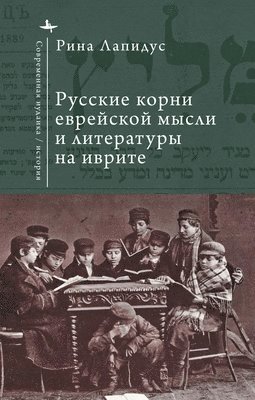
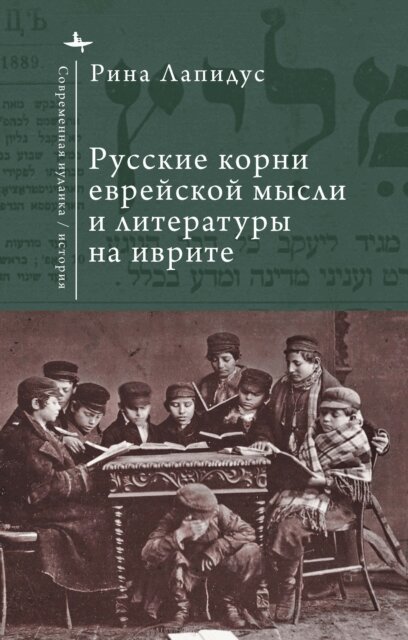
Russian Ideational Roots of Jewish Thought and Hebrew Literature (Russian Language)
Rina Lapidus
367 kr
Du kanske också är intresserad av
Russian Ideational Roots of Jewish Thought and Hebrew Literature (Russian Language)
Rina Lapidus
367 kr
- Signerad!
- Signerad!
- Nyhet
- -30%