
Benjamin Alarie - Böcker
Visar alla böcker från författaren Benjamin Alarie. Handla med fri frakt och snabb leverans.
4 produkter
4 produkter
- Nyhet
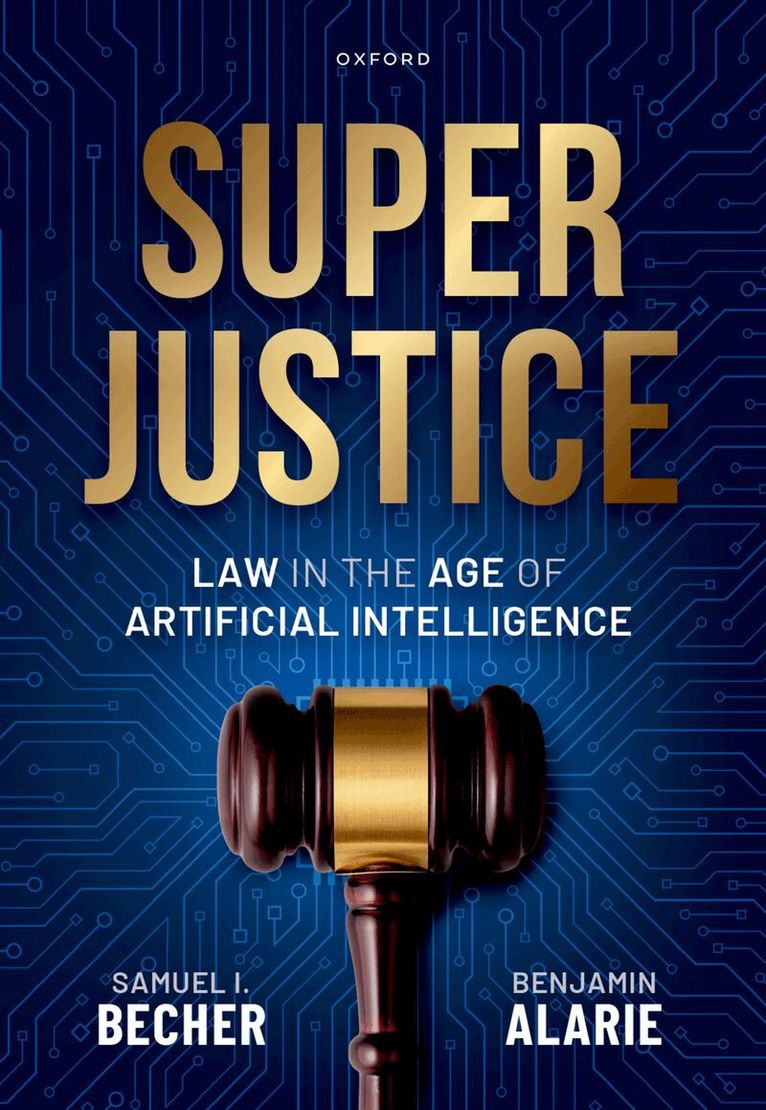
367 kr
Kommande
Justice delayed is justice denied — yet today's legal systems are failing at an unprecedented scale. Courts are backlogged, legal services remain unaffordable, and rigid laws struggle to keep pace with the complexities of modern life. What if we could use artificial intelligence to fundamentally reimagine how justice works?This groundbreaking book presents Superjustice: a revolutionary paradigm that harnesses AI technologies to transform law from a centralized, one-size-fits-all system into a dynamic, responsive framework designed for human flourishing. Moving beyond mere digitization of existing processes, Superjustice envisions a future where:· Justice becomes a universally accessible service, not a luxury for the few· Legal gridlock gives way to responsive, data-driven solutions· Communities gain real power through hybrid decentralized governance models· Personalized law adapts to individual circumstances while maintaining fairness· Human wisdom and AI capabilities combine to deliver outcomes impossible for either aloneWhile advancing a novel and innovative CRISPR-J (Cost-effective, Rapid, Inclusive, Smart, Predictive, Resilient Justice) legal framework, this book provides a practical roadmap for implementation. It addresses the fundamental transformations needed in legal education, professional roles, and institutional structures, while mapping and confronting real-world challenges across technical, governance, and societal domains.Neither utopian fantasy nor dystopian warning, this book offers a well-reasoned and pragmatic vision for stakeholder collaboration that can transform justice from a scarce resource into an abundant one.
Commitment and Cooperation on High Courts
A Cross-Country Examination of Institutional Constraints on Judges
Inbunden, Engelska, 2017
1 863 kr
Skickas inom 3-6 vardagar
Judicial decision-making may ideally be impartial, but in reality it is influenced by many different factors, including institutional context, ideological commitment, fellow justices on a panel, and personal preference. Empirical literature in this area increasingly analyzes this complex collection of factors in isolation, when a larger sample size of comparative institutional contexts can help assess the impact of the procedures, norms, and rules on key institutional decisions, such as how appeals are decided. Four basic institutional questions from a comparative perspective help address these studies regardless of institutional context or government framework. Who decides, or how is a justice appointed? How does an appeal reach the court; what processes occur? Who is before the court, or how do the characteristics of the litigants and third parties affect judicial decision-making? How does the court decide the appeal, or what institutional norms and strategic behaviors do the judges perform to obtain their preferred outcome? This book explains how the answers to these institutional questions largely determine the influence of political preferences of individual judges and the degree of cooperation among judges at a given point in time. The authors apply these four fundamental institutional questions to empirical work on the Supreme Courts of the US, UK, Canada, India, and the High Court of Australia. The ultimate purpose of this book is to promote a deeper understanding of how institutional differences affect judicial decision-making, using empirical studies of supreme courts in countries with similar basic structures but with sufficient differences to enable meaningful comparison.
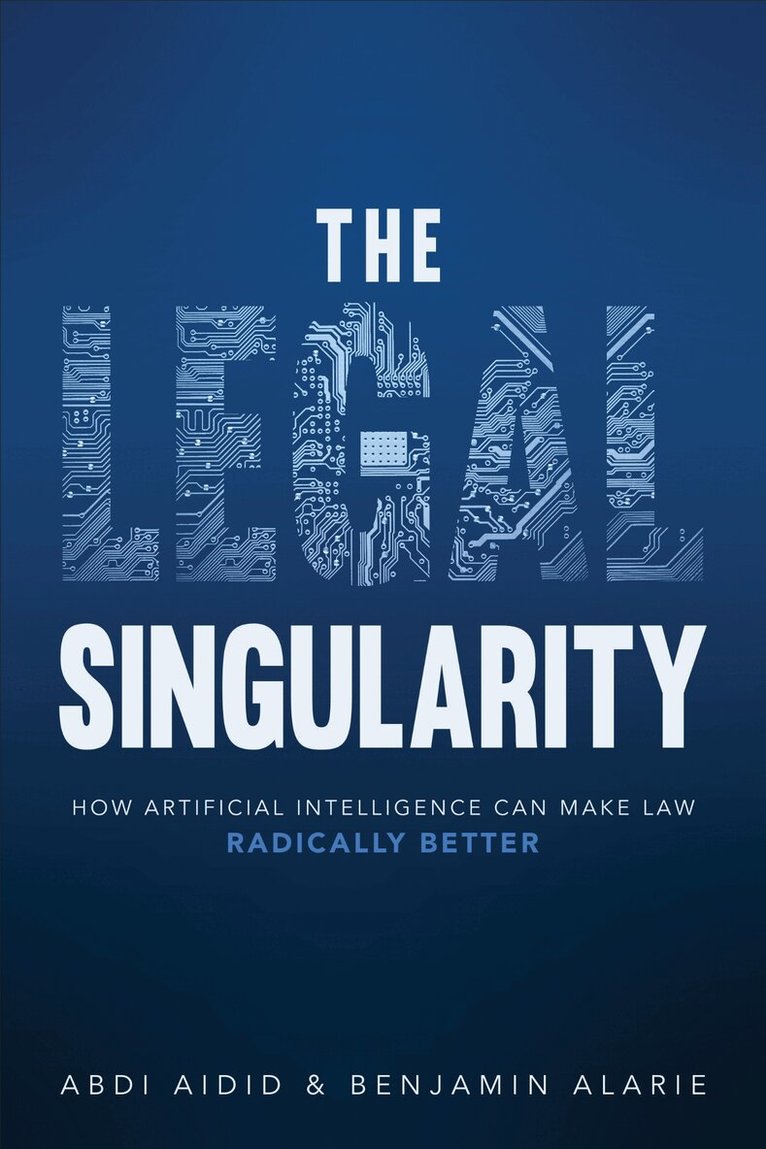
402 kr
Skickas inom 7-10 vardagar
Law today is incomplete, inaccessible, unclear, underdeveloped, and often perplexing to those whom it affects. In The Legal Singularity, Abdi Aidid and Benjamin Alarie argue that the proliferation of artificial intelligence–enabled technology – and specifically the advent of legal prediction – is on the verge of radically reconfiguring the law, our institutions, and our society for the better.Revealing the ways in which our legal institutions underperform and are expensive to administer, the book highlights the negative social consequences associated with our legal status quo. Given the infirmities of the current state of the law and our legal institutions, the silver lining is that there is ample room for improvement. With concerted action, technology can help us to ameliorate the problems of the law and improve our legal institutions. Inspired in part by the concept of the "technological singularity," The Legal Singularity presents a future state in which technology facilitates the functional "completeness" of law, where the law is at once extraordinarily more complex in its specification than it is today, and yet operationally, the law is vastly more knowable, fairer, and clearer for its subjects. Aidid and Alarie describe the changes that will culminate in the legal singularity and explore the implications for the law and its institutions.
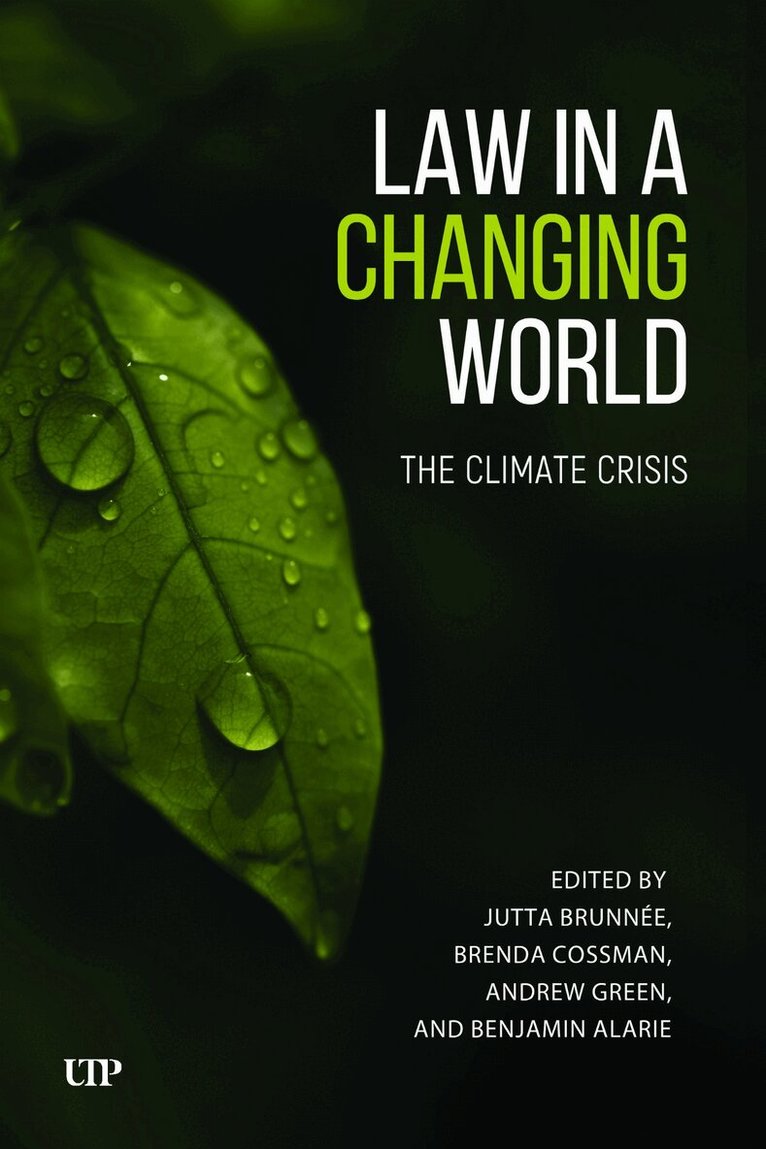
612 kr
Skickas inom 7-10 vardagar
Law in a Changing World explores how climate change is reshaping the law, drawing on contributions from legal scholars across diverse fields. The book examines how climate change impacts areas such as governance, justice, housing, and disability law. Rather than focusing on climate law alone, the chapters explore how climate change is challenging foundational legal concepts and demanding adaptations across various sectors.The authors consider the roles of international, Indigenous, and domestic legal systems in addressing climate-related issues. Topics include climate justice for vulnerable populations, the role of government in crisis management, and the intersection of law with emerging challenges like housing and disability rights. Law in a Changing World provides a comprehensive, cross-disciplinary examination of how legal frameworks can respond to climate-related emergencies and injustices, offering fresh perspectives on the role of law in a warming world. It is an essential read for those interested in the intersection of law, policy, and climate change.