
Finbarr Barry Flood - Böcker
Visar alla böcker från författaren Finbarr Barry Flood. Handla med fri frakt och snabb leverans.
4 produkter
4 produkter
372 kr
Skickas inom 7-10 vardagar
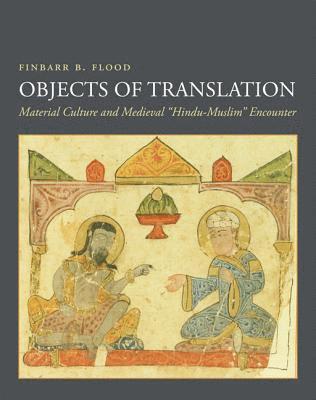
Objects of Translation offers a nuanced approach to the entanglements of medieval elites in the regions that today comprise Afghanistan, Pakistan, and north India. The book--which ranges in time from the early eighth to the early thirteenth centuries--challenges existing narratives that cast the period as one of enduring hostility between monolithic "Hindu" and "Muslim" cultures. These narratives of conflict have generally depended upon premodern texts for their understanding of the past. By contrast, this book considers the role of material culture and highlights how objects such as coins, dress, monuments, paintings, and sculptures mediated diverse modes of encounter during a critical but neglected period in South Asian history.The book explores modes of circulation--among them looting, gifting, and trade--through which artisans and artifacts traveled, remapping cultural boundaries usually imagined as stable and static. It analyzes the relationship between mobility and practices of cultural translation, and the role of both in the emergence of complex transcultural identities. Among the subjects discussed are the rendering of Arabic sacred texts in Sanskrit on Indian coins, the adoption of Turko-Persian dress by Buddhist rulers, the work of Indian stone masons in Afghanistan, and the incorporation of carvings from Hindu and Jain temples in early Indian mosques. Objects of Translation draws upon contemporary theories of cosmopolitanism and globalization to argue for radically new approaches to the cultural geography of premodern South Asia and the Islamic world.
453 kr
Skickas inom 7-10 vardagar
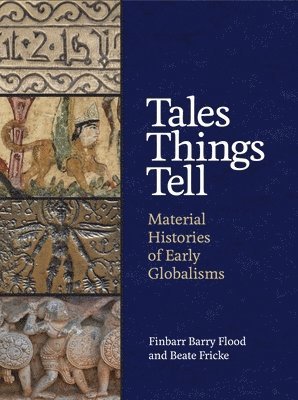
New perspectives on early globalisms from objects and imagesTales Things Tell offers new perspectives on histories of connectivity between Africa, Asia, and Europe in the period before the Mongol conquests of the thirteenth century. Reflected in objects and materials whose circulation and reception defined aesthetic, economic, and technological networks that existed outside established political and sectarian boundaries, many of these histories are not documented in the written sources on which historians usually rely. Tales Things Tell charts bold new directions in art history, making a compelling case for the archival value of mobile artifacts and images in reconstructing the past.In this beautifully illustrated book, Finbarr Barry Flood and Beate Fricke present six illuminating case studies from the sixth to the thirteenth centuries to show how portable objects mediated the mobility of concepts, iconographies, and techniques. The case studies range from metalwork to stone reliefs, manuscript paintings, and objects using natural materials such as coconut and rock crystal. Whether as booty, commodities, gifts, or souvenirs, many of the objects discussed in Tales Things Tell functioned as sources of aesthetic, iconographic, or technical knowledge in the lands in which they came to rest. Remapping the histories of exchange between medieval Islam and Christendom, from Europe to the Indian Ocean, Tales Things Tell ventures beyond standard narratives drawn from written archival records to demonstrate the value of objects and images as documents of early globalisms.
4 654 kr
Skickas inom 11-20 vardagar
The two-volume Companion to Islamic Art and Architecture bridges the gap between monograph and survey text by providing a new level of access and interpretation to Islamic art. The more than 50 newly commissioned essays revisit canonical topics, and include original approaches and scholarship on neglected aspects of the field. This two-volume Companion showcases more than 50 specially commissioned essays and an introduction that survey Islamic art and architecture in all its traditional grandeurEssays are organized according to a new chronological-geographical paradigm that remaps the unprecedented expansion of the field and reflects the nuances of major artistic and political developments during the 1400-year spanThe Companion represents recent developments in the field, and encourages future horizons by commissioning innovative essays that provide fresh perspectives on canonical subjects, such as early Islamic art, sacred spaces, palaces, urbanism, ornament, arts of the book, and the portable arts while introducing others that have been previously neglected, including unexplored geographies and periods, transregional connectivities, talismans and magic, consumption and networks of portability, museums and collecting, and contemporary art worlds; the essays entail strong comparative and historiographic dimensions The volumes are accompanied by a map, and each subsection is preceded by a brief outline of the main cultural and historical developments during the period in questionThe volumes include periods and regions typically excluded from survey books including modern and contemporary art-architecture; China, Indonesia, Sub-Saharan Africa, Sicily, the New World (Americas)
380 kr
Skickas inom 7-10 vardagar
There Where You Are Not brings together the writings of celebrated Palestinian artist and theorist Kamal Boullata (b. 1942). Produced over four decades of exile in Europe, North Africa, and the United States, many are translated into English or published for the first time. The experience of exile and imperatives of resistance permeate the essays, whose subjects range from autobiography to contemporary art, early ruminations on gender relations, language and the visual, to questions of identity and globalization. Taken collectively, they explore intersections between aesthetics, history, and politics that are central to the historio-graphy of modern Arab art.