• Fri frakt över 249 kr
  • •
  • Snabba leveranser
  • •
  • Billiga böcker
Kundservice

Du är på sajten för privatpersoner.

Företag, bibliotek eller offentlig verksamhet?

Du handlar på classic.bokus.com, där alla dina funktioner finns intakta.
Till classic.bokus.com
Bokus logotyp. Gå till startsidan.
  • Erbjudanden
  • Nyheter
  • Student
  • Topplistor
  • Barn & ungdom
  • Bokus Play
  • E-böcker
  • Pocketböcker
  • Spel & pussel

10% rabatt på allt med kod: NYSTART10 →

Sidfot

Mina sidor

    Hjälp

    • Kundservice
    • Vanliga frågor och svar
    • Frakt och leverans
    • Retur vid ångerrätt
    • Reklamera vara
    • Betalning
    • Köpvillkor
    • Allmänna villkor
    • Information om webbplatsens tillgänglighet

    Om Bokus

    • Om oss
    • Pressrum
    • För studenter
    • För företag
    • För bibliotek och offentlig verksamhet
    • För leverantörer
    • Hållbarhet

    Populärt

    • Aktuella erbjudanden
    • Presentkort
    • Studentlitteratur
    • Nya böcker
    • Topplistor
    • Signerade böcker
    • Engelska böcker

    Inspiration

    • Boktips
    • BookTok
    • Populära bokserier
    • Barnbokskaraktärer
    • Populära författare
    Logotyp för Bokus
    Följ oss på Facebook (extern länk)Följ oss på Instagram (extern länk)Följ oss på YouTube (extern länk)Följ oss på TikTok (extern länk)
    bokus @ CookiesAnpassa cookiesIntegritetspolicyKöpvillkor
    Till Citymail hemsida (extern länk)Till Budbee hemsida (extern länk)Till Postnord hemsida (extern länk)Till Schenker hemsida (extern länk)Till Early Bird hemsida (extern länk)Till Walleys hemsida (extern länk)
    1. Kultur
    2. Konstböcker
    3. Konsthistoria

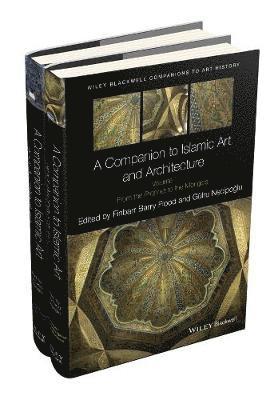
    Companion to Islamic Art and Architecture, 2 Volume Set

    AvFinbarr Barry Flood,Gulru Necipoglu

    Inbunden, Engelska, 2017

    Del i serien Wiley Companions to Art History

    4 638 kr

    Beställningsvara. Skickas inom 5-8 vardagar. Fri frakt över 249 kr.

    Beskrivning

    The two-volume Companion to Islamic Art and Architecture bridges the gap between monograph and survey text by providing a new level of access and interpretation to Islamic art. The more than 50 newly commissioned essays revisit canonical topics, and include original approaches and scholarship on neglected aspects of the field. This two-volume Companion showcases more than 50  specially commissioned essays and an introduction that survey Islamic art and architecture in all its traditional grandeurEssays are organized according to a new chronological-geographical paradigm that remaps the unprecedented expansion of the field and reflects the nuances of major artistic and political developments during the 1400-year spanThe Companion represents recent developments in the field, and encourages future horizons by commissioning innovative essays that provide fresh perspectives on canonical subjects, such as early Islamic art, sacred spaces, palaces, urbanism, ornament, arts of the book, and the portable arts while introducing others that have been previously neglected, including unexplored geographies and periods, transregional connectivities, talismans and magic, consumption and networks of portability, museums and collecting, and contemporary art worlds; the essays entail strong comparative and historiographic dimensions The volumes are accompanied by a map, and each subsection is preceded by a brief outline of the main cultural and historical developments during the period in questionThe volumes include periods and regions typically excluded from survey books including modern and contemporary art-architecture; China, Indonesia, Sub-Saharan Africa, Sicily, the New World (Americas)

    Produktinformation

    • Utgivningsdatum:2017-08-29
    • Mått:218 x 325 x 127 mm
    • Vikt:3 289 g
    • Format:Inbunden
    • Språk:Engelska
    • Serie:Wiley Companions to Art History
    • Antal sidor:1 456
    • Förlag:John Wiley and Sons Ltd
    • ISBN:9781119068662

    Utforska kategorier

    • Konsthistoria inom Kultur

    Mer om författaren

    Finbarr Barry Flood is William R. Kenan Jr. Professor of the Humanities at the Institute of Fine Arts and Department of Art History, New York University. He publishes on late antiquity, Islamic architectural history and historiography, transcultural dimensions of Islamic art, image theory, museology, and Orientalism. His books include The Great Mosque of Damascus: Studies on the Makings of an Umayyad Visual Culture (2000), and Objects of Translation: Material Culture and Medieval "Hindu-Muslim" Encounter, (2009), awarded the 2011 Ananda K. Coomaraswamy Prize of the Association for Asian Studies. Gülru Necipoğlu is Aga Khan Professor of Islamic Art at the Department of History of Art and Architecture, Harvard University. She publishes on architecture and architectural practice, aesthetics of ornament and figural representation, cross-cultural exchanges, and Islamic art historiography. Her books include Architecture, Ceremonial and Power: The Topkapi Palace (1991); The Topkapi Scroll, Geometry and Ornament in Islamic Architecture (1995) which won the Albert Hourani and Spiro Kostoff awards; and The Age of Sinan: Architectural Culture in the Ottoman Empire (2005), winner of the Fuat Köprülü award and the Albert Hourani honorable mention award. She edits the journal Muqarnas and its Supplements.

    Innehållsförteckning

    • Volume I. From the Prophet to the MongolsA. Introduction to the Two Volumes of A Companion to Islamic Art and Architecture1. Frameworks of Islamic Art and Architecture: Concepts, Approaches and HistoriographiesFinbarr B. Flood and Gülru NecipoğluB. The Early Caliphates, Umayyads, and end of Late Antiquity (650-750)2. The Material Culture of pre- and early Islamic ArabiaBarbara Finster3. The Formation of Religious and Caliphal Identity in the Umayyad Period: The Evidence of the CoinageLuke Treadwell4. The Early Qur’an and the Sacred Art of Late AntiquityAlain George5. Sacred Spaces in Early IslamMattia GuidettiC. Abbasids and the Universal Caliphate (750-900)6. The Origins of Islamic Urbanism: The Royal City in the Umayyad and Abbasid PeriodsAlastair Northedge7. Samarra and Abbasid OrnamentMarcus Milwright8. China among Equals: The China-Abbasid Ceramics TradeHsueh-man ShenD. Fragmentation and the Rival Caliphates of Cordoba, Cairo, and Baghdad (900- 1050)9. The Three Caliphates, a Comparative ApproachGlaire D. Anderson and Jennifer Pruitt10. Early Islam on the East African CoastMark Horton11. Textiles and IdentityJochen SokolyE. “City States” and the Later Baghdad Caliphate (1050-1250)12. The Resurgence of the Baghdad CaliphateYasser Tabbaa13. Turko-Persian Empires between Anatolia and IndiaHoward Crane and Lorenz Korn14. Bridging Seas of Sand and Water: The Berber Dynasties of the Islamic Far WestAbigail Balbale15. Sicily and the Staging of MulticulturalismLev Kapitaikin16. Transculturation in the Eastern MediterraneanScott Redford and Eva Hoffman17. Patronage and the Idea of an Urban BourgeoisieAnna Contadini18. The Social and Economic Life of MetalworkJames Allan and Ruba Kana’an19. Ceramics and CirculationOliver Watson20. Figural Ornament in Medieval Islamic ArtOya Pancaroğlu21. Medieval Islamic Amulets, Talismans and MagicVenetia Porter, Liana Saif, and Emilie Savage-Smith22. The Discovery and Rediscovery of the Medieval Islamic ObjectAvinoam ShalemVolume II: From the Mongols to ModernismA. “Global” Empires and the World-System (1250-1450)23. Architecture and Court Cultures of the Fourteenth CenturyBernard O’Kane24. Islamic Architecture and Ornament in ChinaNancy S. Steinhardt25. Chinese and Turko-Mongol Elements in Ilkhanid and Timurid ArtsPart 1Yuka KadoiPart 2.Tomoko Masuya26. Persianate Arts of the Book in Iran and Central AsiaDavid J. Roxburgh27. Diversification of Qur’an Manuscripts from Spain to ChinaPriscilla Soucek28. Locating the Alhambra: A Fourteenth-Century “Islamic” Palace and its “Western” ContextsCynthia Robinson29. Architectural Patronage and the Rise of the OttomansZeynep Yurekli30. Islam beyond Empires: Mosques and Islamic Landscapes in India and the Indian OceanElizabeth Lambourn31. The Deccani Sultanates and their Interregional ConnectionsPhillip B. Wagoner and Laura WeinsteinB. Early Modern Empires and their Neighbors (1450-1700)32. In Search of the Timurid Roots of Mughal ArchitectureLisa Golombek and Ebba Koch33. Istanbul, Isfahan, and Delhi: Imperial Designs and Urban Experiences in the Early Modern EraSussan Babaie and Çiğdem Kafescioğlu34. Painting, from Royal to Urban PatronageChristiane Gruber and Emine Fetvacı35. Objects of Consumption: Mediterranean Interconnections of the Ottomans and MamluksTülay Artan36. Safavid Arts and Diplomacy in the Age of the Renaissance and ReformationPart 1Massumeh FarhadPart 2Marianna Shreve Simpson37. Carpets, Textiles, and Trade in the Early Modern Islamic WorldWalter B. Denny38. Trade, Politics, and Sufi Synthesis in the Formation of Southeast Asian Islamic ArchitectureImran bin Tajudeen39. Mudejar Americano: Iberian Aesthetic Transmission in the New WorldThomas F.B. Cummins and María Judith FelicianoC. Modernity, Empire, Colony and Nation (1700-1950)40. Beyond the Taj Mahal: Late Mughal Visual CultureChanchal Dadlani and Yuthika Sharma41. Kings and Traditions in Différance: Antiquity Revisited in Post-Safavid IranTalinn Grigor42. Public Sphere in the Eastern MediterraneanShirine Hamadeh43. “Jeux de miroir”: Architecture in Istanbul and Cairo from Empire to ModernismNebahat Avcıoğlu and Mercedes Volait44. Islamic Art in the Islamic Lands: Museums and Architectural RevivalismWendy Shaw45. Islamic Art in the West: Categories of CollectingStephen Vernoit46. Islamic Arts and the Crisis of Representation in Modern EuropeRémi LabrusseD. Islam, Art, and the Contemporary (1950-Present)47. Resonance and Circulation: The Category “Islamic Art and Architecture”Heghnar Watenpaugh48. Dubai, Anyplace: Histories of Architecture in the Contemporary Middle EastKishwar Rizvi49. Translations of Architecture in West Asia during the Twentieth CenturyEsra Akcan50. Calligraphic AbstractionIftikhar Dadi51. Articulating the ContemporaryAnneka Lenssen and Sarah Rogers