Adrastos Omissi - Böcker
Visar alla böcker från författaren Adrastos Omissi. Handla med fri frakt och snabb leverans.
4 produkter
4 produkter
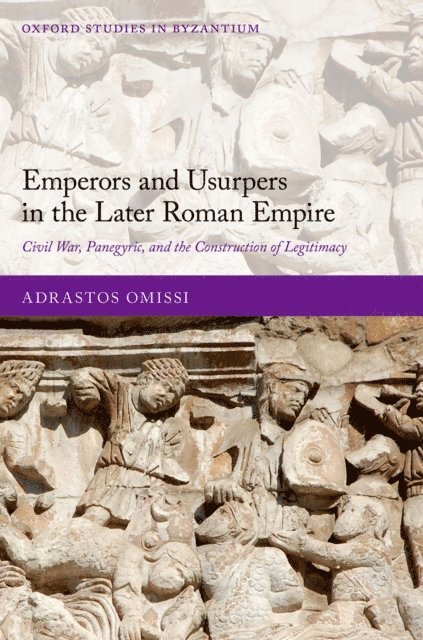
Emperors and Usurpers in the Later Roman Empire
Civil War, Panegyric, and the Construction of Legitimacy
Inbunden, Engelska, 2018
2 034 kr
Skickas inom 5-8 vardagar
One of the great maxims of history is that it is written by the victors, and nowhere does this find greater support than in the later Roman Empire. Between 284 and 395 AD, no fewer than 37 men claimed imperial power, though today we recognize barely half of these men as 'legitimate' rulers and more than two thirds died at their subjects' hands. Once established in power, a new ruler needed to publicly legitimate himself and to discredit his predecessor: overt criticism of the new regime became high treason, with historians supressing their accounts for fear of reprisals and the very names of defeated emperors chiselled from public inscriptions and deleted from official records. In a period of such chaos, how can we ever hope to record in any fair or objective way the history of the Roman state? Emperors and Usurpers in the Later Roman Empire is the first history of civil war in the later Roman Empire to be written in English and aims to address this question by focusing on the various ways in which successive imperial dynasties attempted to legitimate themselves and to counter the threat of almost perpetual internal challenge to their rule. Panegyric in particular emerges as a crucial tool for understanding the rapidly changing political world of the third and fourth centuries, providing direct evidence of how, in the wake of civil wars, emperors attempted to publish their legitimacy and to delegitimize their enemies. The ceremony and oratory surrounding imperial courts too was of great significance: used aggressively to dramatize and constantly recall the events of recent civil wars, the narratives produced by the court in this context also went on to have enormous influence on the messages and narratives found within contemporary historical texts. In its exploration of the ways in which successive imperial courts sought to communicate with their subjects, this volume offers a thoroughly original reworking of late Roman domestic politics, and demonstrates not only how history could be erased, rewritten, and repurposed, but also how civil war, and indeed usurpation, became endemic to the later Empire.
Emperors and Usurpers in the Later Roman Empire
Civil War, Panegyric, and the Construction of Legitimacy
Häftad, Engelska, 2020
464 kr
Skickas inom 5-8 vardagar
One of the great maxims of history is that it is written by the victors, and nowhere does this find greater support than in the later Roman Empire. Between 284 and 395 AD, no fewer than 37 men claimed imperial power, though today we recognize barely half of these men as 'legitimate' rulers and more than two thirds died at their subjects' hands. Once established in power, a new ruler needed to publicly legitimate himself and to discredit his predecessor: overt criticism of the new regime became high treason, with historians supressing their accounts for fear of reprisals and the very names of defeated emperors chiselled from public inscriptions and deleted from official records. In a period of such chaos, how can we ever hope to record in any fair or objective way the history of the Roman state?Emperors and Usurpers in the Later Roman Empire is the first history of civil war in the later Roman Empire to be written in English and aims to address this question by focusing on the various ways in which successive imperial dynasties attempted to legitimate themselves and to counter the threat of almost perpetual internal challenge to their rule. Panegyric in particular emerges as a crucial tool for understanding the rapidly changing political world of the third and fourth centuries, providing direct evidence of how, in the wake of civil wars, emperors attempted to publish their legitimacy and to delegitimize their enemies. The ceremony and oratory surrounding imperial courts too was of great significance: used aggressively to dramatize and constantly recall the events of recent civil wars, the narratives produced by the court in this context also went on to have enormous influence on the messages and narratives found within contemporary historical texts. In its exploration of the ways in which successive imperial courts sought to communicate with their subjects, this volume offers a thoroughly original reworking of late Roman domestic politics, and demonstrates not only how history could be erased, rewritten, and repurposed, but also how civil war, and indeed usurpation, became endemic to the later Empire.
Del 3 - Translated Texts for Historians, Contexts
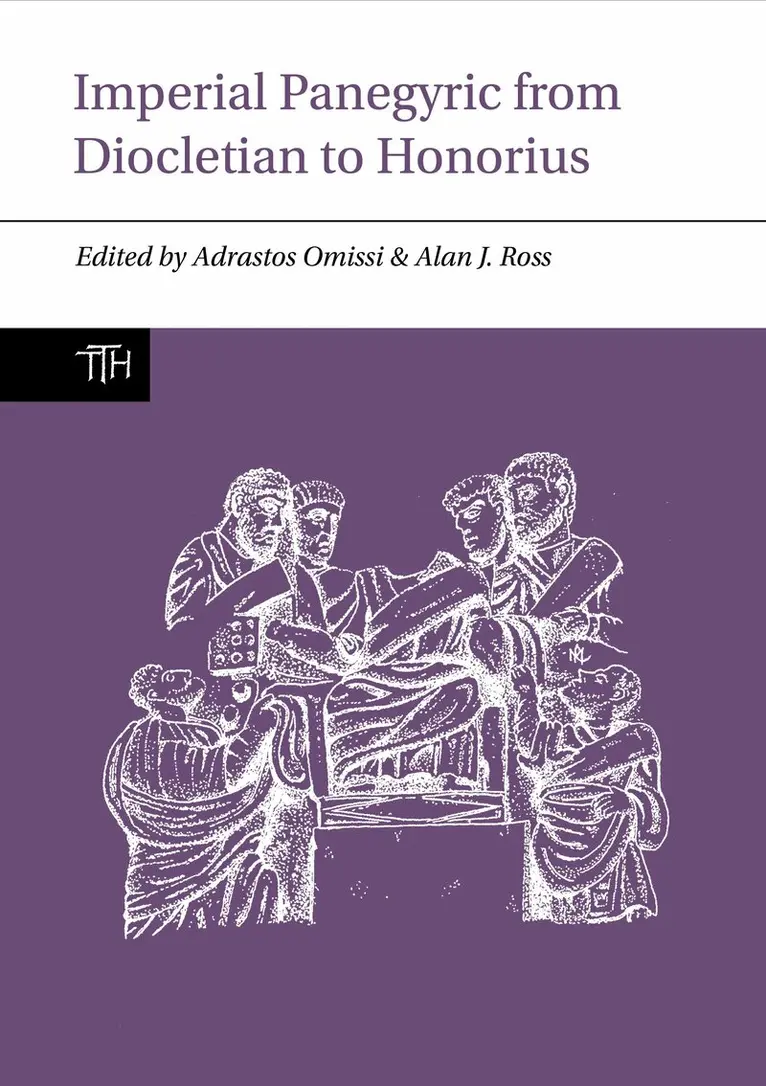
Imperial Panegyric from Diocletian to Honorius
Inbunden, Engelska, 2020
2 134 kr
Skickas inom 7-10 vardagar
Imperial Panegyric from Diocletianto Honorius examines one of the most importantliteratures of the late Roman period – speeches of praise addressed to the reigningemperor – and the panegyrical culture of the late Roman world more generally. Unlikemuch previous work on this topic, Imperial Panegyric takes a consciously comparativeapproach, especially between eastern and western, Greek and Latin texts.Each contributordraws upon evidence taken from multiple authors or from different kinds of panegyricin order to explore both the communal and the particular in this most idiosyncraticof media. The volume investigates to what extent therewas a unified concept of imperial panegyric, and how local circumstances shapedindividual speeches. It also considers the ways in which traditional forms of praise-givingrespond to fourth-century phenomena such as the expansion of Christianity, collegialrulership, and the decline of Rome as the political centre of the empire. Itscontributors include a roster of some of the most important names in the fieldof panegyric studies, both established researchers and the rising stars of thenew generation.
Del 3 - Translated Texts for Historians, Contexts
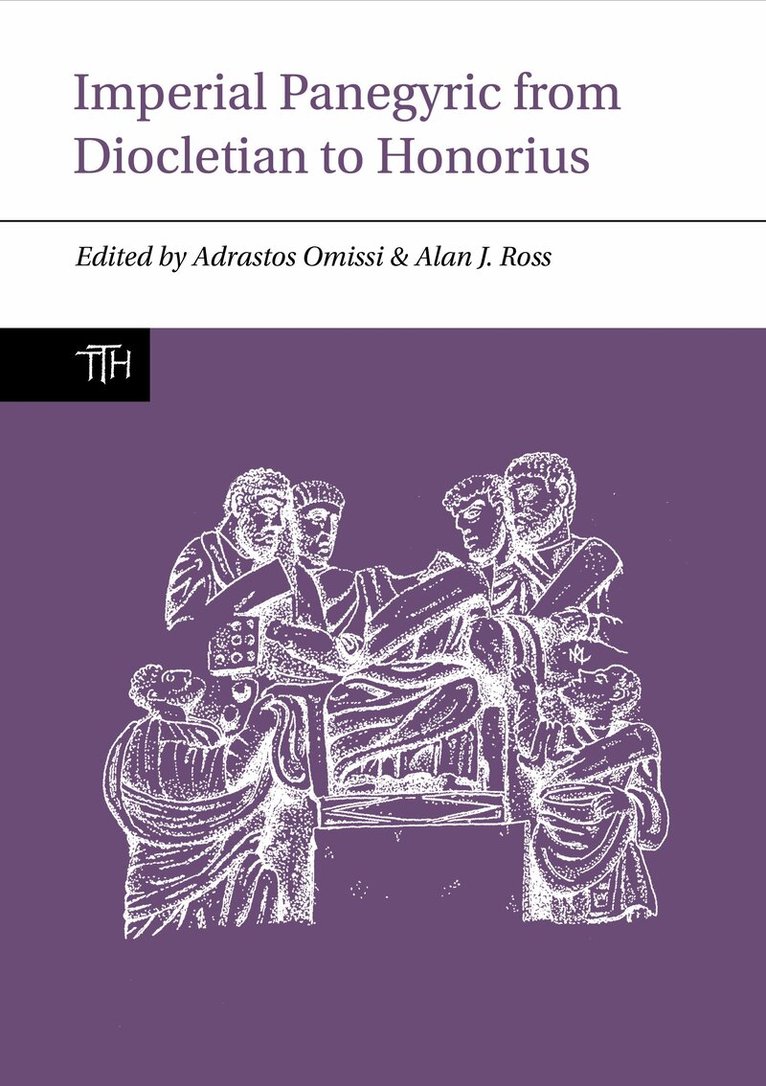
Imperial Panegyric from Diocletian to Honorius
Häftad, Engelska, 2022
625 kr
Skickas inom 7-10 vardagar
Imperial Panegyric from Diocletianto Honorius examines one of the most importantliteratures of the late Roman period – speeches of praise addressed to the reigningemperor – and the panegyrical culture of the late Roman world more generally. Unlikemuch previous work on this topic, Imperial Panegyric takes a consciously comparativeapproach, especially between eastern and western, Greek and Latin texts.Each contributordraws upon evidence taken from multiple authors or from different kinds of panegyricin order to explore both the communal and the particular in this most idiosyncraticof media. The volume investigates to what extent therewas a unified concept of imperial panegyric, and how local circumstances shapedindividual speeches. It also considers the ways in which traditional forms of praise-givingrespond to fourth-century phenomena such as the expansion of Christianity, collegialrulership, and the decline of Rome as the political centre of the empire. Itscontributors include a roster of some of the most important names in the fieldof panegyric studies, both established researchers and the rising stars of thenew generation.