Alan J. Ross – författare
Visar alla böcker från författaren Alan J. Ross. Handla med fri frakt och snabb leverans.
7 produkter
7 produkter
E-bok
PDF, Engelska, 20161 238 kr
Läs direkt efter köp
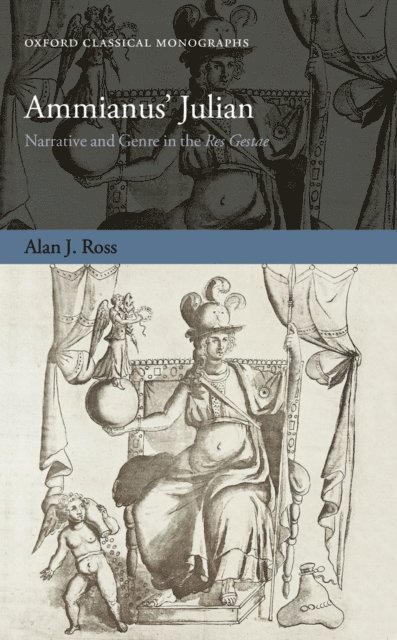
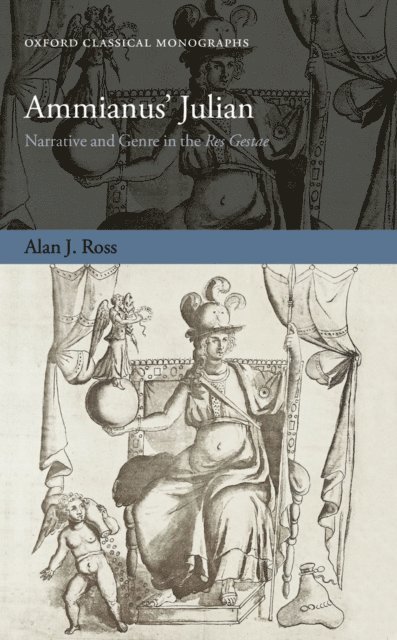
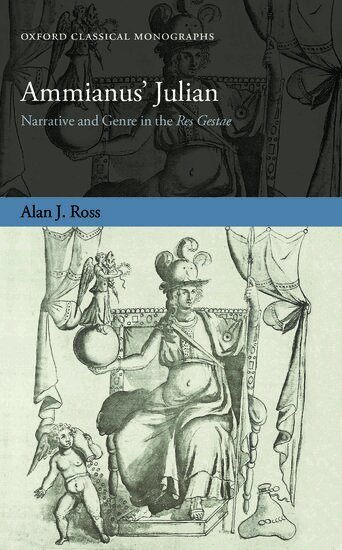
Ammianus Marcellinus'' Res Gestae holds a prominent position in modern studies of the emperor Julian as the fullest extant narrative of the reign of the last ''pagan'' emperor. Ammianus'' Julian: Narrative and Genre in the Res Gestae offers a major reinterpretation of the work, which is one of the main narrative sources for the political history of the later Roman Empire, and argues for a re-examination of Ammianus'' agenda and methods in narrating thereign of Julian.Building on recent developments in the application of literary approaches and critical theories to historical texts, Ammianus'' presentation of Julian is evaluated by considering the Res Gestae within three interrelated contexts: as a work of Latin historiography, which consciously sets itself within a classical and classicizing generic tradition; in a more immediate literary and political context, as the final contribution by a member of an ''eyewitness'' generation to a quarter centuryof intense debate over Julian''s legacy by several authors who had lived through his reign and had been in varying degrees of proximity to Julian himself; and as a narrative text, in which narratorial authority is closely associated with the persona of the narrator, both as an external narrating agent and anoccasional participant in the events he relates. This is complemented by a literary survey and a re-analysis of Ammianus'' depiction of several key moments in Julian''s reign, such as his appointment as Caesar, the battle of Strasbourg in 357AD, his acclamation as Augustus, and the disastrous invasion of Persia in 363AD. It suggests that the Res Gestae presents a Latin-speaking, western audience with an idiosyncratic and ''Romanized'' depiction of the philhellene emperor and that,consciously exploiting his position as a Greek writing in Latin and as a contemporary of Julian, Ammianus wished his work to be considered a culminating and definitive account of the man and his life.
E-bok
Engelska, 20161 238 kr
Läs direkt efter köp
Ammianus Marcellinus'' Res Gestae holds a prominent position in modern studies of the emperor Julian as the fullest extant narrative of the reign of the last ''pagan'' emperor. Ammianus'' Julian: Narrative and Genre in the Res Gestae offers a major reinterpretation of the work, which is one of the main narrative sources for the political history of the later Roman Empire, and argues for a re-examination of Ammianus'' agenda and methods in narrating thereign of Julian.Building on recent developments in the application of literary approaches and critical theories to historical texts, Ammianus'' presentation of Julian is evaluated by considering the Res Gestae within three interrelated contexts: as a work of Latin historiography, which consciously sets itself within a classical and classicizing generic tradition; in a more immediate literary and political context, as the final contribution by a member of an ''eyewitness'' generation to a quarter centuryof intense debate over Julian''s legacy by several authors who had lived through his reign and had been in varying degrees of proximity to Julian himself; and as a narrative text, in which narratorial authority is closely associated with the persona of the narrator, both as an external narrating agent and anoccasional participant in the events he relates. This is complemented by a literary survey and a re-analysis of Ammianus'' depiction of several key moments in Julian''s reign, such as his appointment as Caesar, the battle of Strasbourg in 357AD, his acclamation as Augustus, and the disastrous invasion of Persia in 363AD. It suggests that the Res Gestae presents a Latin-speaking, western audience with an idiosyncratic and ''Romanized'' depiction of the philhellene emperor and that,consciously exploiting his position as a Greek writing in Latin and as a contemporary of Julian, Ammianus wished his work to be considered a culminating and definitive account of the man and his life.
E-bok
Engelska, 20251 416 kr
Läs direkt efter köp
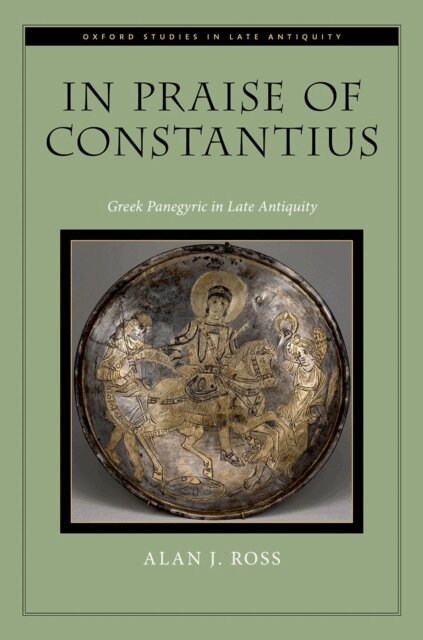
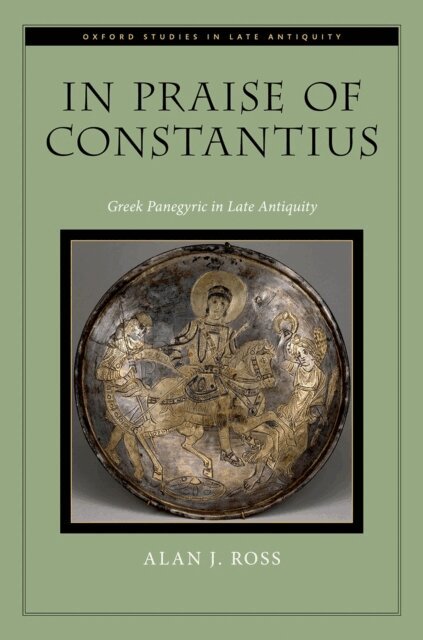
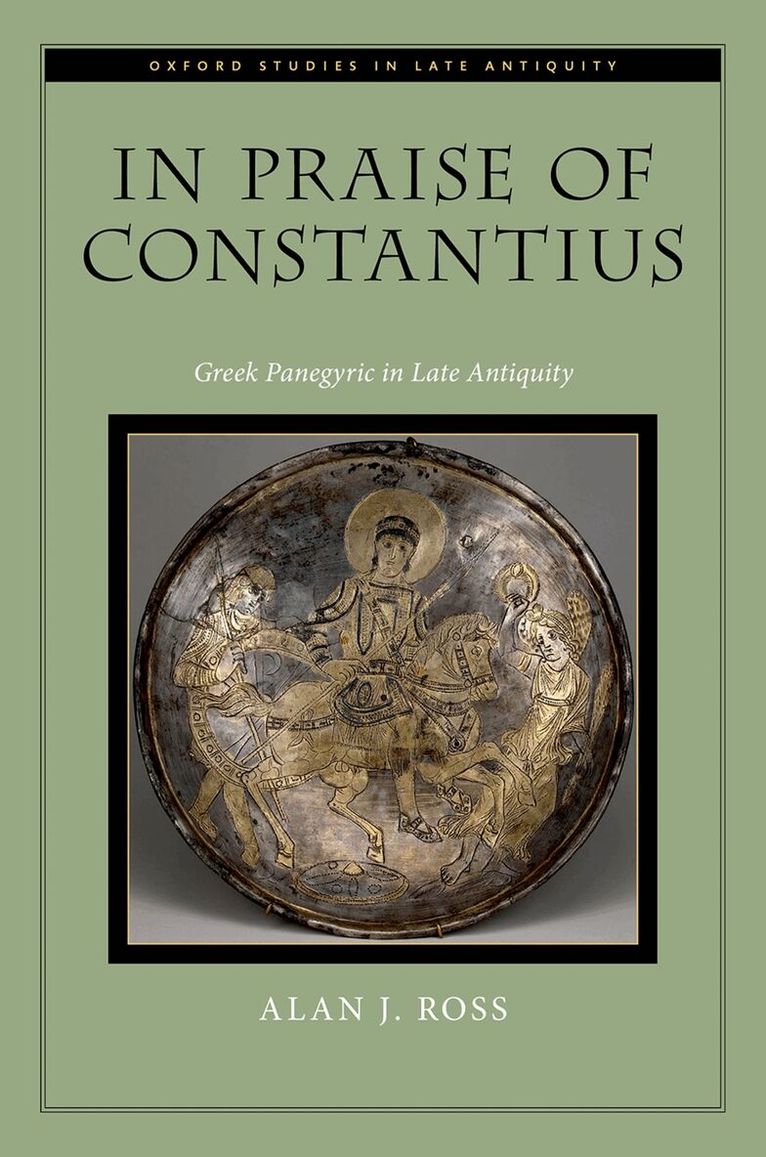
In Praise of Constantius offers historical and literary analysis of eight Greek panegyrics composed by Libanius, Themistius, and Julian in the 340s and 350s CE, and addressed to Constantius II and his wife, the empress Eusebia. Its central concerns are the role that the composition, performance, and dissemination of imperial panegyric played in establishing the careers of the three most prominent Greek pagans of the fourth century; and their development of Greek epideictic literature in an era beyond the Second Sophistic. The book deftly exposes the rich intertextual dynamics between these eight speeches, other contemporary works, and canonical works of Greek political literature. It revises standard interpretations of panegyric's communicative function, and treats the orator less as a vector for others' messaging and instead as an active agent in political discourse in pursuit of his own ends. The volume substantially re-writes the early careers of each of its subjects, emphasizing their precarity and the utilization of performed paideia in managing moments of personal and political upheaval.
E-bok
PDF, Engelska, 20251 416 kr
Läs direkt efter köp
In Praise of Constantius offers historical and literary analysis of eight Greek panegyrics composed by Libanius, Themistius, and Julian in the 340s and 350s CE, and addressed to Constantius II and his wife, the empress Eusebia. Its central concerns are the role that the composition, performance, and dissemination of imperial panegyric played in establishing the careers of the three most prominent Greek pagans of the fourth century; and their development of Greek epideictic literature in an era beyond the Second Sophistic. The book deftly exposes the rich intertextual dynamics between these eight speeches, other contemporary works, and canonical works of Greek political literature. It revises standard interpretations of panegyric's communicative function, and treats the orator less as a vector for others' messaging and instead as an active agent in political discourse in pursuit of his own ends. The volume substantially re-writes the early careers of each of its subjects, emphasizing their precarity and the utilization of performed paideia in managing moments of personal and political upheaval.
Inbunden, Engelska, 2016
1 917 kr
Skickas inom 5-8 vardagar
Ammianus Marcellinus' Res Gestae holds a prominent position in modern studies of the emperor Julian as the fullest extant narrative of the reign of the last 'pagan' emperor. Ammianus' Julian: Narrative and Genre in the Res Gestae offers a major reinterpretation of the work, which is one of the main narrative sources for the political history of the later Roman Empire, and argues for a re-examination of Ammianus' agenda and methods in narrating the reign of Julian. Building on recent developments in the application of literary approaches and critical theories to historical texts, Ammianus' presentation of Julian is evaluated by considering the Res Gestae within three interrelated contexts: as a work of Latin historiography, which consciously sets itself within a classical and classicizing generic tradition; in a more immediate literary and political context, as the final contribution by a member of an 'eyewitness' generation to a quarter century of intense debate over Julian's legacy by several authors who had lived through his reign and had been in varying degrees of proximity to Julian himself; and as a narrative text, in which narratorial authority is closely associated with the persona of the narrator, both as an external narrating agent and an occasional participant in the events he relates. This is complemented by a literary survey and a re-analysis of Ammianus' depiction of several key moments in Julian's reign, such as his appointment as Caesar, the battle of Strasbourg in 357AD, his acclamation as Augustus, and the disastrous invasion of Persia in 363AD. It suggests that the Res Gestae presents a Latin-speaking, western audience with an idiosyncratic and 'Romanized' depiction of the philhellene emperor and that, consciously exploiting his position as a Greek writing in Latin and as a contemporary of Julian, Ammianus wished his work to be considered a culminating and definitive account of the man and his life.
Del 3 - Translated Texts for Historians, Contexts
Imperial Panegyric from Diocletian to Honorius
Inbunden, Engelska, 2020
2 211 kr
Skickas inom 5-8 vardagar
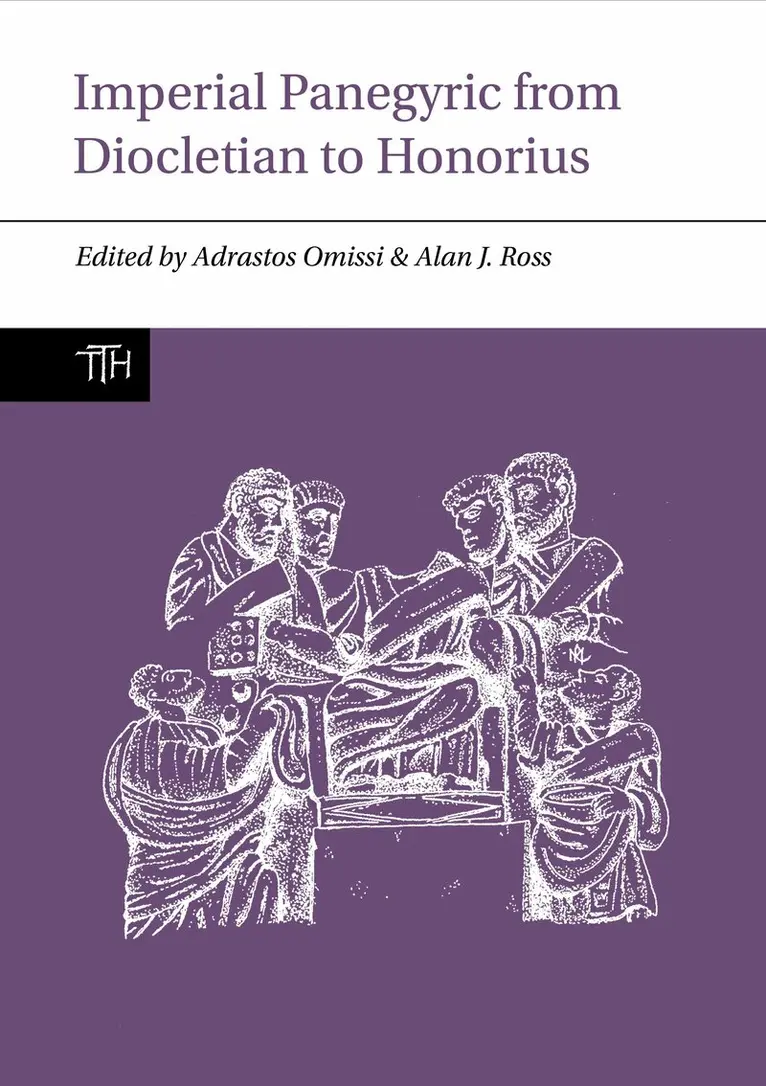
Imperial Panegyric from Diocletian to Honorius examines one of the most important literatures of the late Roman period – speeches of praise addressed to the reigning emperor – and the panegyrical culture of the late Roman world more generally. Unlike much previous work on this topic, Imperial Panegyric takes a consciously comparative approach, especially between eastern and western, Greek and Latin texts.Each contributor draws upon evidence taken from multiple authors or from different kinds of panegyric in order to explore both the communal and the particular in this most idiosyncratic of media. The volume investigates to what extent there was a unified concept of imperial panegyric, and how local circumstances shaped individual speeches. It also considers the ways in which traditional forms of praise-giving respond to fourth-century phenomena such as the expansion of Christianity, collegial rulership, and the decline of Rome as the political centre of the empire. Its contributors include a roster of some of the most important names in the field of panegyric studies, both established researchers and the rising stars of the new generation.
Del 3 - Translated Texts for Historians, Contexts
Imperial Panegyric from Diocletian to Honorius
Häftad, Engelska, 2022
648 kr
Skickas inom 5-8 vardagar
Imperial Panegyric from Diocletian to Honorius examines one of the most important literatures of the late Roman period – speeches of praise addressed to the reigning emperor – and the panegyrical culture of the late Roman world more generally. Unlike much previous work on this topic, Imperial Panegyric takes a consciously comparative approach, especially between eastern and western, Greek and Latin texts.Each contributor draws upon evidence taken from multiple authors or from different kinds of panegyric in order to explore both the communal and the particular in this most idiosyncratic of media. The volume investigates to what extent there was a unified concept of imperial panegyric, and how local circumstances shaped individual speeches. It also considers the ways in which traditional forms of praise-giving respond to fourth-century phenomena such as the expansion of Christianity, collegial rulership, and the decline of Rome as the political centre of the empire. Its contributors include a roster of some of the most important names in the field of panegyric studies, both established researchers and the rising stars of the new generation.