Ae-Gyung Shim – författare
Visar alla böcker från författaren Ae-Gyung Shim. Handla med fri frakt och snabb leverans.
6 produkter
Korea's Occupied Cinemas, 1893-1948
The Untold History of the Film Industry
Av Brian Yecies, Ae-Gyung Shim
Häftad, 2013
785 kr
Lägg i varukorg
Korea’s Occupied Cinemas, 1893-1948 compares and contrasts the development of cinema in Korea during the Japanese occupation (1910-1945) and US Army Military (1945-1948) periods within the larger context of cinemas in occupied territories. It differs from previous studies by drawing links between …
Korea's Occupied Cinemas, 1893-1948
The Untold History of the Film Industry
Av Brian Yecies, Ae-Gyung Shim
Inbunden, 2011
2818 kr
Lägg i varukorg
Korea’s Occupied Cinemas, 1893-1948 compares and contrasts the development of cinema in Korea during the Japanese occupation (1910-1945) and US Army Military (1945-1948) periods within the larger context of cinemas in occupied territories. It differs from previous studies by drawing links between …
Korea's Occupied Cinemas, 1893-1948
The Untold History of the Film Industry
Av Ae-Gyung Shim, Brian Yecies
E-bok, 2012
901 kr
Lägg i varukorg
Korea’s Occupied Cinemas, 1893-1948 compares and contrasts the development of cinema in Korea during the Japanese occupation (1910-1945) and US Army Military (1945-1948) periods within the larger context of cinemas in occupied territories. It differs from previous studies by drawing links between …
Korea's Occupied Cinemas, 1893-1948
The Untold History of the Film Industry
Av Ae-Gyung Shim, Brian Yecies
E-bok, 2012
881 kr
Lägg i varukorg
Korea’s Occupied Cinemas, 1893-1948 compares and contrasts the development of cinema in Korea during the Japanese occupation (1910-1945) and US Army Military (1945-1948) periods within the larger context of cinemas in occupied territories. It differs from previous studies by drawing links between …
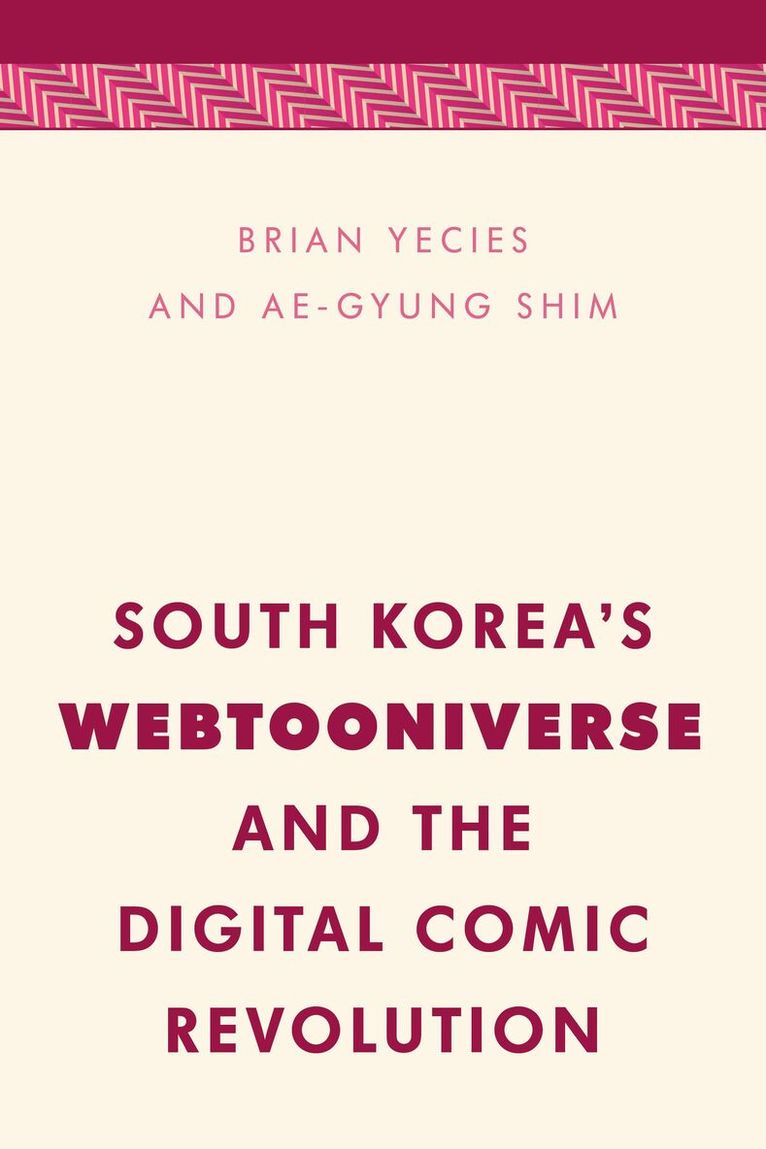
South Korea's Webtooniverse and the Digital Comic Revolution
Av Brian Yecies, Ae-Gyung Shim
Häftad, 2022
458 kr
Lägg i varukorg
This book investigates the meteoric rise of mobile webtoons – also known as webcomics – and the dynamic relationships between serialised content, artists, agencies, platforms and applications, as well as the global readership associated with them. It offers an engaging discussion of webtoons …
South Korea's Webtooniverse and the Digital Comic Revolution
Av Brian Yecies, Ae-Gyung Shim
Inbunden, 2021
1345 kr
Lägg i varukorg
This book investigates the meteoric rise of mobile webtoons – also known as webcomics – and the dynamic relationships between serialised content, artists, agencies, platforms and applications, as well as the global readership associated with them. It offers an engaging discussion of webtoons …