Agar Brugiavini - Böcker
Visar alla böcker från författaren Agar Brugiavini. Handla med fri frakt och snabb leverans.
8 produkter
8 produkter
1 304 kr
Skickas inom 5-8 vardagar
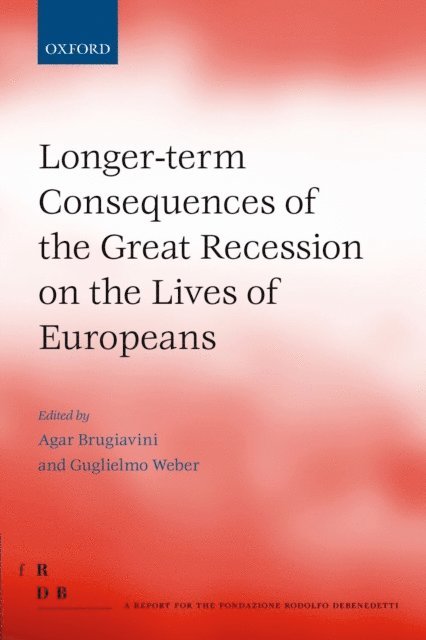
The great recession is changing the way many people live and the way they perceive their prospects for the near and more distant future. Its longer term consequences will not be known for some time, but something can be learned from the effect on individuals and households who experienced financial hardship. This volume is the first to use innovative survey data on the lives of Europeans to investigate the long term impact of financial hardship on earnings, standards of living, and health. The data provide a detailed account of the key events that have taken place over the course of the recession. It compares the well-being of individuals who were lucky to escape negative shocks to their income or their circumstances to the less fortunate who may have lost their job, faced divorce, or serious illness. The wide array of welfare state and social support provisions across different European countries adds an important policy angle to the analysis: has the welfare state, currently under heavy pressure, been able to provide an adequate safety net in the face of extended periods of financial difficulties, or has the family instead proven the ultimate source of support in difficult times?
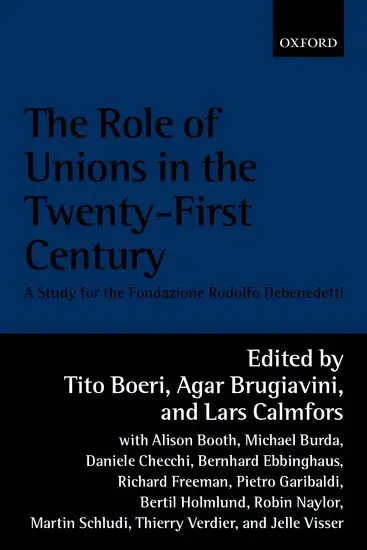
The Role of Unions in the Twenty-first Century
A Report for the Fondazione Rodolfo Debenedetti
Inbunden, Engelska, 2001
1 499 kr
Skickas inom 3-6 vardagar
This book, which includes contributions from first-rate international scholars in the field, discusses the role that unions are likely to play in the changed economic environment of the new century. Questions discussed include: What will unions look like in the years to come? Which kind of interest groups will they represent? How important will be the broader political role of unions? To what extent do unions care about future generations?
The Role of Unions in the Twenty-first Century
A Report for the Fondazione Rodolfo Debenedetti
Häftad, Engelska, 2001
1 071 kr
Skickas inom 7-10 vardagar
In this book, first-rate international scholars in the field explore the role that unions are likely to play in the changed economic environment of the new century. Questions discussed include: What will unions look like in the years to come? Which kind of interest groups will they represent? How important will be the broader political role of unions? To what extent do unions care about future generations? Part One documents a tendency towards greater decentralization in collective bargaining and declining union membership rates in most European countries. The process of decentralization may only be partly reversed by social pacts of the type that occurred in several EU countries in the run-up to EMU. Yet this type of co-ordination is likely to be increasingly unstable in a context where membership is falling, hence will inevitably require government intervention. Not all governments may wish to intervene in wage setting, however, as there are strong reasons to believe that such intervention could impose wage rigidities in some parts of the economy and lead to non-enforcement in other parts. Moreover, under EMU what matters is ultimately co-ordination of bargaining at the pan-European level rather than simply at the national level. Such higher-level, transnational co-ordination is not likely to occur for a long time to come because of the huge costs that it involves. Some transnational co-ordination may occur within multinational firms, however, as costs are likely to be much lower at this level. Part Two characterizes the intergenerational conflicts present within unions. Unions may be able to better respond to the needs of the unemployed without losing the support of current employees when they become involved in the running of unemployment benefit systems, as has been the case in those countries applying the so-called Ghent system. They may also succeed in making the system more efficient by, for example, contributing to the reduction of moral hazard problems associated with the provision of unemployment insurance. Unions are, however, unlikely to solve the latent conflict between their younger and older members in a context where the population is ageing, since they tend to preserve the status quo when it comes to cutting pension benefits in order to deal with demographic transition. The cost of these dynamic inefficiencies may be accepted by younger generations as long as an intergenerational contract can be enforced whereby unions guarantee that the status quo will be preserved, and are credible in their commitment. Unions could play a key role in this implicit intergenerational pact because they are long-lived agents---certainly longer-lived than many governments---but, under present conditions, this pact may be no longer credible.
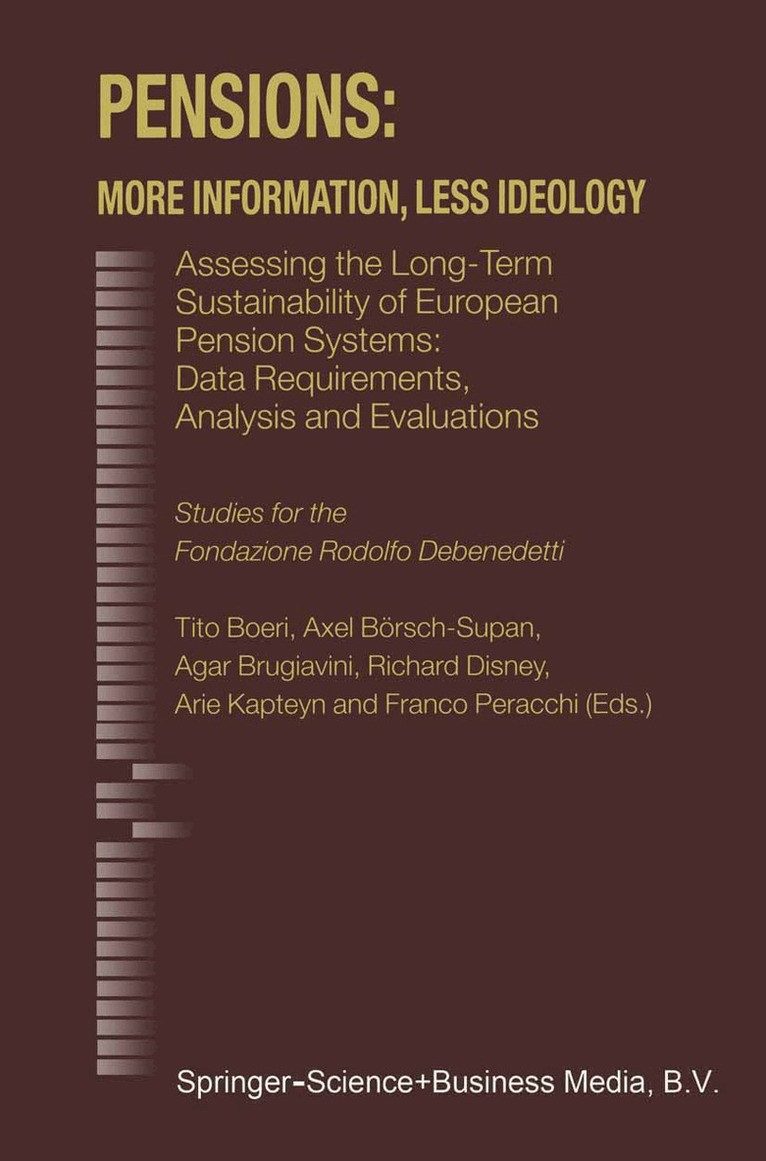
Pensions: More Information, Less Ideology
Assessing the Long-Term Sustainability of European Pension Systems: Data Requirements, Analysis and Evaluations
Inbunden, Engelska, 2001
1 096 kr
Skickas inom 10-15 vardagar
Europeans are living longer, and fewer now remain in the labour force as they grow older. Many European countries have responded to the ensuing financial pressure by reforming their public pension systems and health care programmes. There is considerable uncertainty as to the effects of these reforms - as they typically do not alter the unfunded nature of public welfare arrangements and this uncertainty is itself costly. Not only does it undermine the credibility of public welfare programmes, but it may also distort labour supply behaviour, decisions regarding savings and capital accumulation. More generally there is uncertainty about the overall impact of ageing on welfare and society and the multiple domains in which its effects may develop.This text builds on the existing evidence - mostly in the field of public pensions - and highlights the advantages that would be obtained by: harmonizing methodologies used in the various countries to report pension outlays and forecast future pension liabilities or more generally public spending; defining common standards as to the frequency of expenditure forecasts and the length of the forecast horizons for welfare expenditures; and developing European longitudinal survey of persons pre- and post-retirement age, providing timely information on a wide array of decisions by individuals and household related to the ageing process and the ongoing trends.
Pensions: More Information, Less Ideology
Assessing the Long-Term Sustainability of European Pension Systems: Data Requirements, Analysis and Evaluations
Häftad, Engelska, 2010
1 096 kr
Skickas inom 10-15 vardagar
Europeans are living longer, and fewer now remain in the labour force as they grow older. Many European countries have responded to the ensuing financial pressure by reforming their public pension systems and health care programmes. There is considerable uncertainty as to the effects of these reforms - as they typically do not alter the unfunded nature of public welfare arrangements and this uncertainty is itself costly. Not only does it undermine the credibility of public welfare programmes, but it may also distort labour supply behaviour, decisions regarding savings and capital accumulation. More generally there is uncertainty about the overall impact of ageing on welfare and society and the multiple domains in which its effects may develop.Pensions: More Information, Less Ideology builds on the existing evidence - mostly in the field of public pensions - and highlights the advantages that would be obtained by: harmonising methodologies used in the various countries to report pension outlays and forecast future pension liabilities or more generally public spending; defining common standards as to the frequency of expenditure forecasts and the length of the forecast horizons for welfare expenditures; developing European longitudinal survey of persons pre- and post retirement age, providing timely information on a wide array of decisions by individuals and household related to the ageing process and the ongoing trends.
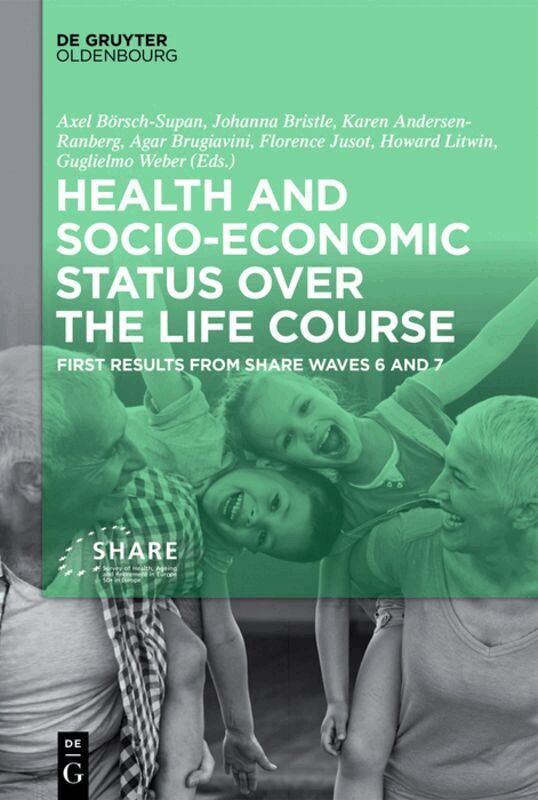
Health and socio-economic status over the life course
First results from SHARE Waves 6 and 7
Inbunden, Engelska, 2019
1 578 kr
Skickas inom 5-8 vardagar
Health in later life is shaped by behavior and policies over the life course and reflects the differences between the societies in which we are ageing. This multidisciplinary book answers questions from all life course phases and its interconnections from a European perspective based on the most recent SHARE data, such as: How is our health related to personality traits and influenced by our childhood conditions and careers? Which role does our social network play? Which impacts of the different health care and societal regimes can we trace at older ages? Which are the differences and similarities across European countries?
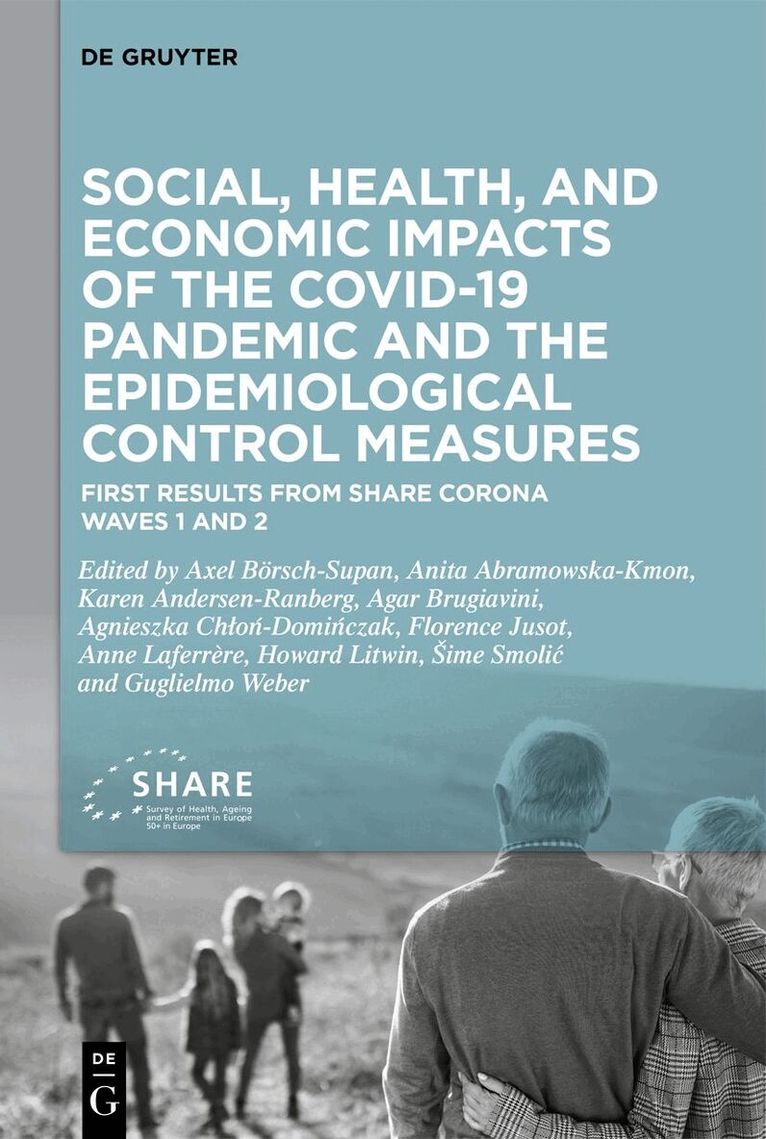
Social, health, and economic impacts of the COVID-19 pandemic and the epidemiological control measures
First results from SHARE Corona Waves 1 and 2
Inbunden, Engelska, 2023
1 070 kr
Skickas
The COVID-19 pandemic posed a major threat to the well-being of older Europeans. Its economic and social effects, however, varied across countries. This multidisciplinary book presents the first results of analyses that combined the renowned longitudinal database of SHARE with new data from two telephone surveys that were uniquely conducted during the pandemic. The analyses address important policy-related issues, such as: Did social distancing destabilize family and social support networks? Did the pandemic increase health, social and economic inequality? Who had to forego essential health care because of the pandemic? Did lockdown affect one’s physical and mental health? Did the shift towards remote work affect workload and well-being? Were different housing conditions related to the spread of the virus?
606 kr
Skickas inom 10-15 vardagar
On average, people in Europe are living longer, and are in better health. Despite this, however, a significant degree of health inequality is emerging among different socioeconomic groups. Assessment-of-need procedures and eligibility rules define the target population in ‘need-of-care’, and represent a compulsory gateway for olderadults in order to receive home-care benefits, either in-kind or in-cash. In this context, the economic relevance of formal long-term care has been growing and the rates of care-dependent older people in need of long-term care are estimated to increase in the forthcoming decades. The authors of this volume compare micro-data from SHARE (the Survey of Health, Ageing and Retirement in Europe) and ELSA (the English Longitudinal Study of Ageing) across Austria, Belgium, the Czech Republic, France, Germany, Italy, Spain, and United Kingdom’s England and Wales, where eligibility rules are care-blind. They critically review long-term care regulations in Europe, offering a detailed taxonomy of the role and the characteristics of vulnerability-evaluations and eligibility criteria. This book is of interest to academics in health economics and social policy, managers in the health sector, policy makers and professionals interested in the design, implementation and evaluation of long-term care policies. It could also be used to support different courses in the fields of ageing, health economics and policy evaluation.