Aidan Hartley - Böcker
Visar alla böcker från författaren Aidan Hartley. Handla med fri frakt och snabb leverans.
5 produkter
5 produkter
157 kr
Skickas
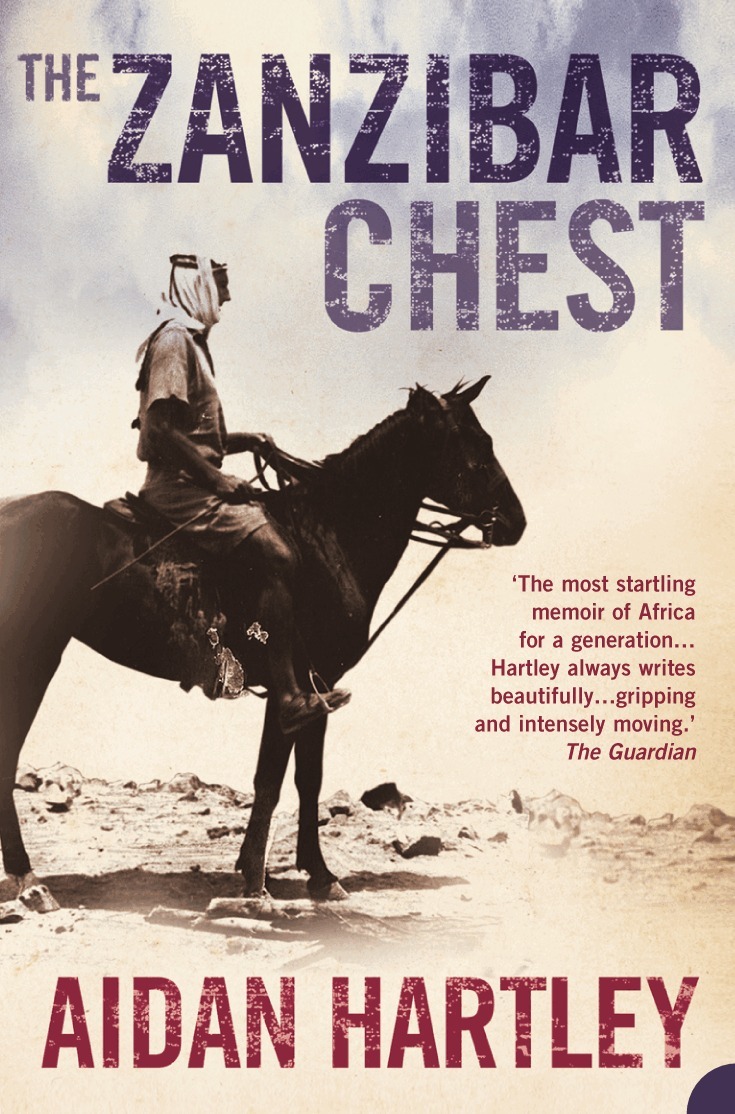
A deeply affecting memoir of a childhood in Africa and the continent's horrendous wars, which Hartley witnessed at first hand as a journalist in the 1990s. Shortlisted for the prestigious Samuel Johnson Prize for Non-fiction, this is a masterpiece of autobiographical journalism.Aidan Hartley, a foreign correspondent, burned-out from the horror of covering the terrifying micro wars of the 1990s, from Rwanda to Bosnia, seeks solace and solitude in the remote mountains and deserts of southern Arabia and the Yemen, following his father’s death. While there, he finds himself on the trail of the tragic story of an old friend of his father’s, who fell in love and was murdered in southern Arabia fifty years ago. As the terrible events of the past unfold, Hartley finds his own kind of deliverance.‘The Zanzibar Chest’ is a powerful story about a man witnessing and confronting extreme violence and being broken down by it, and of a son trying to come to terms with the death of a father whom he also saw as his best friend. It charts not only a love affair between two people, but also the British love affair with Arabia and the vast emptinesses of the desert, which become a fitting metaphor for the emotional and spiritual condition in which Hartley finds himself.
295 kr
Kommande
From the Samuel Johnson Prize shortlisted author, a powerful literary memoir about life in rural Nairobi, one of the last true wildernesses of the world.Aidan Hartley grew up in Kenya, moving from farm to farm across Africa with his family. As an adult he moved to England to study, then became a war correspondent in Africa, and then, when he couldn't resist it any longer, a farmer in his own right.Aidan's farm today sits in view of the Kenyan Mountain. His work is dosing sheep, dipping cattle, fixing machinery, responding to the night alarms of rustlers entering the valley on elephant raids. Living here, injury means relying on a manual called Where There is No Doctor, and the home medicine chest complete with blood coagulants for gunshot wounds.Laikipia is a beautiful, wild place. Sometimes peaceful, and sometimes dangerous. It is also a landscape tragically at risk. Across the course of Aidan's life, the nature around him has changed. The wild hunting dog, cheetah, rhinos, elephants – even the giraffe and lion – face oblivion. Whole forests have been torn down. Kenya Mountain on the horizon is losing its tropical icefields – they will be gone in a handful of years.Paradise of Thorns is a restlessly inventive literary memoir: the story of Aidan's departure from cities and the irresistible move back to his real home. It is part glorious testament to the extraordinary heart of rural Africa as a place which is fast becoming lost; part antidote to the false impressions imposed on the country over the years; and part adventure story of drug trade, cattle raids, gunfights, tragic losses, ambushes, posses and battles.
203 kr
Kommande
134 kr
Kommande
100 kr
Skickas inom 5-8 vardagar
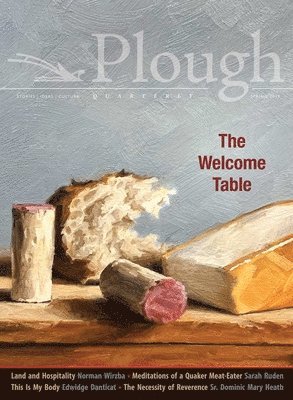
Food – how it’s grown, how it’s shared – makes us who we are. This issue traces the connections between farm and food, between humus and human. According to the first book of the Bible, tending the earth was humankind’s first task: “The Lord God planted a garden in Eden, in the east; and there he put the man whom he had formed” (Gen. 2:8). The desire to get one’s hands dirty raising one’s own food, then, doesn’t just come from modern romanticism, but is built into human nature.The title, “The Welcome Table,” comes from a spiritual first sung by enslaved African-Americans. The song refers to the Bible’s closing scene, the wedding feast of the Lamb described in the Book of Revelation, to which every race, tribe, and tongue are invited – a divine pledge of a day of freedom and freely shared plenty, of earth renewed and humanity restored. In the case of food, the symbol is the substance. Every meal, if shared generously and with radical hospitality, is already now a taste of the feast to come.Also in this issue: poetry by Luci Shaw; reviews of books by Julia Child, Robert Farrar Capon, Peter Mayle, Albert Woodfox, and Maria von Trapp; and art by Michael Naples, Sieger Köder, Carl Juste, André Chung, Ángel Bracho, Winslow Homer, Raymond Logan, Sybil Andrews, Cameron Davidson, and Jason Landsel.Plough Quarterly features stories, ideas, and culture for people eager to put their faith into action. Each issue brings you in-depth articles, interviews, poetry, book reviews, and art to help you put Jesus’ message into practice and find common cause with others.