Alan C. Love - Böcker
Visar alla böcker från författaren Alan C. Love. Handla med fri frakt och snabb leverans.
8 produkter
8 produkter
753 kr
Skickas inom 7-10 vardagar
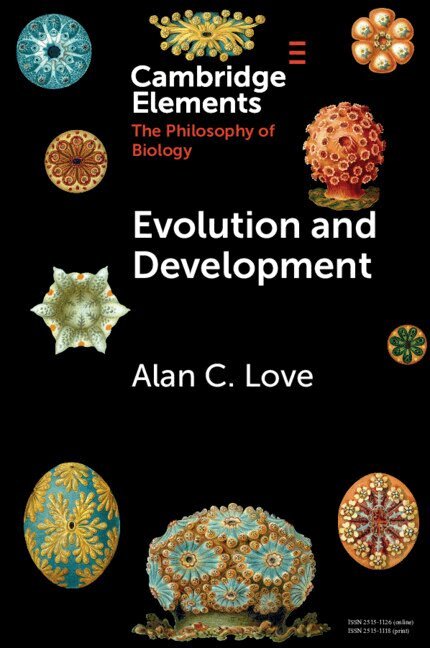
The intersection of development and evolution has always harbored conceptual issues, but many of these are on display in contemporary evolutionary developmental biology (evo-devo). These issues include: (1) the precise constitution of evo-devo, with its focus on both the evolution of development and the developmental basis of evolution, and how it fits within evolutionary theory; (2) the nature of evo-devo model systems that comprise the material of comparative and experimental research; (3) the puzzle of how to understand the widely used notion of 'conserved mechanisms'; (4) the definition of evolutionary novelties and expectations for how to explain them; and (5) the demand of interdisciplinary collaboration that derives from investigating complex phenomena at key moments in the history of life, such as the fin-limb transition. This Element treats these conceptual issues with close attention to both empirical detail and scientific practice to offer new perspectives on evolution and development. This title is also available as Open Access on Cambridge Core.
234 kr
Skickas inom 7-10 vardagar
The intersection of development and evolution has always harbored conceptual issues, but many of these are on display in contemporary evolutionary developmental biology (evo-devo). These issues include: (1) the precise constitution of evo-devo, with its focus on both the evolution of development and the developmental basis of evolution, and how it fits within evolutionary theory; (2) the nature of evo-devo model systems that comprise the material of comparative and experimental research; (3) the puzzle of how to understand the widely used notion of 'conserved mechanisms'; (4) the definition of evolutionary novelties and expectations for how to explain them; and (5) the demand of interdisciplinary collaboration that derives from investigating complex phenomena at key moments in the history of life, such as the fin-limb transition. This Element treats these conceptual issues with close attention to both empirical detail and scientific practice to offer new perspectives on evolution and development. This title is also available as Open Access on Cambridge Core.
1 674 kr
Skickas inom 10-15 vardagar
Interdisciplinary perspectives on cultural evolution that reject meme theory in favor of a complex understanding of dynamic change over timeHow do cultures change? In recent decades, the concept of the meme, posited as a basic unit of culture analogous to the gene, has been central to debates about cultural transformation. Despite the appeal of meme theory, its simplification of complex interactions and other inadequacies as an explanatory framework raise more questions about cultural evolution than it answers. In Beyond the Meme, William C. Wimsatt and Alan C. Love assemble interdisciplinary perspectives on cultural evolution, providing a nuanced understanding of it as a process in which dynamic structures interact on different scales of size and time. By focusing on the full range of evolutionary processes across distinct contexts, from rice farming to scientific reasoning, this volume demonstrates how a thick understanding of change in culture emerges from multiple disciplinary vantage points, each of which is required to understand cultural evolution in all its complexity. The editors provide an extensive introductory essay to contextualize the volume, and Wimsatt contributes a separate chapter that systematically organizes the conceptual geography of cultural processes and phenomena.Any adequate account of the transmission, elaboration, and evolution of culture must, this volume argues, recognize the central roles that cognitive and social development play in cultural change and the complex interplay of technological, organizational, and institutional structures needed to enable and coordinate these processes.Contributors: Marshall Abrams, U of Alabama at Birmingham; Claes Andersson, Chalmers U of Technology; Mark A. Bedau, Reed College; James A. Evans, U of Chicago; Jacob G. Foster, U of California, Los Angeles; Michel Janssen, U of Minnesota; Sabina Leonelli, U of Exeter; Massimo Maiocchi, U of Chicago; Joseph D. Martin, U of Cambridge; Salikoko S. Mufwene, U of Chicago; Nancy J. Nersessian, Georgia Institute of Technology and Harvard U; Paul E. Smaldino, U of California, Merced; Anton TÖrnberg, U of Gothenburg; Petter TÖrnberg, U of Amsterdam; Gilbert B. Tostevin, U of Minnesota.
420 kr
Skickas inom 10-15 vardagar
Interdisciplinary perspectives on cultural evolution that reject meme theory in favor of a complex understanding of dynamic change over timeHow do cultures change? In recent decades, the concept of the meme, posited as a basic unit of culture analogous to the gene, has been central to debates about cultural transformation. Despite the appeal of meme theory, its simplification of complex interactions and other inadequacies as an explanatory framework raise more questions about cultural evolution than it answers. In Beyond the Meme, William C. Wimsatt and Alan C. Love assemble interdisciplinary perspectives on cultural evolution, providing a nuanced understanding of it as a process in which dynamic structures interact on different scales of size and time. By focusing on the full range of evolutionary processes across distinct contexts, from rice farming to scientific reasoning, this volume demonstrates how a thick understanding of change in culture emerges from multiple disciplinary vantage points, each of which is required to understand cultural evolution in all its complexity. The editors provide an extensive introductory essay to contextualize the volume, and Wimsatt contributes a separate chapter that systematically organizes the conceptual geography of cultural processes and phenomena.Any adequate account of the transmission, elaboration, and evolution of culture must, this volume argues, recognize the central roles that cognitive and social development play in cultural change and the complex interplay of technological, organizational, and institutional structures needed to enable and coordinate these processes.Contributors: Marshall Abrams, U of Alabama at Birmingham; Claes Andersson, Chalmers U of Technology; Mark A. Bedau, Reed College; James A. Evans, U of Chicago; Jacob G. Foster, U of California, Los Angeles; Michel Janssen, U of Minnesota; Sabina Leonelli, U of Exeter; Massimo Maiocchi, U of Chicago; Joseph D. Martin, U of Cambridge; Salikoko S. Mufwene, U of Chicago; Nancy J. Nersessian, Georgia Institute of Technology and Harvard U; Paul E. Smaldino, U of California, Merced; Anton TÖrnberg, U of Gothenburg; Petter TÖrnberg, U of Amsterdam; Gilbert B. Tostevin, U of Minnesota.
1 308 kr
Kommande
Interdisciplinary voices reflect on some of the most complex and consequential scientific undertakings of our timePerspectives on the Human Genome Project and Genomics is a groundbreaking volume that examines the pivotal roles of the National Institutes of Health (NIH) and the National Human Genome Research Institute (NHGRI) in the Human Genome Project (HGP) and the development of other major genomics projects. Drawing on newly uncovered archival materials and oral histories from NHGRI, this volume offers a multifaceted narrative of some of the most transformative scientific achievements of the twentieth and twenty-first centuries. Coeditors Christopher R. Donohue and Alan C. Love bring together a range of perspectives on the HGP’s progress and legacy, as well as other major genomics projects, to explore not only their scientific achievements but also their social and political dimensions. Presenting reflections from historians, philosophers, and sociologists alongside those of key NHGRI scientists like Eric Green, Mark Guyer, and Elise Feingold; experts like Nature editor-in-chief Magdalena Skipper and geneticist Eric Vilain; and scholars of the ethical, legal, and social implications of genomics like Jean McEwan and Joy Boyer, Perspectives on the Human Genome Project and Genomics highlights the international, interdisciplinary collaborations and collective long view that underpinned these genomics initiatives aimed at a better understanding of our basic biology and genetic diseases. From genomic variation and sequencing technologies to the integration of big data and the influence of ancestry and gender, this book is an essential resource for deepening the discussion of the scientific, historical, and ethical impacts of genomics and a fascinating collection of insights into coordinated science in the making. Contributors: Rina Bliss, Joy Boyer, Lisa D. Brooks, Michel Dubois, Elise A. Feingold, Adam Felsenfeld, Miguel GarcÍa-Sancho, Eric Green, Catherine Guaspare, Chris Gunter, Stephan Guttinger, Mark Guyer, Elke Jordan, Jonathan E. LoTempio Jr., Jean McEwen, Jane Peterson, Anya Plutynski, Ramya M. Rajagopalan, Emanuele Ratti, Sahotra Sarkar, Jeffery A. Schloss, Magdalena Skipper, Alexandra Soulier, Thomas Stoeger, Eric Vilain, Kris A. Wetterstrand. Retail e-book files for this title are screen-reader friendly with images accompanied by short alt text and/or extended descriptions.
384 kr
Kommande
Interdisciplinary voices reflect on some of the most complex and consequential scientific undertakings of our timePerspectives on the Human Genome Project and Genomics is a groundbreaking volume that examines the pivotal roles of the National Institutes of Health (NIH) and the National Human Genome Research Institute (NHGRI) in the Human Genome Project (HGP) and the development of other major genomics projects. Drawing on newly uncovered archival materials and oral histories from NHGRI, this volume offers a multifaceted narrative of some of the most transformative scientific achievements of the twentieth and twenty-first centuries. Coeditors Christopher R. Donohue and Alan C. Love bring together a range of perspectives on the HGP’s progress and legacy, as well as other major genomics projects, to explore not only their scientific achievements but also their social and political dimensions. Presenting reflections from historians, philosophers, and sociologists alongside those of key NHGRI scientists like Eric Green, Mark Guyer, and Elise Feingold; experts like Nature editor-in-chief Magdalena Skipper and geneticist Eric Vilain; and scholars of the ethical, legal, and social implications of genomics like Jean McEwan and Joy Boyer, Perspectives on the Human Genome Project and Genomics highlights the international, interdisciplinary collaborations and collective long view that underpinned these genomics initiatives aimed at a better understanding of our basic biology and genetic diseases. From genomic variation and sequencing technologies to the integration of big data and the influence of ancestry and gender, this book is an essential resource for deepening the discussion of the scientific, historical, and ethical impacts of genomics and a fascinating collection of insights into coordinated science in the making. Contributors: Rina Bliss, Joy Boyer, Lisa D. Brooks, Michel Dubois, Elise A. Feingold, Adam Felsenfeld, Miguel GarcÍa-Sancho, Eric Green, Catherine Guaspare, Chris Gunter, Stephan Guttinger, Mark Guyer, Elke Jordan, Jonathan E. LoTempio Jr., Jean McEwen, Jane Peterson, Anya Plutynski, Ramya M. Rajagopalan, Emanuele Ratti, Sahotra Sarkar, Jeffery A. Schloss, Magdalena Skipper, Alexandra Soulier, Thomas Stoeger, Eric Vilain, Kris A. Wetterstrand. Retail e-book files for this title are screen-reader friendly with images accompanied by short alt text and/or extended descriptions.
Del 307 - Boston Studies in the Philosophy and History of Science
Conceptual Change in Biology
Scientific and Philosophical Perspectives on Evolution and Development
Inbunden, Engelska, 2014
1 381 kr
Skickas inom 10-15 vardagar
This volume explores questions about conceptual change from both scientific and philosophical viewpoints by analyzing the recent history of evolutionary developmental biology. It features revised papers that originated from the workshop "Conceptual Change in Biological Science: Evolutionary Developmental Biology, 1981-2011" held at the Max Planck Institute for the History of Science in Berlin in July 2010. The Preface has been written by Ron Amundson.In these papers, philosophers and biologists compare and contrast key concepts in evolutionary developmental biology and their development since the original, seminal Dahlem conference on evolution and development held in Berlin in 1981. Many of the original scientific participants from the 1981 conference are also contributors to this new volume and, in conjunction with other expert biologists and philosophers specializing on these topics, provide an authoritative, comprehensive view on the subject.Taken together, the papers supply novel perspectives on how and why the conceptual landscape has shifted and stabilized in particular ways, yielding insights into the dynamic epistemic changes that have occurred over the past three decades. This volume will appeal to philosophers of biology studying conceptual change, evolutionary developmental biologists focused on comprehending the genesis of their field and evaluating its future directions, and historians of biology examining this period when the intersection of evolution and development rose again to prominence in biological science.
Del 307 - Boston Studies in the Philosophy and History of Science
Conceptual Change in Biology
Scientific and Philosophical Perspectives on Evolution and Development
Häftad, Engelska, 2016
1 381 kr
Skickas inom 10-15 vardagar
This volume explores questions about conceptual change from both scientific and philosophical viewpoints by analyzing the recent history of evolutionary developmental biology. It features revised papers that originated from the workshop "Conceptual Change in Biological Science: Evolutionary Developmental Biology, 1981-2011" held at the Max Planck Institute for the History of Science in Berlin in July 2010. The Preface has been written by Ron Amundson.In these papers, philosophers and biologists compare and contrast key concepts in evolutionary developmental biology and their development since the original, seminal Dahlem conference on evolution and development held in Berlin in 1981. Many of the original scientific participants from the 1981 conference are also contributors to this new volume and, in conjunction with other expert biologists and philosophers specializing on these topics, provide an authoritative, comprehensive view on the subject.Taken together, the papers supply novel perspectives on how and why the conceptual landscape has shifted and stabilized in particular ways, yielding insights into the dynamic epistemic changes that have occurred over the past three decades. This volume will appeal to philosophers of biology studying conceptual change, evolutionary developmental biologists focused on comprehending the genesis of their field and evaluating its future directions, and historians of biology examining this period when the intersection of evolution and development rose again to prominence in biological science.