William Wimsatt - Böcker
Visar alla böcker från författaren William Wimsatt. Handla med fri frakt och snabb leverans.
5 produkter
5 produkter
747 kr
Skickas inom 3-6 vardagar
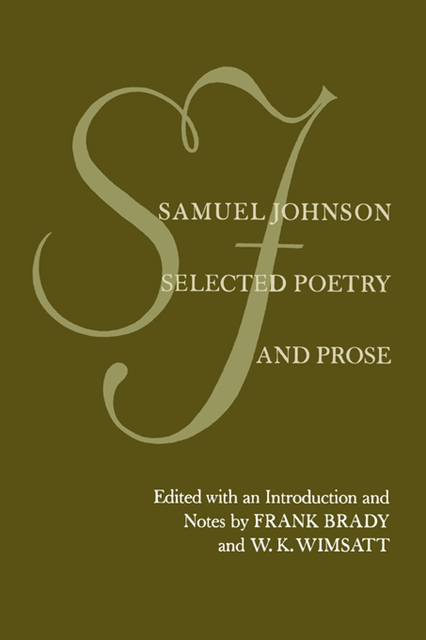
This is a major new selection of Samuel Johnson's best work, delightfully introduced by W. K. Wimsatt and scrupulously annotated by Frank Brady and Mr. Wimsatt. Samuel Johnson, the only writer in English since the Renaissance to give his name to a literary period, was the center of English letters in his time. He was Dictionary Johnson, the lexicographer who had single-handedly settled the English language (it was hoped) on a firm basis; he was the author of a handful of fine poems, including two of the most remarkable satires of the century; he was a moralist whose "Rambler and Idler" essays, and novel-of-ideas "Rasselas", provided a searching view of men and matters. And in his final years he produced his greatest work, that extraordinary combination of biography and criticism which came to be known as the "Lives of the Poets".This first extensive anthology of Johnson's writings to be published in many years emphasizes Johnson the writer. It responds to those aspects of Johnson's work of special interest to modern readers.It comprises a selection of Johnson's letters, all of his major poems (including "London"), "Rasselas", twenty-one "Rambler", nineteen "Idlers", the "Prefaces to the Dictionary" and to the edition of Shakespeare, and the following "Lives of the Poets: Cowley, Milton, Swift, Pope, Savage, Collins, and Gray". All these works are extensively annotated and printed complete. Mr. Wimsatt, one of the outstanding Johnsonians of this century, provides in his introduction a clear, connected biographical account of Johnson, stressing his writings. An up-to-date bibliography is also included. Johnson's varied accomplishments - as poet, as moralist, as biographer, as critic - are all amply represented.
1 710 kr
Skickas inom 10-15 vardagar
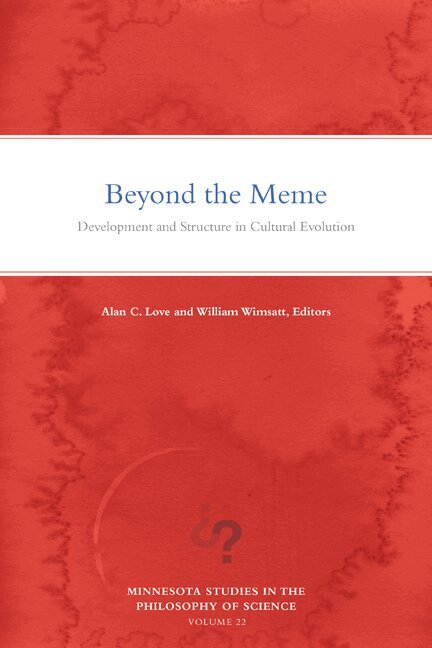
Interdisciplinary perspectives on cultural evolution that reject meme theory in favor of a complex understanding of dynamic change over timeHow do cultures change? In recent decades, the concept of the meme, posited as a basic unit of culture analogous to the gene, has been central to debates about cultural transformation. Despite the appeal of meme theory, its simplification of complex interactions and other inadequacies as an explanatory framework raise more questions about cultural evolution than it answers. In Beyond the Meme, William C. Wimsatt and Alan C. Love assemble interdisciplinary perspectives on cultural evolution, providing a nuanced understanding of it as a process in which dynamic structures interact on different scales of size and time. By focusing on the full range of evolutionary processes across distinct contexts, from rice farming to scientific reasoning, this volume demonstrates how a thick understanding of change in culture emerges from multiple disciplinary vantage points, each of which is required to understand cultural evolution in all its complexity. The editors provide an extensive introductory essay to contextualize the volume, and Wimsatt contributes a separate chapter that systematically organizes the conceptual geography of cultural processes and phenomena.Any adequate account of the transmission, elaboration, and evolution of culture must, this volume argues, recognize the central roles that cognitive and social development play in cultural change and the complex interplay of technological, organizational, and institutional structures needed to enable and coordinate these processes.Contributors: Marshall Abrams, U of Alabama at Birmingham; Claes Andersson, Chalmers U of Technology; Mark A. Bedau, Reed College; James A. Evans, U of Chicago; Jacob G. Foster, U of California, Los Angeles; Michel Janssen, U of Minnesota; Sabina Leonelli, U of Exeter; Massimo Maiocchi, U of Chicago; Joseph D. Martin, U of Cambridge; Salikoko S. Mufwene, U of Chicago; Nancy J. Nersessian, Georgia Institute of Technology and Harvard U; Paul E. Smaldino, U of California, Merced; Anton TÖrnberg, U of Gothenburg; Petter TÖrnberg, U of Amsterdam; Gilbert B. Tostevin, U of Minnesota.
420 kr
Skickas inom 10-15 vardagar
Interdisciplinary perspectives on cultural evolution that reject meme theory in favor of a complex understanding of dynamic change over timeHow do cultures change? In recent decades, the concept of the meme, posited as a basic unit of culture analogous to the gene, has been central to debates about cultural transformation. Despite the appeal of meme theory, its simplification of complex interactions and other inadequacies as an explanatory framework raise more questions about cultural evolution than it answers. In Beyond the Meme, William C. Wimsatt and Alan C. Love assemble interdisciplinary perspectives on cultural evolution, providing a nuanced understanding of it as a process in which dynamic structures interact on different scales of size and time. By focusing on the full range of evolutionary processes across distinct contexts, from rice farming to scientific reasoning, this volume demonstrates how a thick understanding of change in culture emerges from multiple disciplinary vantage points, each of which is required to understand cultural evolution in all its complexity. The editors provide an extensive introductory essay to contextualize the volume, and Wimsatt contributes a separate chapter that systematically organizes the conceptual geography of cultural processes and phenomena.Any adequate account of the transmission, elaboration, and evolution of culture must, this volume argues, recognize the central roles that cognitive and social development play in cultural change and the complex interplay of technological, organizational, and institutional structures needed to enable and coordinate these processes.Contributors: Marshall Abrams, U of Alabama at Birmingham; Claes Andersson, Chalmers U of Technology; Mark A. Bedau, Reed College; James A. Evans, U of Chicago; Jacob G. Foster, U of California, Los Angeles; Michel Janssen, U of Minnesota; Sabina Leonelli, U of Exeter; Massimo Maiocchi, U of Chicago; Joseph D. Martin, U of Cambridge; Salikoko S. Mufwene, U of Chicago; Nancy J. Nersessian, Georgia Institute of Technology and Harvard U; Paul E. Smaldino, U of California, Merced; Anton TÖrnberg, U of Gothenburg; Petter TÖrnberg, U of Amsterdam; Gilbert B. Tostevin, U of Minnesota.
Del 292 - Boston Studies in the Philosophy and History of Science
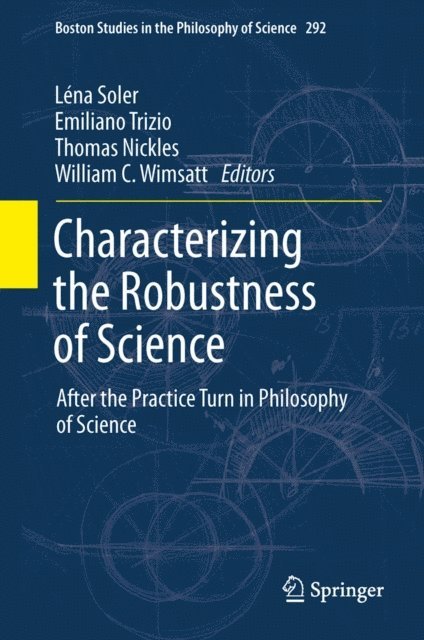
Characterizing the Robustness of Science
After the Practice Turn in Philosophy of Science
Inbunden, Engelska, 2012
1 593 kr
Skickas inom 10-15 vardagar
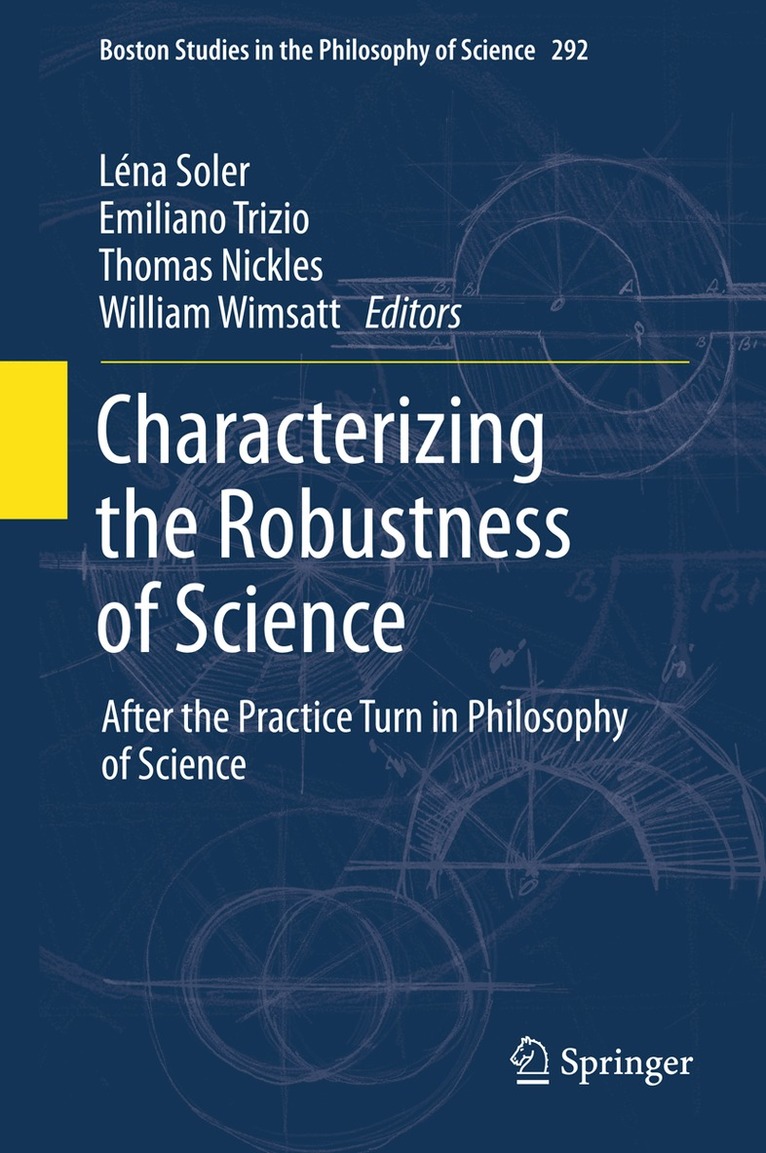
Mature sciences have been long been characterized in terms of the “successfulness”, “reliability” or “trustworthiness” of their theoretical, experimental or technical accomplishments. Today many philosophers of science talk of “robustness”, often without specifying in a precise way the meaning of this term. This lack of clarity is the cause of frequent misunderstandings, since all these notions, and that of robustness in particular, are connected to fundamental issues, which concern nothing less than the very nature of science and its specificity with respect to other human practices, the nature of rationality and of scientific progress; and science’s claim to be a truth-conducive activity. This book offers for the first time a comprehensive analysis of the problem of robustness, and in general, that of the reliability of science, based on several detailed case studies and on philosophical essays inspired by the so-called practical turn in philosophy of science.
Del 292 - Boston Studies in the Philosophy and History of Science
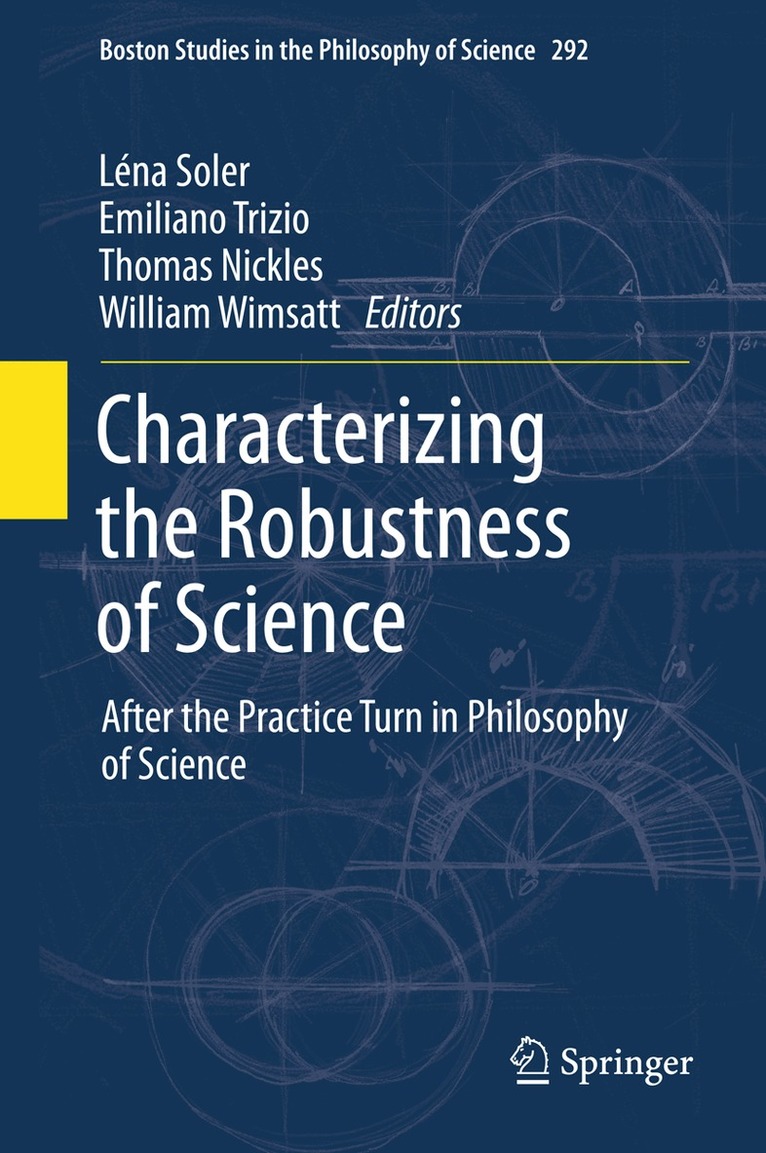
Characterizing the Robustness of Science
After the Practice Turn in Philosophy of Science
Häftad, Engelska, 2014
1 593 kr
Skickas inom 10-15 vardagar
Mature sciences have been long been characterized in terms of the “successfulness”, “reliability” or “trustworthiness” of their theoretical, experimental or technical accomplishments. Today many philosophers of science talk of “robustness”, often without specifying in a precise way the meaning of this term. This lack of clarity is the cause of frequent misunderstandings, since all these notions, and that of robustness in particular, are connected to fundamental issues, which concern nothing less than the very nature of science and its specificity with respect to other human practices, the nature of rationality and of scientific progress; and science’s claim to be a truth-conducive activity. This book offers for the first time a comprehensive analysis of the problem of robustness, and in general, that of the reliability of science, based on several detailed case studies and on philosophical essays inspired by the so-called practical turn in philosophy of science.