Alan R. MacDonald - Böcker
Visar alla böcker från författaren Alan R. MacDonald. Handla med fri frakt och snabb leverans.
15 produkter
15 produkter
1 381 kr
Tillfälligt slut
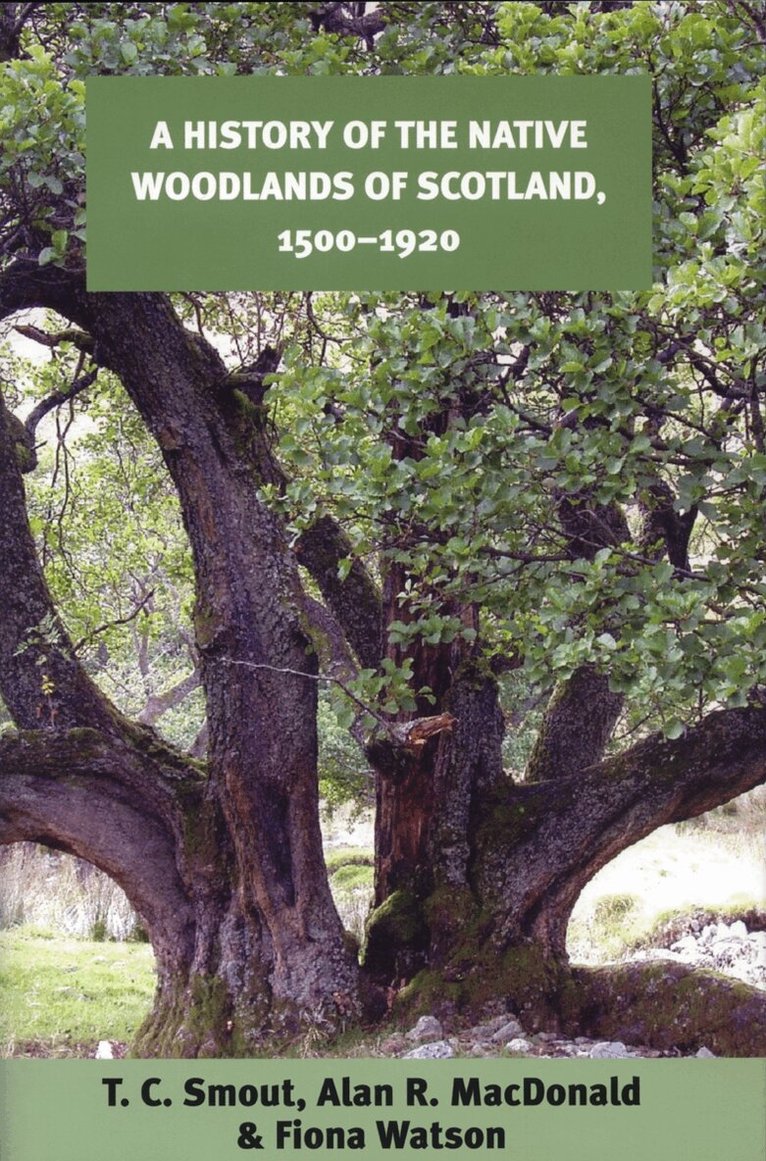
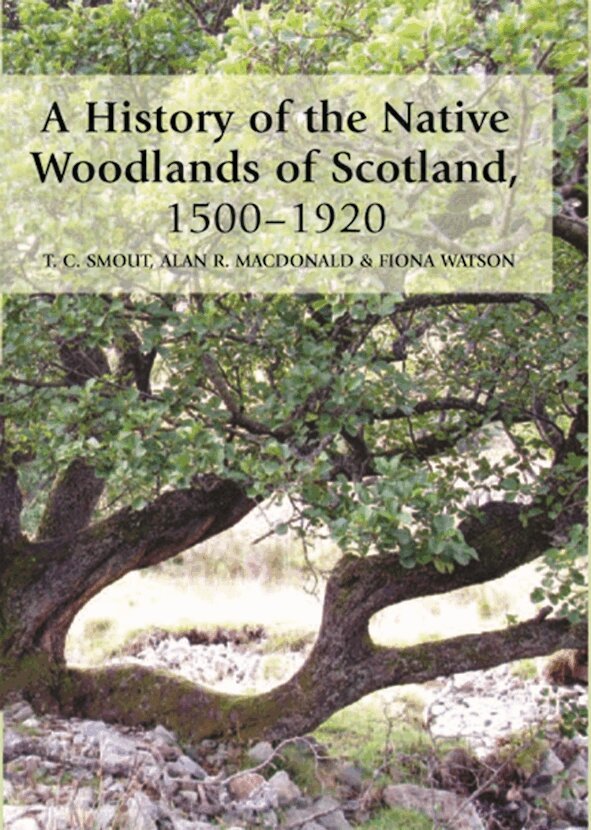
The first modern history of Scottish woodlands explores the changing relationship between trees and people from the time of Scotland’s first settlement, focusing on the period 1500 to 1920. Drawing on work in natural science, geography and history, as well as on the authors’ own research, it presents an accessible and readable account that balances social, economic and environmental factors. Two opening chapters describe the early history of the woodlands. The book is then divided into chapters that consider traditional uses and management, the impact of outsiders on the pine woods and the oakwoods in the first phase of exploitation, and the effect of industrialisation. Separate chapters are devoted to case studies of management at Strathcarron, Glenorchy, Rothiemurchus and on Skye.
History of the Scottish Parliament
Parliament and Politics in Scotland, 1235-1560
Inbunden, Engelska, 2004
1 304 kr
Tillfälligt slut
These three volumes comprise a new history of Scotland’s first parliament from the first surviving official records in the thirteenth century to its final dissolution in 1707. Denigrated by unionists as inferior to the English parliament and despised by nationalists for agreeing to its own demise, the Scottish parliament has been shockingly under-researched by Scottish historians. This new history will go a long way towards redressing the balance, not merely putting the record straight but making it visible for the first time. Written by some twenty-five leading scholars the three volumes will be by far the most comprehensive history of the parliament ever published.Volumes 1 and 2 examine the history of parliament under the medieval and early modern monarchs. The former describes its role during the wars of independence, under the Stewart monarchy, and during the Reformation. The latter describes its role in the reign of James VI and throughout the century between the unions of the crowns in 1603 and of the parliaments in 1707, a period of royal absenteeism , religious upheaval, revolutions, civil wars, and economic catastrophe.Volume 3 addresses broad themes across the life of the parliament: relationship to the crown and nobility; legislative role; procedures; modes of government; relations with burghs and regions; receptiveness to political ideas; relationship with the church and role in national religious life.The refounding of the parliament in Edinburgh makes this a good time for a new look at the history, workings, and effectiveness of its long medieval and early modern antecedent. The History of the Scottish Parliament will be the definitive account for many years, informative, reliable, readable, and replete with story, character and incidentIt is, in sum, an outstanding testimony to the quality of historical scholarship in Scotland.
1 304 kr
Tillfälligt slut
This is the third volume in The History of the Scottish Parliament. In volumes 1 and 2 the contributors addressed discrete episodes in political history from the early thirteenth century through to 1707, demonstrating the richness of the sources for such historical writing and the importance of parliament to that history. In Volume 3 the contributors have built on that foundation and taken advantage of the Records of the Parliaments of Scotland to discuss a comprehensive range of key themes in the development of parliament.The editors, Keith M. Brown and Alan R. MacDonald, have assembled a team of established and younger scholars who each discuss a theme that ranges over the entire six centuries of the parliament's existence. These include broad, interpretive chapters on each of the key political constituencies represented in parliament. Thus Roland Tanner and Gillian MacIntosh write on parliament and the crown, Roland Tanner and Kirsty McAlister discuss parliament and the church, Keith Brown addresses parliament and the nobility and Alan MacDonald examines parliament and the burghs. Cross-cutting themes are also analysed. The political culture of parliament is the subject of a chapter by Julian Goodare, while parliament and the law, political ideas and social control are dealt with in turn by Mark Godfrey, James Burns and Alastair Mann. Finally, parliament's own procedures are also discussed by Alastair Mann.The History of the Scottish Parliament: Parliament in Context offers the most comprehensive and up-to-date account of the workings and significance of this important institution to the history of late medieval and early modern Scotland.
History of the Scottish Parliament
Parliament and Politics in Scotland, 1567 to 1707
Inbunden, Engelska, 2005
1 563 kr
Skickas inom 7-10 vardagar
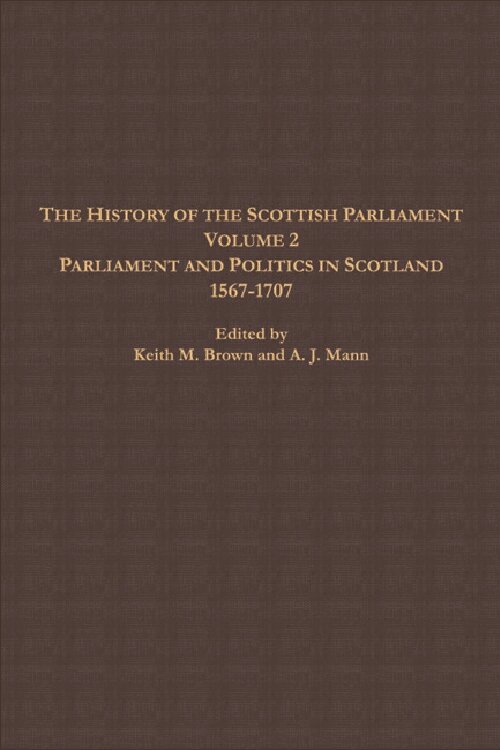
These three volumes comprise a new history of Scotland’s first parliament from the first surviving official records in the thirteenth century to its final dissolution in 1707. Denigrated by unionists as inferior to the English parliament and despised by nationalists for agreeing to its own demise, the Scottish parliament has been shockingly under-researched by Scottish historians. This new history will go a long way towards redressing the balance, not merely putting the record straight but making it visible for the first time. Written by some twenty-five leading scholars the three volumes will be by far the most comprehensive history of the parliament ever published.Volumes 1 and 2 examine the history of parliament under the medieval and early modern monarchs. The former describes its role during the wars of independence, under the Stewart monarchy, and during the Reformation. The latter describes its role in the reign of James VI and throughout the century between the unions of the crowns in 1603 and of the parliaments in 1707, a period of royal absenteeism , religious upheaval, revolutions, civil wars, and economic catastrophe.Volume 3 addresses broad themes across the life of the parliament: relationship to the crown and nobility; legislative role; procedures; modes of government; relations with burghs and regions; receptiveness to political ideas; relationship with the church and role in national religious life.The refounding of the parliament in Edinburgh makes this a good time for a new look at the history, workings, and effectiveness of its long medieval and early modern antecedent. The History of the Scottish Parliament will be the definitive account for many years, informative, reliable, readable, and replete with story, character and incidentIt is, in sum, an outstanding testimony to the quality of historical scholarship in Scotland.
483 kr
Skickas inom 11-20 vardagar
REVIEWS OF PREVIOUS EDITIONS:'An authoritative, readable and attractively illustrated book... it is likely to be a much cited, definitive work for a long time to come.'Ian Whyte, Landscape History'I thoroughly recommend it to ecologists, historians, and anyone liking a good story.'Oliver Rackham, Agricultural History Review'This well-produced book has been a great pleasure for me to read and, indeed, I wish it had been written years ago so I could have recommended it during my course on Quaternary paleoecology… Every one of the colour plates is appropriate and attractive.…I stress again my admiration of this book.'James H Dickson, Environmental History (January 2006)'An excellent combination of detailed case studies and more general reviews… a particular strength of the book is that it does not deal with these industries in isolation, but shows how the management, felling and regeneration of trees and woodlands was intricately connected with grazing… The careful analysis by the authors of a wide range of sources is exemplary and the results are of great interest and value. Edinburgh University Press should be congratulated for the high production quality, including excellent colour plates, historical photographs, and maps and diagrams. This important book should be required reading for all interested in the economic and environmental history of the woodlands.'Charles Watkins, Economic History Review'[Tells] the more fundamental story of trees and woods in our history, in great detail, but always with a firm sense of narrative. It is a tribute not only to the authors' multidisciplinary talents but also to the renaissance of woodland studies north of the border.'British WildlifeNow available in paperback, the first modern history of Scottish woodlands explores the changing relationship between trees and people from the time of Scotland’s first settlement, focusing on the period 1500 to 1920. Drawing on work in natural science, geography and histo
1 862 kr
Skickas
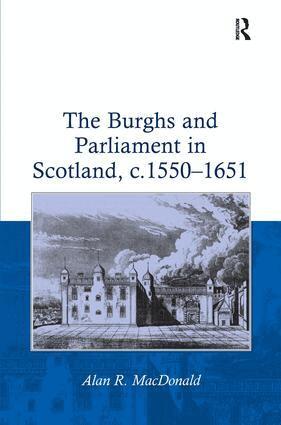
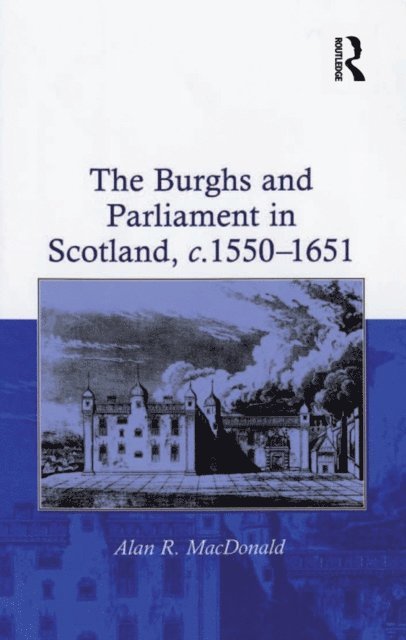
Existing studies of early modern Scotland tend to focus on the crown, the nobility and the church. Yet, from the sixteenth century, a unique national representative assembly of the towns, the Convention of Burghs, provides an insight into the activities of another key group in society. Meeting at least once a year, the Convention consisted of representatives from every parliamentary burgh, and was responsible for apportioning taxation, settling disputes between members, regulating weights and measures, negotiating with the crown on issues of concern to the merchant community. The Convention's role in relation to parliament was particularly significant, for it regulated urban representation, admitted new burghs to parliament, and co-ordinated and oversaw the conduct of the burgess estate in parliament. In this, the first full-length study of the burghs and parliament in Scotland, the influence of this institution is fully analysed over a one hundred year period. Drawing extensively on local and national sources, this book sheds new light upon the way in which parliament acted as a point of contact, a place where legislative business was done, relationships formed and status affirmed. The interactions between centre and localities, and between urban and rural elites are prominent themes, as is Edinburgh's position as the leading burgh and the host of parliament. The study builds upon existing scholarship to place Scotland within the wider British and European context and argues that the Scottish parliament was a distinctive and effective institution which was responsive to the needs of the burghs both collectively and individually.
Del 3 - Scottish History Society 6th Series
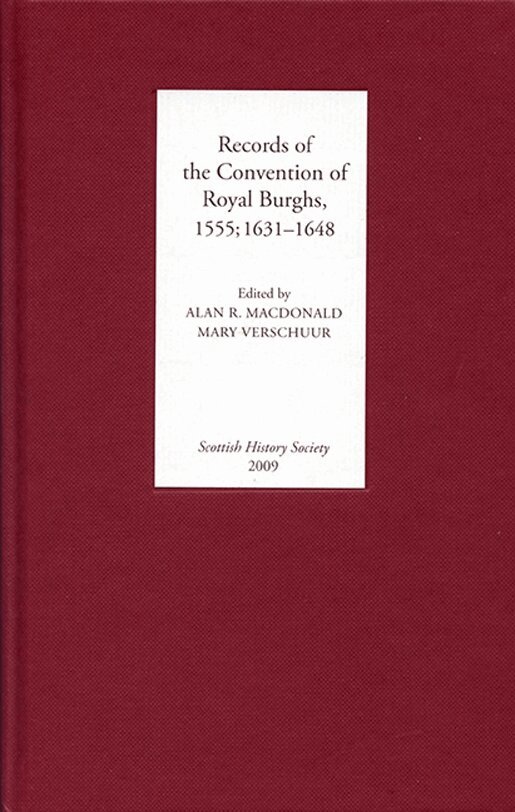
Records of the Convention of Royal Burghs, 1555; 1631-1648
Inbunden, Engelska, 2013
507 kr
Skickas inom 7-10 vardagar
306 kr
Kommande
This is the third volume in The History of the Scottish Parliament. In volumes 1 and 2 the contributors addressed discrete episodes in political history from the early thirteenth century through to 1707, demonstrating the richness of the sources for such historical writing and the importance of parliament to that history. In Volume 3 the contributors have built on that foundation and taken advantage of the Records of the Parliaments of Scotland to discuss a comprehensive range of key themes in the development of parliament.The editors, Keith M. Brown and Alan R. MacDonald, have assembled a team of established and younger scholars who each discuss a theme that ranges over the entire six centuries of the parliament's existence. These include broad, interpretive chapters on each of the key political constituencies represented in parliament. Thus Roland Tanner and Gillian MacIntosh write on parliament and the crown, Roland Tanner and Kirsty McAlister discuss parliament and the church, Keith Brown addresses parliament and the nobility and Alan MacDonald examines parliament and the burghs. Cross-cutting themes are also analysed. The political culture of parliament is the subject of a chapter by Julian Goodare, while parliament and the law, political ideas and social control are dealt with in turn by Mark Godfrey, James Burns and Alastair Mann. Finally, parliament's own procedures are also discussed by Alastair Mann.The History of the Scottish Parliament: Parliament in Context offers the most comprehensive and up-to-date account of the workings and significance of this important institution to the history of late medieval and early modern Scotland.
History of the Scottish Parliament
Parliament and Politics in Scotland, 1567 to 1707
Häftad, Engelska, 2026
306 kr
Kommande
These three volumes comprise a new history of Scotland’s first parliament from the first surviving official records in the thirteenth century to its final dissolution in 1707. Denigrated by unionists as inferior to the English parliament and despised by nationalists for agreeing to its own demise, the Scottish parliament has been shockingly under-researched by Scottish historians. This new history will go a long way towards redressing the balance, not merely putting the record straight but making it visible for the first time. Written by some twenty-five leading scholars the three volumes will be by far the most comprehensive history of the parliament ever published.Volumes 1 and 2 examine the history of parliament under the medieval and early modern monarchs. The former describes its role during the wars of independence, under the Stewart monarchy, and during the Reformation. The latter describes its role in the reign of James VI and throughout the century between the unions of the crowns in 1603 and of the parliaments in 1707, a period of royal absenteeism , religious upheaval, revolutions, civil wars, and economic catastrophe.Volume 3 addresses broad themes across the life of the parliament: relationship to the crown and nobility; legislative role; procedures; modes of government; relations with burghs and regions; receptiveness to political ideas; relationship with the church and role in national religious life.The refounding of the parliament in Edinburgh makes this a good time for a new look at the history, workings, and effectiveness of its long medieval and early modern antecedent. The History of the Scottish Parliament will be the definitive account for many years, informative, reliable, readable, and replete with story, character and incidentIt is, in sum, an outstanding testimony to the quality of historical scholarship in Scotland.
History of the Scottish Parliament
Parliament and Politics in Scotland, 1235-1560
Häftad, Engelska, 2026
247 kr
Kommande
These three volumes comprise a new history of Scotland’s first parliament from the first surviving official records in the thirteenth century to its final dissolution in 1707. Denigrated by unionists as inferior to the English parliament and despised by nationalists for agreeing to its own demise, the Scottish parliament has been shockingly under-researched by Scottish historians. This new history will go a long way towards redressing the balance, not merely putting the record straight but making it visible for the first time. Written by some twenty-five leading scholars the three volumes will be by far the most comprehensive history of the parliament ever published.Volumes 1 and 2 examine the history of parliament under the medieval and early modern monarchs. The former describes its role during the wars of independence, under the Stewart monarchy, and during the Reformation. The latter describes its role in the reign of James VI and throughout the century between the unions of the crowns in 1603 and of the parliaments in 1707, a period of royal absenteeism , religious upheaval, revolutions, civil wars, and economic catastrophe.Volume 3 addresses broad themes across the life of the parliament: relationship to the crown and nobility; legislative role; procedures; modes of government; relations with burghs and regions; receptiveness to political ideas; relationship with the church and role in national religious life.The refounding of the parliament in Edinburgh makes this a good time for a new look at the history, workings, and effectiveness of its long medieval and early modern antecedent. The History of the Scottish Parliament will be the definitive account for many years, informative, reliable, readable, and replete with story, character and incidentIt is, in sum, an outstanding testimony to the quality of historical scholarship in Scotland.
Del 4 - Boydell Studies in Rural History
Agriculture, Economy and Society in Early Modern Scotland
Inbunden, Engelska, 2024
1 195 kr
Skickas inom 7-10 vardagar
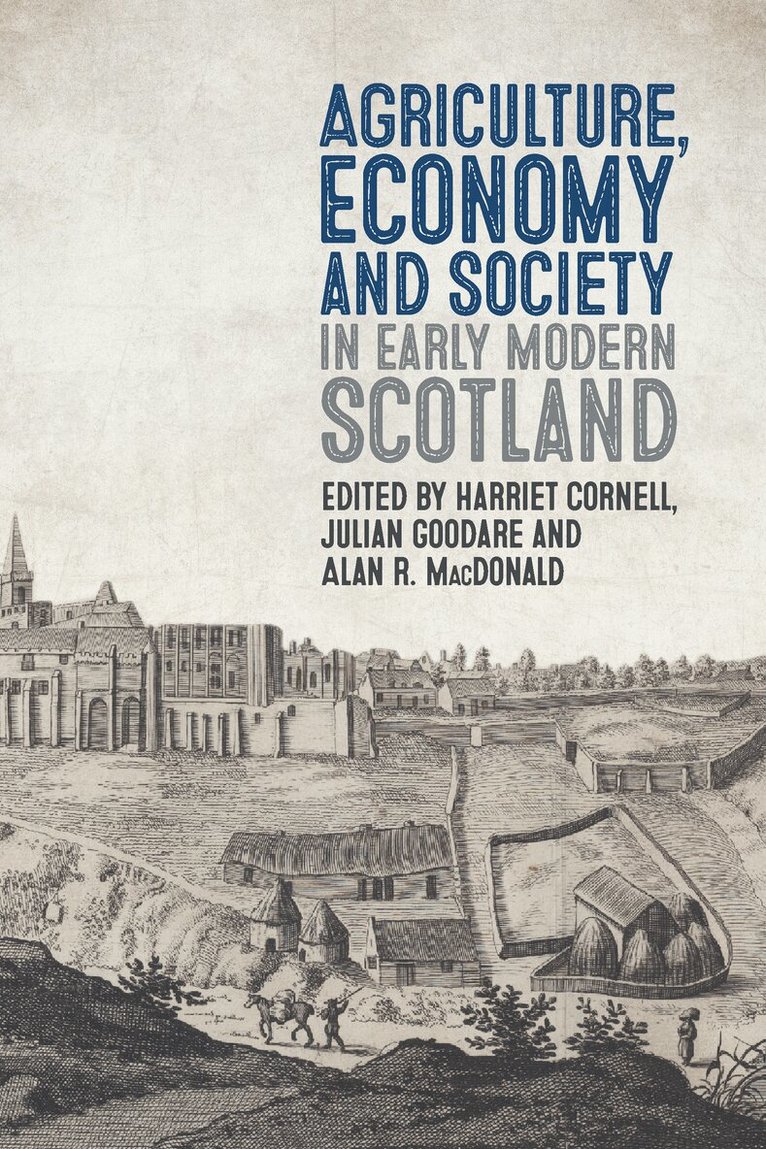
Showcases the latest research on Scotland's rural economy and society.Early modern Scotland was predominantly rural. Agriculture was the main occupation of most people at the time, so what happened in the countryside was crucial: economically, socially and culturally. The essays collected here focus on the years between around 1500 and 1750. This period, although before the main era of agricultural "improvement" in the late eighteenth and early nineteenth centuries, was nevertheless far from static in terms of agrarian development. Specific topics addressed include everyday farming practices; investment; landlords, tenants and estate management; and the cultural context within which agriculture was "imagined". The disastrous famine of 1622-23 is analysed in detail. The volume is completed by a comprehensive survey of recent historiography, setting agricultural history in its broader context.
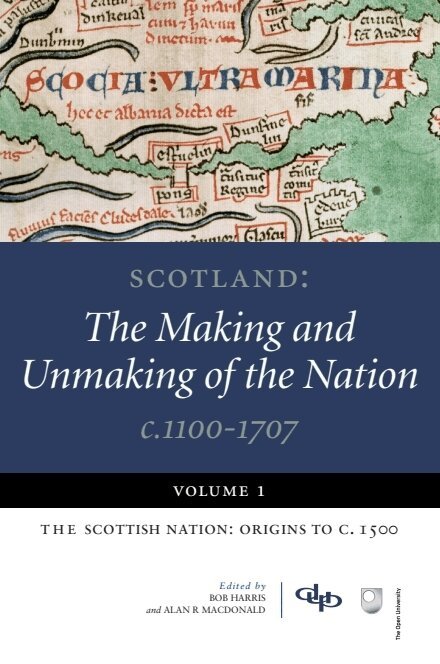
Scotland: The Making and Unmaking of the Nation c.1100-1707
Volume 1:The Scottish Nation: Origins to c. 1500
Häftad, Engelska, 2012
483 kr
Skickas inom 3-6 vardagar
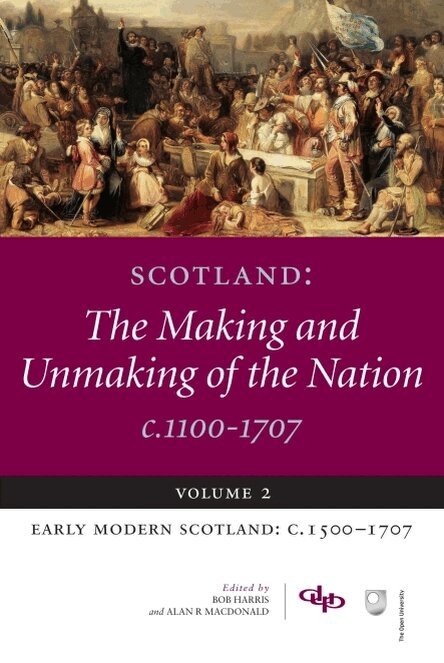
Scotland: The Making and Unmaking of the Nation c.1100-1707
Volume 2 Early Modern Scotland: c.1500-1707
Häftad, Engelska, 2007
247 kr
Skickas
1 290 kr
Skickas inom 7-10 vardagar
2 088 kr
Skickas inom 10-15 vardagar
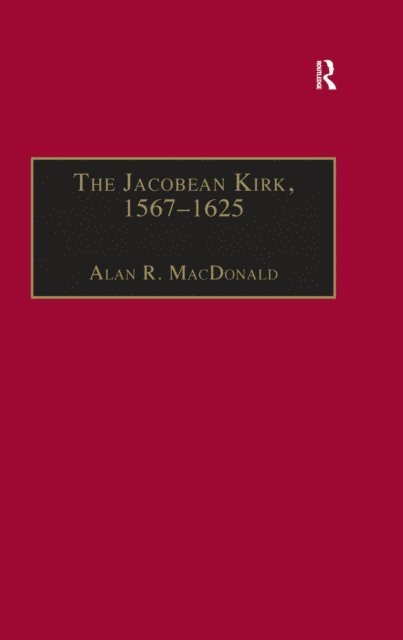
This book is the first detailed discussion of the political history of the Scottish Church in the reign of James VI (1567-1625). It offers a refreshing new perspective on the Reformed Kirk during the crucial period in its development. It is an examination of relations between Kirk and State based firmly on contemporary sources. Analysing the formation and evolution of clerical views, it argues for fluid patterns of opinion governed by events rather than fixed ideologies. As a result, it rejects the established notion of ’Melvillian’ and ’Episcopalian’ parties in the Kirk. Pivoting on the regal union of 1603, it explores the Scottish experience of the implementation of ecclesiastical policies under a multi-state monarchy in the light of recent British scholarship. It also assesses the significance of the regal union for the government of Scotland, for the status of the Kirk within Scotland and in relation to the Church of England. The result is a significant and challenging contribution to early modern Scottish and British historiography.