Keith M. Brown - Böcker
Visar alla böcker från författaren Keith M. Brown. Handla med fri frakt och snabb leverans.
10 produkter
10 produkter
526 kr
Skickas inom 7-10 vardagar
Even in the sixteenth and seventeenth centuries it was conventional for humanist writers and their Enlightenment successors to regard the nobility which dominated early modern Scottish society and politics as violent, unlearned, and backward - at best conservatively bound to feudal codes of behaviour; at worst, brutal, corrupt and anarchic. It is a view that prevails still. Keith Brown takes issue with this.The author draws on extensive research in the rich archives of the Scottish noble houses to demonstrate that the conventional view of the Scottish nobility is wrong. He shows that the nobility were as steeped in contemporary European debates and movements as they were rooted in local society. Far from holding back Scotland's economic and cultural development, they embraced economic change, seized financial opportunities, led the way in the pursuit of Renaissance ideals through their own learning and in the education of their children, and were partners in religious reform. Professor Brown makes extensive comparisons with the noble societies elsewhere in Europe to reveal how the differences and above all the similarities between the lives of Scottish nobles and their peers abroad.Elegantly written and illustrated with a wealth of contemporary incident and anecdote, the book presents an intimate and vivid picture of noble life in Scotland. It challenges and will change perceptions of early modern Scotland. Noble Society in Scotland is the first of two related books on the subject. The second, on noble power and the relations between the nobility, state and monarchy, will be published by EUP in 2003.
History of the Scottish Parliament
Parliament and Politics in Scotland, 1235-1560
Inbunden, Engelska, 2004
1 304 kr
Tillfälligt slut
These three volumes comprise a new history of Scotland’s first parliament from the first surviving official records in the thirteenth century to its final dissolution in 1707. Denigrated by unionists as inferior to the English parliament and despised by nationalists for agreeing to its own demise, the Scottish parliament has been shockingly under-researched by Scottish historians. This new history will go a long way towards redressing the balance, not merely putting the record straight but making it visible for the first time. Written by some twenty-five leading scholars the three volumes will be by far the most comprehensive history of the parliament ever published.Volumes 1 and 2 examine the history of parliament under the medieval and early modern monarchs. The former describes its role during the wars of independence, under the Stewart monarchy, and during the Reformation. The latter describes its role in the reign of James VI and throughout the century between the unions of the crowns in 1603 and of the parliaments in 1707, a period of royal absenteeism , religious upheaval, revolutions, civil wars, and economic catastrophe.Volume 3 addresses broad themes across the life of the parliament: relationship to the crown and nobility; legislative role; procedures; modes of government; relations with burghs and regions; receptiveness to political ideas; relationship with the church and role in national religious life.The refounding of the parliament in Edinburgh makes this a good time for a new look at the history, workings, and effectiveness of its long medieval and early modern antecedent. The History of the Scottish Parliament will be the definitive account for many years, informative, reliable, readable, and replete with story, character and incidentIt is, in sum, an outstanding testimony to the quality of historical scholarship in Scotland.
1 304 kr
Tillfälligt slut
This is the third volume in The History of the Scottish Parliament. In volumes 1 and 2 the contributors addressed discrete episodes in political history from the early thirteenth century through to 1707, demonstrating the richness of the sources for such historical writing and the importance of parliament to that history. In Volume 3 the contributors have built on that foundation and taken advantage of the Records of the Parliaments of Scotland to discuss a comprehensive range of key themes in the development of parliament.The editors, Keith M. Brown and Alan R. MacDonald, have assembled a team of established and younger scholars who each discuss a theme that ranges over the entire six centuries of the parliament's existence. These include broad, interpretive chapters on each of the key political constituencies represented in parliament. Thus Roland Tanner and Gillian MacIntosh write on parliament and the crown, Roland Tanner and Kirsty McAlister discuss parliament and the church, Keith Brown addresses parliament and the nobility and Alan MacDonald examines parliament and the burghs. Cross-cutting themes are also analysed. The political culture of parliament is the subject of a chapter by Julian Goodare, while parliament and the law, political ideas and social control are dealt with in turn by Mark Godfrey, James Burns and Alastair Mann. Finally, parliament's own procedures are also discussed by Alastair Mann.The History of the Scottish Parliament: Parliament in Context offers the most comprehensive and up-to-date account of the workings and significance of this important institution to the history of late medieval and early modern Scotland.
History of the Scottish Parliament
Parliament and Politics in Scotland, 1567 to 1707
Inbunden, Engelska, 2005
1 563 kr
Skickas inom 7-10 vardagar
These three volumes comprise a new history of Scotland’s first parliament from the first surviving official records in the thirteenth century to its final dissolution in 1707. Denigrated by unionists as inferior to the English parliament and despised by nationalists for agreeing to its own demise, the Scottish parliament has been shockingly under-researched by Scottish historians. This new history will go a long way towards redressing the balance, not merely putting the record straight but making it visible for the first time. Written by some twenty-five leading scholars the three volumes will be by far the most comprehensive history of the parliament ever published.Volumes 1 and 2 examine the history of parliament under the medieval and early modern monarchs. The former describes its role during the wars of independence, under the Stewart monarchy, and during the Reformation. The latter describes its role in the reign of James VI and throughout the century between the unions of the crowns in 1603 and of the parliaments in 1707, a period of royal absenteeism , religious upheaval, revolutions, civil wars, and economic catastrophe.Volume 3 addresses broad themes across the life of the parliament: relationship to the crown and nobility; legislative role; procedures; modes of government; relations with burghs and regions; receptiveness to political ideas; relationship with the church and role in national religious life.The refounding of the parliament in Edinburgh makes this a good time for a new look at the history, workings, and effectiveness of its long medieval and early modern antecedent. The History of the Scottish Parliament will be the definitive account for many years, informative, reliable, readable, and replete with story, character and incidentIt is, in sum, an outstanding testimony to the quality of historical scholarship in Scotland.
669 kr
Skickas inom 3-6 vardagar
'Why do the wicked live on, growing old and increasing in power?' This quotation from Job begins Keith Brown's study of how Scotland's nobility rallied under the pressure of the Reformation and the Covenanting Revolution - a tumultuous period which has generated much historical debate on issues of political authority and power. In this volume Brown builds on his previous book, Noble Society in Scotland, to argue that in spite of the changes brought about by the Reformation, by the recovery of crown authority and by the regal union between England and Scotland, the huge power exercised by the nobility remained fundamentally unaltered. Hence, when political crisis did surface in 1637-8, the crown lacked the means to oppose a noble-led revolution.Noble Power in Scotland discusses the nobility's political relationship with the crown in chapters at either end of this volume, taking the regal union of 1603 as the crucial dividing point. The remainder of the book addresses in turn themes that analyse the various roles nobles inhabited in exercising power. Keith Brown situates the Scottish debate within the wider arena of European nobilities and their enduring power, showing that the Scottish nobility successfully adapted to political change, just as it did to economic and cultural change, to retain its dominant political position throughout the period.Key Features:Nobles as chiefs of clans and lords of Scottish territoriesNobles as warriors and soldiers in domestic and foreign serviceNobles as men of honour Nobles as law-bringers and magistrates Nobles as parliamentarians, royal councillors and courtiers
306 kr
Kommande
This is the third volume in The History of the Scottish Parliament. In volumes 1 and 2 the contributors addressed discrete episodes in political history from the early thirteenth century through to 1707, demonstrating the richness of the sources for such historical writing and the importance of parliament to that history. In Volume 3 the contributors have built on that foundation and taken advantage of the Records of the Parliaments of Scotland to discuss a comprehensive range of key themes in the development of parliament.The editors, Keith M. Brown and Alan R. MacDonald, have assembled a team of established and younger scholars who each discuss a theme that ranges over the entire six centuries of the parliament's existence. These include broad, interpretive chapters on each of the key political constituencies represented in parliament. Thus Roland Tanner and Gillian MacIntosh write on parliament and the crown, Roland Tanner and Kirsty McAlister discuss parliament and the church, Keith Brown addresses parliament and the nobility and Alan MacDonald examines parliament and the burghs. Cross-cutting themes are also analysed. The political culture of parliament is the subject of a chapter by Julian Goodare, while parliament and the law, political ideas and social control are dealt with in turn by Mark Godfrey, James Burns and Alastair Mann. Finally, parliament's own procedures are also discussed by Alastair Mann.The History of the Scottish Parliament: Parliament in Context offers the most comprehensive and up-to-date account of the workings and significance of this important institution to the history of late medieval and early modern Scotland.
History of the Scottish Parliament
Parliament and Politics in Scotland, 1567 to 1707
Häftad, Engelska, 2026
306 kr
Kommande
These three volumes comprise a new history of Scotland’s first parliament from the first surviving official records in the thirteenth century to its final dissolution in 1707. Denigrated by unionists as inferior to the English parliament and despised by nationalists for agreeing to its own demise, the Scottish parliament has been shockingly under-researched by Scottish historians. This new history will go a long way towards redressing the balance, not merely putting the record straight but making it visible for the first time. Written by some twenty-five leading scholars the three volumes will be by far the most comprehensive history of the parliament ever published.Volumes 1 and 2 examine the history of parliament under the medieval and early modern monarchs. The former describes its role during the wars of independence, under the Stewart monarchy, and during the Reformation. The latter describes its role in the reign of James VI and throughout the century between the unions of the crowns in 1603 and of the parliaments in 1707, a period of royal absenteeism , religious upheaval, revolutions, civil wars, and economic catastrophe.Volume 3 addresses broad themes across the life of the parliament: relationship to the crown and nobility; legislative role; procedures; modes of government; relations with burghs and regions; receptiveness to political ideas; relationship with the church and role in national religious life.The refounding of the parliament in Edinburgh makes this a good time for a new look at the history, workings, and effectiveness of its long medieval and early modern antecedent. The History of the Scottish Parliament will be the definitive account for many years, informative, reliable, readable, and replete with story, character and incidentIt is, in sum, an outstanding testimony to the quality of historical scholarship in Scotland.
History of the Scottish Parliament
Parliament and Politics in Scotland, 1235-1560
Häftad, Engelska, 2026
247 kr
Kommande
These three volumes comprise a new history of Scotland’s first parliament from the first surviving official records in the thirteenth century to its final dissolution in 1707. Denigrated by unionists as inferior to the English parliament and despised by nationalists for agreeing to its own demise, the Scottish parliament has been shockingly under-researched by Scottish historians. This new history will go a long way towards redressing the balance, not merely putting the record straight but making it visible for the first time. Written by some twenty-five leading scholars the three volumes will be by far the most comprehensive history of the parliament ever published.Volumes 1 and 2 examine the history of parliament under the medieval and early modern monarchs. The former describes its role during the wars of independence, under the Stewart monarchy, and during the Reformation. The latter describes its role in the reign of James VI and throughout the century between the unions of the crowns in 1603 and of the parliaments in 1707, a period of royal absenteeism , religious upheaval, revolutions, civil wars, and economic catastrophe.Volume 3 addresses broad themes across the life of the parliament: relationship to the crown and nobility; legislative role; procedures; modes of government; relations with burghs and regions; receptiveness to political ideas; relationship with the church and role in national religious life.The refounding of the parliament in Edinburgh makes this a good time for a new look at the history, workings, and effectiveness of its long medieval and early modern antecedent. The History of the Scottish Parliament will be the definitive account for many years, informative, reliable, readable, and replete with story, character and incidentIt is, in sum, an outstanding testimony to the quality of historical scholarship in Scotland.
156 kr
Skickas inom 5-8 vardagar
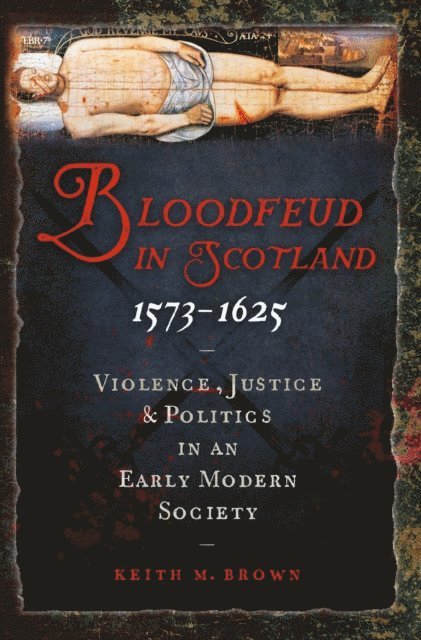
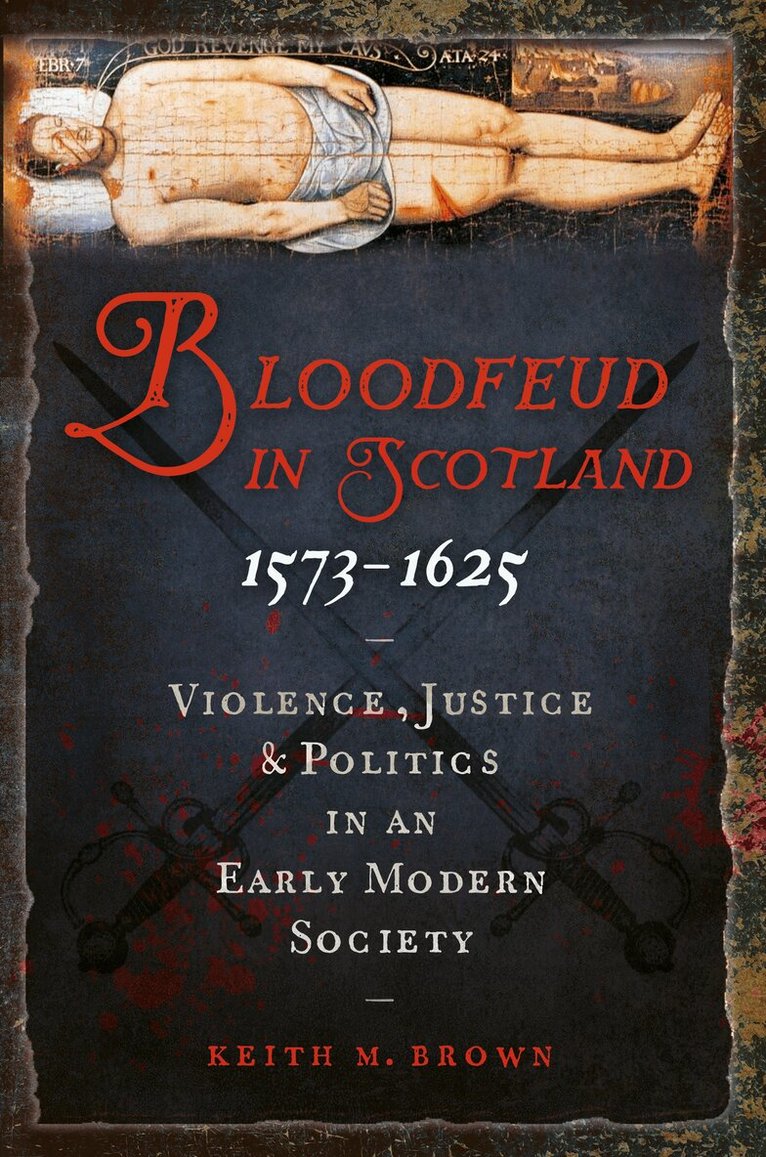
Bloodfeud in Scotland 1573-1625
Violence, Justice and Politics in an Early Modern Society
Häftad, Engelska, 2026
396 kr
Skickas
Feuding had an effect on the history of most of Europe. Scotland provides a fascinating focus for the study of the bloodfeud because feuding survived until remarkably late there, and thus is much better documented than in other European societies. This examination of the Scottish evidence shows its relevance to the wider European community to which the Scots belonged, reveals much about the nature of the bloodfeud in general, and explores the changes in society which at last brought about its suppression.The bloodfeud has been the subject of anthropological rather than historical investigation, partly because it largely disappeared at an early stage in the development of literacy in Europe and has never been a fashionable research topic for historians. In this study of fifteenth- and sixteenth-century feud in Scotland, Keith Brown focuses on its context in society, politics and the ideology that served to uproot the tradition. The book will be of value to historians of many different cultures and periods.