Alessandra Criscuoli – författare
Visar alla böcker från författaren Alessandra Criscuoli. Handla med fri frakt och snabb leverans.
4 produkter
4 produkter
1 446 kr
Tillfälligt slut
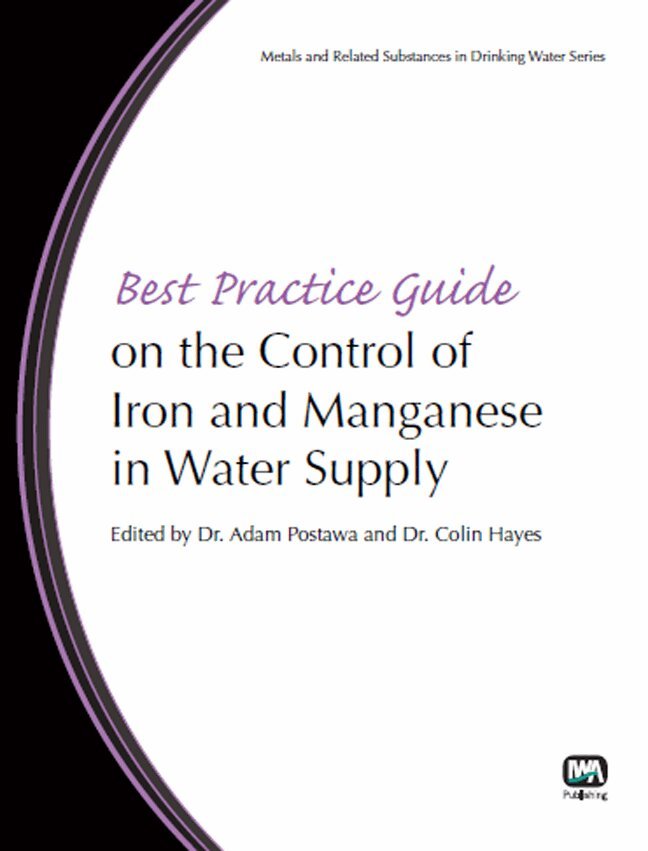
This Best Practice Guide on the Control of Iron and Manganese in Water Supply is one of a series produced by the International Water Association’s Specialist Group on Metals and Related Substances in Drinking Water. Iron and manganese are often found in soft upland water sources associated with natural organic matter and are also commonly found in the groundwater abstracted from confined and unconfined aquifers. The presence of iron and manganese in water is one of the most frequent reasons for customers’ complaint due to aesthetic issues (yellow, brown and black or stains on laundry and plumbing fixtures). These two metals can be removed fairly readily by physico-chemical treatment. The municipal treatment systems deployed derive benefit from their larger scale, particularly in relation to control, but the processes used are less suitable for the numerous small supplies that are the most common water supplies throughout Europe, especially in rural areas. One important source of iron in drinking water is from old corroded cast-iron water mains, historically the material used most commonly in supply networks. Replacement and refurbishment is very expensive and the major challenge is how best to prioritize available expenditure. The purpose for this Best Practice Guide on the Control of Iron and Manganese in Water Supply is to give readers the broad view of a problem based on state-of-the-art compilation of the range of scientific, engineering, regulatory and operational issues concerned with the control of iron and manganese in drinking water. The Guide is of interest to water utility practitioners, health agencies and policy makers, as well as students on civil engineering and environmental engineering courses. Authors: Dr Adam Postawa, AGH University of Science and Technology, Faculty of Geology, Geophysics and Environment Protection, Krakow, Poland and Dr Colin R Hayes, University of Swansea, UK, Chair of IWA Specialist Group on Metals and Related Substances in Drinking Water.
1 822 kr
Tillfälligt slut
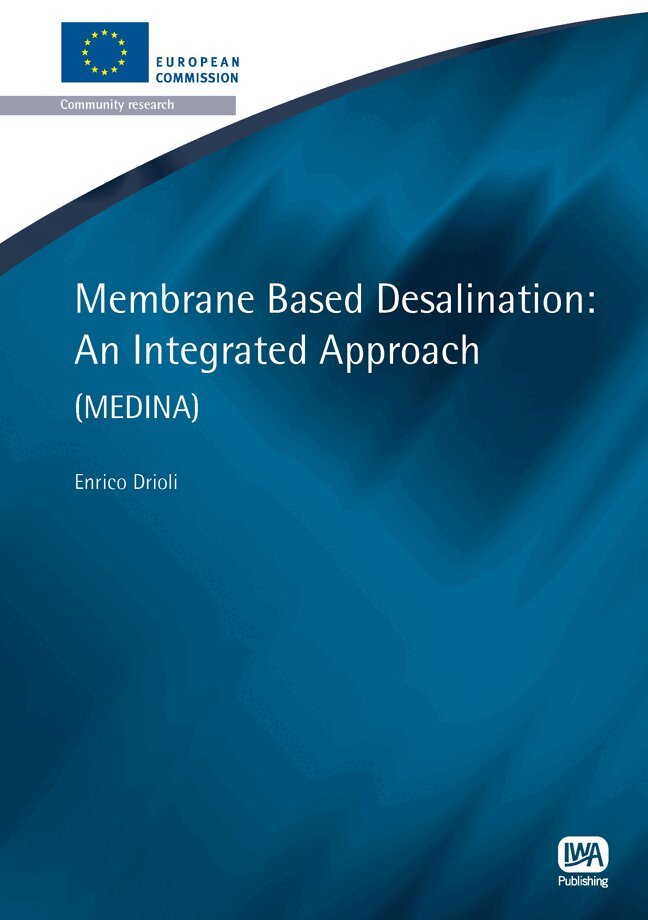
Reverse osmosis is the dominant technology in water desalination. However, some critical issues remain open: improvement of water quality, enhancement of the recovery factor, reduction of the unit water cost, minimizing the brine disposal impact. This book aims to solve these problems with an innovative approach based on the integration of different membrane operations in pre-treatment and post-treatment stages. Membrane-Based Desalination: An Integrated Approach (acronym MEDINA) has been a three year project funded by the European Commission within the 6th Framework Program. The project team has developed a work programme aiming to improve the current design and operation practices of membrane systems used for water desalination, trying to solve or, at least, to decrease the critical issues of sea and brackish water desalination systems. In the book, the main results achieved in the nine Work Packages constituting the project will be described, and dismissed by the leaders of the various WPs. The following areas are explored in the book: the development of advanced analytical methods for feed water characterization, appropriate fouling indicators and prediction tools, procedures and protocols at full-scale desalination facilities; the identification of optimal seawater pre-treatment strategies by designing advanced hybrid membrane processes (submerged hollow fibre filtration/reaction, adsorption/ion exchange/ozonation) and comparison with conventional methods; the optimisation of RO membrane module configuration, cleaning strategies, reduction of scaling potential by NF; the development of strategies aiming to approach the concept of Zero Liquid Discharge (increasing the water recovery factor up to 95% by using Membrane Distillation - MD; bringing concentrates to solids by Membrane Crystallization or Wind Intensified Enhanced Evaporation) and to reduce the brine disposal environmental impact and cost; increase the sustainability of desalination process by reducing energy consumption (evaluation of MD, demonstration of a new energy recovery device for SWRO installations) and use of renewable energy (wind and solar). Colour figures (PDF, 6MB) Visit the IWA WaterWiki to read and share material related to this title: http://www.iwawaterwiki.org/xwiki/bin/view/Articles/WaterdesalinationandEuropeanresearch
2 348 kr
Skickas inom 10-15 vardagar
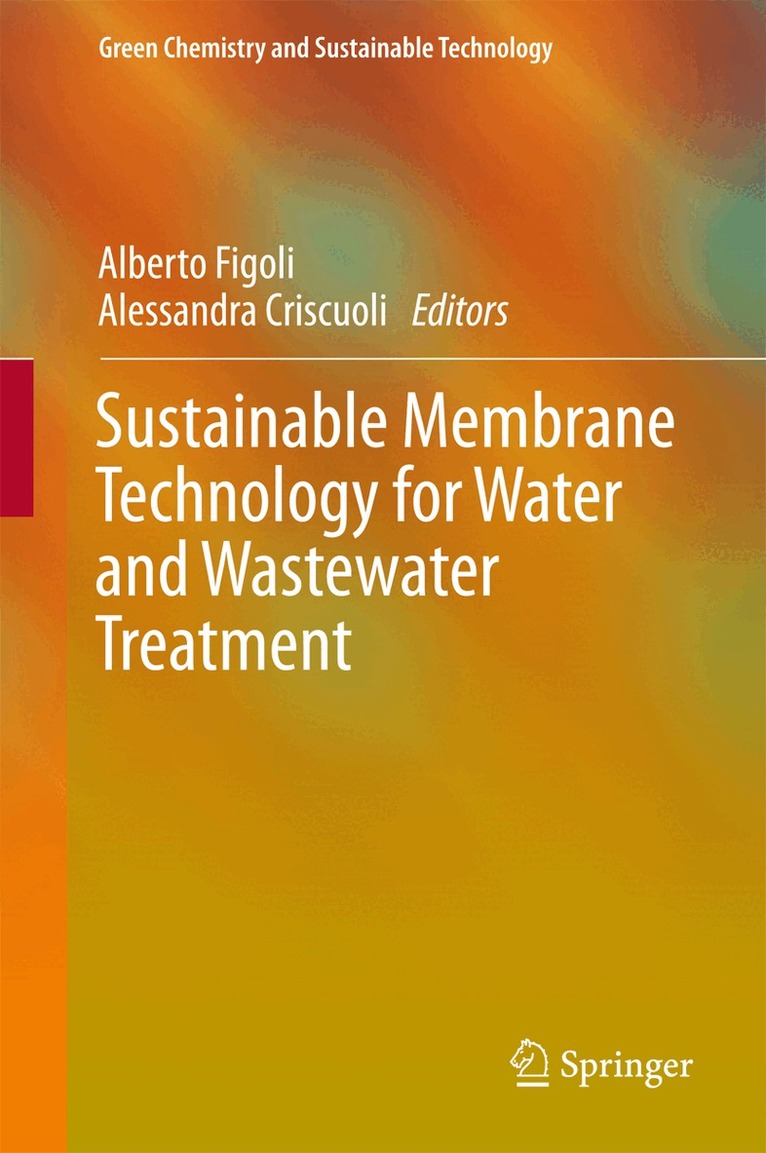
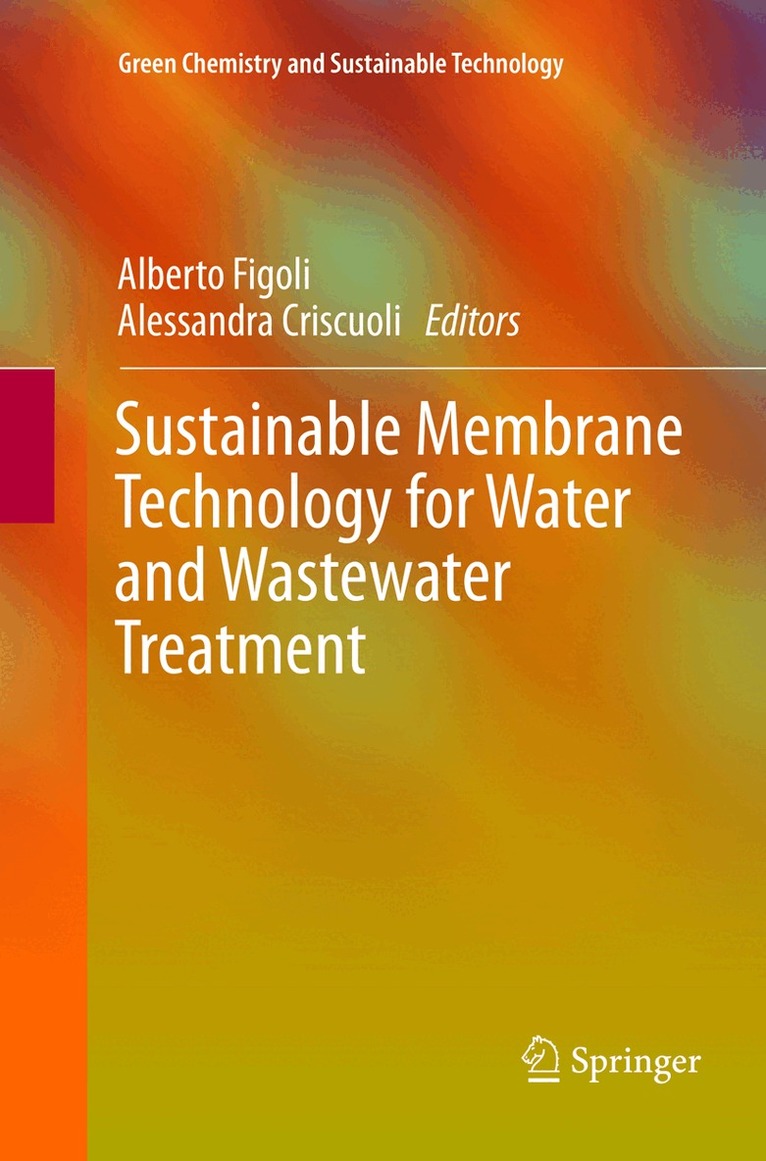
This book analyses the sustainability of membrane operations applied on an industrial scale, as well as that of those under investigation on lab/pilot scales, covering also the preparation of both polymeric and inorganic membranes. It presents reverse osmosis in desalination, membrane bioreactors for municipal wastewater treatment and pressure-driven industrial wastewater treatment in agrofood and textile fields as examples of industrial membrane operations. Regarding the membrane processes still on a lab/pilot scale, the analysis includes membrane operations for the recovery of valuable products from wastewater streams, for the removal of toxic compounds from water/wastewater, and for zero liquid discharge approaches in desalination. The book offers a useful guide for scientists and engineers working in various fields, including membrane technology, separation, desalination, and wastewater treatment. Alberto Figoli and Alessandra Criscuoli are both Senior Researchersat the Institute on Membrane Technology (ITM-CNR), Italy.
2 348 kr
Skickas inom 10-15 vardagar
This book analyses the sustainability of membrane operations applied on an industrial scale, as well as that of those under investigation on lab/pilot scales, covering also the preparation of both polymeric and inorganic membranes.