Adam Postawa – författare
Visar alla böcker från författaren Adam Postawa. Handla med fri frakt och snabb leverans.
2 produkter
2 produkter
1 446 kr
Tillfälligt slut
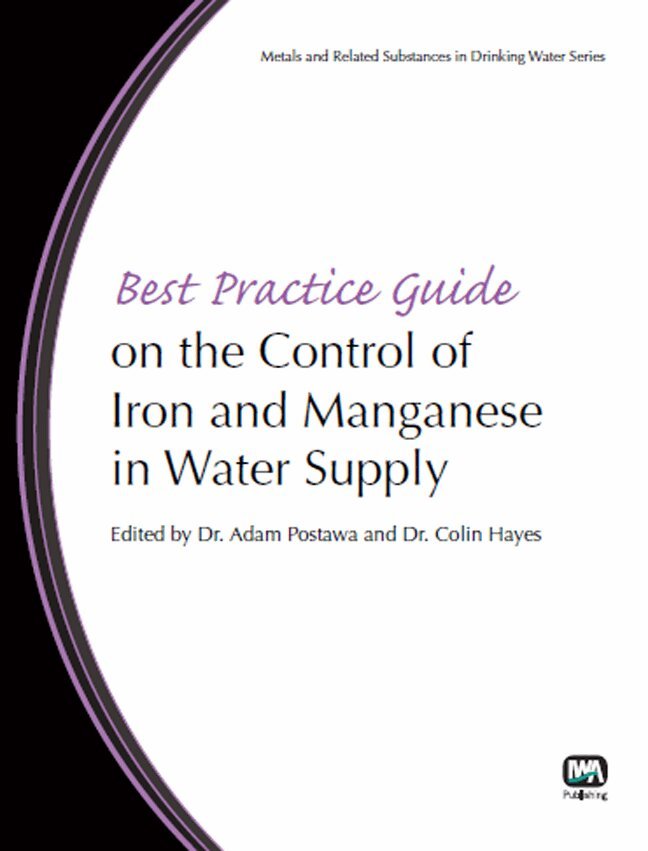
This Best Practice Guide on the Control of Iron and Manganese in Water Supply is one of a series produced by the International Water Association’s Specialist Group on Metals and Related Substances in Drinking Water. Iron and manganese are often found in soft upland water sources associated with natural organic matter and are also commonly found in the groundwater abstracted from confined and unconfined aquifers. The presence of iron and manganese in water is one of the most frequent reasons for customers’ complaint due to aesthetic issues (yellow, brown and black or stains on laundry and plumbing fixtures). These two metals can be removed fairly readily by physico-chemical treatment. The municipal treatment systems deployed derive benefit from their larger scale, particularly in relation to control, but the processes used are less suitable for the numerous small supplies that are the most common water supplies throughout Europe, especially in rural areas. One important source of iron in drinking water is from old corroded cast-iron water mains, historically the material used most commonly in supply networks. Replacement and refurbishment is very expensive and the major challenge is how best to prioritize available expenditure. The purpose for this Best Practice Guide on the Control of Iron and Manganese in Water Supply is to give readers the broad view of a problem based on state-of-the-art compilation of the range of scientific, engineering, regulatory and operational issues concerned with the control of iron and manganese in drinking water. The Guide is of interest to water utility practitioners, health agencies and policy makers, as well as students on civil engineering and environmental engineering courses. Authors: Dr Adam Postawa, AGH University of Science and Technology, Faculty of Geology, Geophysics and Environment Protection, Krakow, Poland and Dr Colin R Hayes, University of Swansea, UK, Chair of IWA Specialist Group on Metals and Related Substances in Drinking Water.
1 321 kr
Tillfälligt slut
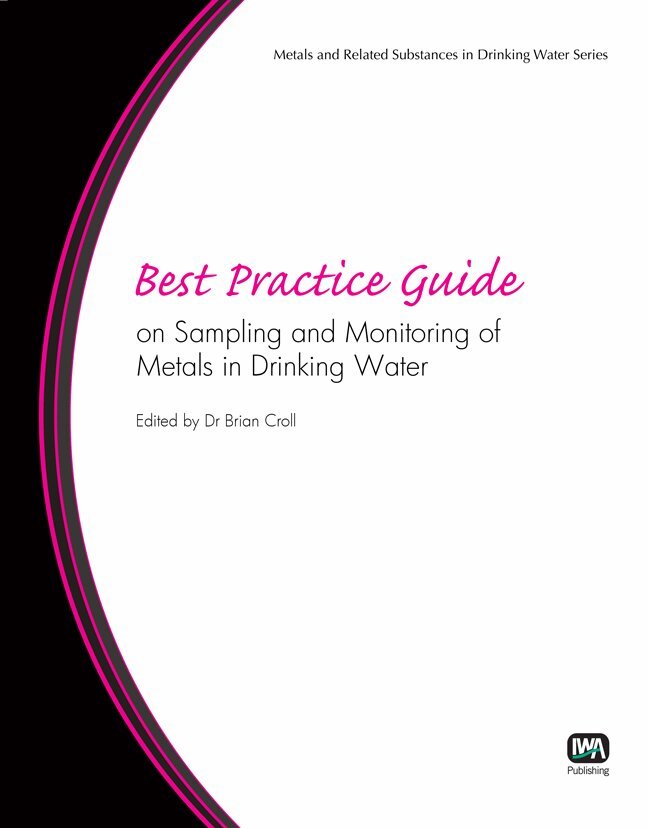
Part of Metals and Related Substances in Drinking Water Set - buy all five books together to save over 30%! There is increasing concern regarding the presence of metals, particularly heavy metals in drinking water. In addition to the well-known toxic effects of lead, which are discussed at length in the Best Practice Guide on the Control of Lead in Drinking Water (in this series of Guides), the latest WHO guide values for maximum mean concentrations of arsenic, nickel and others in drinking water have been lowered compared to previous versions. European Union, USA and National standards for drinking water have followed the trend based largely on the same toxicological information. There is currently growing interest in the presence of hexavalent chromium in drinking water following its finding in some drinking waters in the USA above the national upper limit for total chromium and research suggesting that this limit needs to be considerably lowered. Some metals, particularly iron and manganese are associated with the production of discoloured (dirty) water in distribution systems and are therefore very important to the production of water with acceptable aesthetic qualities. Others (iron and aluminium) are key to the treatment of raw waters to drinking water standards. In most cases it is not possible to continuously monitor waters for metals and suitable sampling programmes must be designed and carried out to give results representative of the true water quality. The Best Practice Guide on Sampling and Monitoring of Metals in Drinking Water gives guidance on the design and quality control of sampling programmes for metals in Raw waters, in the water treatment works, in the drinking water distribution system and at the consumers tap. It also gives guidance on the analytical methods that can be used for the analysis of metals and quality control of those methods. Sampling programmes on the same water will vary according to the purpose for which they are carried out and the statistical techniques used to determine and design the different types of programme are outlined. Finally some case studies of optimisation of sampling are set out. Best Practice Guide on Sampling and Monitoring of Metals in Drinking Water is a valuable text for scientists, engineers and quality managers working in drinking water supply, laboratory managers and scientists who carry out sampling and analysis, and water industry consultants. It is also an excellent resource for post graduate and research workers in the field of drinking water. Editor: Dr Adam Postawa, AGH University, Krakow, Poland