Colin Hayes – författare
Visar alla böcker från författaren Colin Hayes. Handla med fri frakt och snabb leverans.
5 produkter
5 produkter
1 446 kr
Skickas
This Best Practice Guide on the Control of Iron and Manganese in Water Supply is one of a series produced by the International Water Association’s Specialist Group on Metals and Related Substances in Drinking Water. Iron and manganese are often found in soft upland water sources associated with natural organic matter and are also commonly found in the groundwater abstracted from confined and unconfined aquifers. The presence of iron and manganese in water is one of the most frequent reasons for customers’ complaint due to aesthetic issues (yellow, brown and black or stains on laundry and plumbing fixtures). These two metals can be removed fairly readily by physico-chemical treatment. The municipal treatment systems deployed derive benefit from their larger scale, particularly in relation to control, but the processes used are less suitable for the numerous small supplies that are the most common water supplies throughout Europe, especially in rural areas. One important source of iron in drinking water is from old corroded cast-iron water mains, historically the material used most commonly in supply networks. Replacement and refurbishment is very expensive and the major challenge is how best to prioritize available expenditure. The purpose for this Best Practice Guide on the Control of Iron and Manganese in Water Supply is to give readers the broad view of a problem based on state-of-the-art compilation of the range of scientific, engineering, regulatory and operational issues concerned with the control of iron and manganese in drinking water. The Guide is of interest to water utility practitioners, health agencies and policy makers, as well as students on civil engineering and environmental engineering courses. Authors: Dr Adam Postawa, AGH University of Science and Technology, Faculty of Geology, Geophysics and Environment Protection, Krakow, Poland and Dr Colin R Hayes, University of Swansea, UK, Chair of IWA Specialist Group on Metals and Related Substances in Drinking Water.
1 822 kr
Tillfälligt slut
Part of Metals and Related Substances in Drinking Water Set - buy all five books together to save over 30%! Metals and Related Substances in Drinking Water comprises the proceedings of COST Action 637 - METEAU, held in Kristianstad, Sweden, October 13-15, 2010.This book collates the understanding of the various factors which control metals and related substances in drinking water with an aim to minimize environmental impacts. Metals and Related Substances in Drinking Water: Provides an overview of knowledge on metals and related substances in drinking water. Promotes good practice in controlling metals and related substances in drinking water. Helps to determining the environmental and socio-economic impacts of control measures through public participation Introduces the importance of mineral balance in drinking water especially when choosing treatment methods Shares practitioner experience. The proceedings of this international conference contain many state-of-the-art presentations by leading researchers from across the world. They are of interest to water sector practitioners, regulators, researchers and engineers.
1 446 kr
Skickas
Part of Metals and Related Substances in Drinking Water Set - buy all five books together to save over 30%! This Code of Practice is concerned with metal pick-up by drinking water within the water supply chain, particularly from water mains and from domestic and institutional pipe-work systems. The principal metals of interest are copper, iron, and lead, and to a lesser extent nickel and zinc. The emphasis is on cold drinking water at its point of use by consumers. Metals arising from water sources and hot water systems are not considered. The intention is that this Code of Practice establishes an international standard for the control of internal corrosion of water supply systems. It provides a basis for identifying both problems and sustainable solutions in a manner which is sound scientifically and will help operators to achieve due diligence. It provides a template for improving internal corrosion control in countries, cities or towns where this has been neglected or poorly implemented. Internal Corrosion Control of Water Supply Systems is deliberately brief in its presentation of a wide array of complex information, in order to provide direction to practitioners that can be more easily related to their specific circumstances. The book also provides a series of check-lists and criteria to be used in risk assessment. Editor: Dr Colin R Hayes, University of Swansea, UK, Chair of IWA Specialist Group on Metals and Related Substances in Drinking Water.
Optimisation of Corrosion Control for Lead in Drinking Water Using Computational Modelling Techniques
Häftad, Engelska, 2013
1 822 kr
Tillfälligt slut
In many respects, lead in drinking water has become a forgotten problem, since the mid 1980s when a range of environmental controls were implemented to reduce exposure to lead. This is largely because the sampling protocols, that underpin regulatory controls, are mostly inadequate and have tended to under-estimate the amount of lead that can be present in drinking water (IWA, 2010). Optimisation of Corrosion Control for Lead in Drinking Water Using Computational Modelling Techniques shows how compliance modelling has been used to very good effect in the optimisation of plumbosolvency control in the United Kingdom, particularly in the optimisation of orthophosphate dosing. Over 100 water supply systems have been modelled, involving 30% of the UK’s water companies. This “proof-of-concept” project has the overall objective of demonstrating that these modelling techniques could also be applicable to the circumstances of Canada and the United States, via three case studies. This report is the first in the Research Report Series published by the IWA Specialist Group on Metals and Related Substances in Drinking Water. Authors: Dr. C. R. Hayes and Dr. T. N. Croft Collaborators A. Campbell, City of Ottawa Water (CA) I. P. Douglas, City of Ottawa Water (CA) P. Gadoury, Providence Water (US) M. R. Schock, US Environmental Protection Agency (US)
1 321 kr
Tillfälligt slut
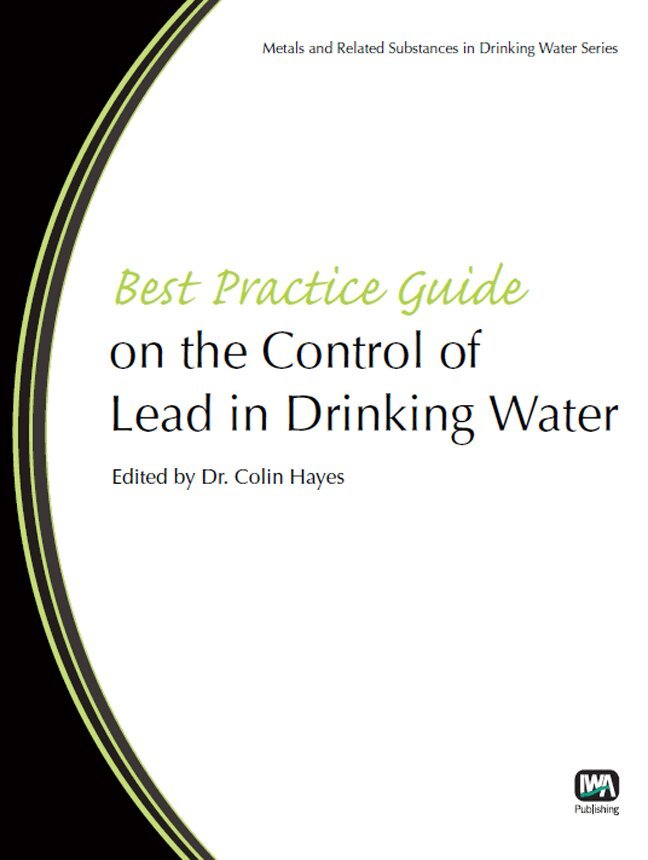
Part of Metals and Related Substances in Drinking Water Set - buy all five books together to save over 30%! Visit: http://iwapublishing.comThe Best Practice Guide on the Control of Lead in Drinking Water brings together, for the first time, all of the regulatory, health, monitoring, risk assessment, operational and technological issues relevant to the control of lead in drinking water. Its focus is Europe and North America and the Guide benefits from the input of an international research network involving 28 countries. A large range of illustrative examples and case studies are provided. The Guide will be of interest to scientists, engineers, regulators and health specialists who are involved in the provision of safe drinking water. The reader will gain a comprehensive understanding of how to assess lead in drinking water problems, both in the water supply systems that serve a City, Town or rural area and at individual properties, dependent on their knowledge of pipe-work circumstances and water quality. Options for corrective action are outlined and their strengths and weaknesses explained, with information on costs and environmental impact. The reader should then be able to develop a strategy for controlling lead in drinking water in their area, establish an appropriate monitoring programme, select the right combination of corrective measures, and define the level of risk reduction that will likely be achieved. The Best Practice Guide provides a succinct compilation of the wide range of issues that relate to lead in drinking water, at a time when the regulations are under review in both Europe and North America. It will also be very relevant to all those implementing the Protocol on Water and Health, as lead in drinking water has recently been adopted as one of the key issues requiring assessment, improvement planning and reporting. The key features are: For the first time, all the complex inter-related aspects of lead in drinking water have been brought together.The detailed explanations given on sampling and monitoring should avoid mistakes being repeated.The information on optimising corrective treatment measures is the most comprehensive to date.The Best Practice Guide will facilitate the protection of water consumers from lead contamination and reduce associated health risks. This Guide is one of a series produced by the International Water Association’s Specialist Group on Metals and Related Substances in Drinking Water. It is a state-of-the-art compilation of the range of scientific, engineering, regulatory and operational issues concerned with the control of lead in drinking water. Download the free Guide for Small Community Water Suppliers and Local Health Officials on Lead in Drinking Water at: http://iwapublishing.com/books/9781843393801/guide-small-community-water-suppliers-and-local-health-officials-lead-drinkingVisit the IWA WaterWiki to read and share material related to this title:http://www.iwawaterwiki.org/xwiki/bin/view/Articles/LeadinDrinkingWater