
Alice Lyons - Böcker
Visar alla böcker från författaren Alice Lyons. Handla med fri frakt och snabb leverans.
3 produkter
3 produkter
169 kr
Skickas
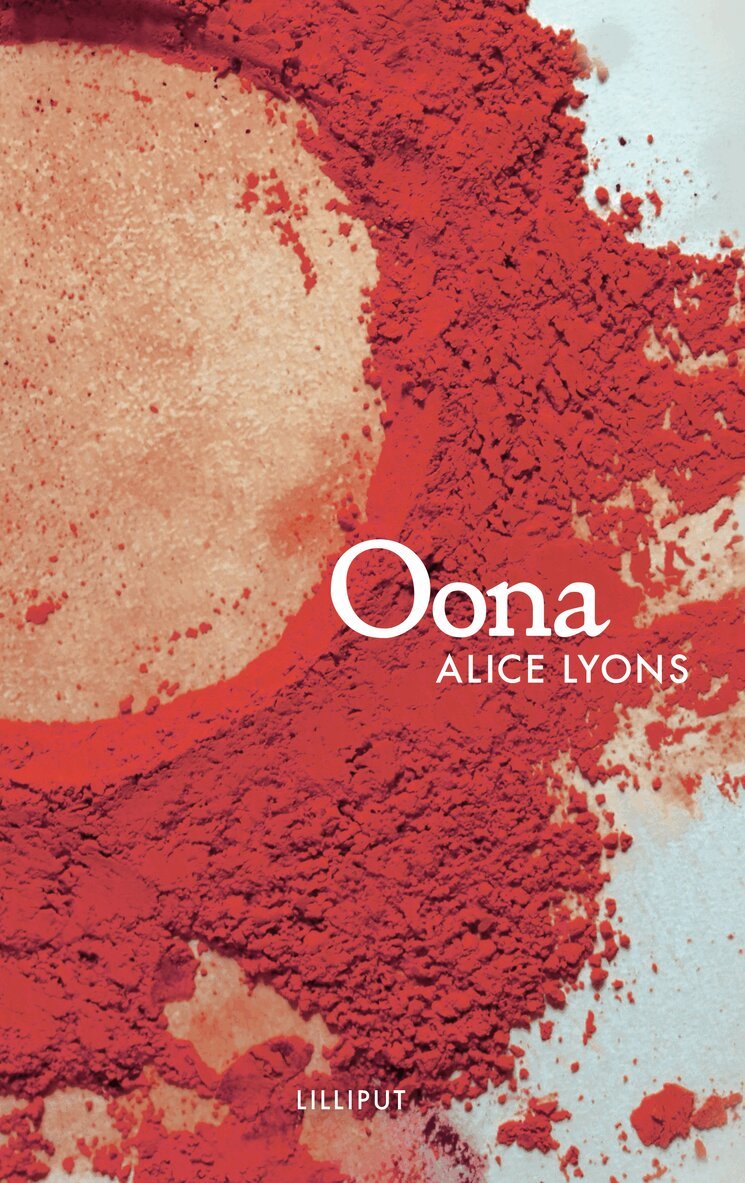
What is the sound of a voice that is alienated from itself? How can one truthfully represent the creative process of an artist? Oona, an artist-in-the-making, lives in an affluent suburban culture of first-generation immigrants in New Jersey where conspicuous consumption and white privilege prevail, and the denial of death is ubiquitous. The silence surrounding death extends to the family home where Oona is not told while her mother lies dying of cancer upstairs. Afterwards, a silence takes hold inside her: her inner life goes into a deep freeze. Emotionally hobbled, she has her first encounters with sex, drugs and other trials of adolescence.Lyons’ first novel gives voice to a female character on her fraught journey into adulthood and charts her evolution as an artist, as her adolescent dissociation is thawed through contact with the physical world, the materials of painting and her engagement with Irish community, culture and landscape.Set during the era of the Celtic Tiger and its aftermath, this is a resonant story conveyed in an innovative form. Written entirely without the letter ‘o’, the tone of the book reflects Oona’s inner damage and the destruction caused by hiding, omitting and obliterating parts of ourselves.
EAA 178: Hinxton, Cambridgeshire: Part I
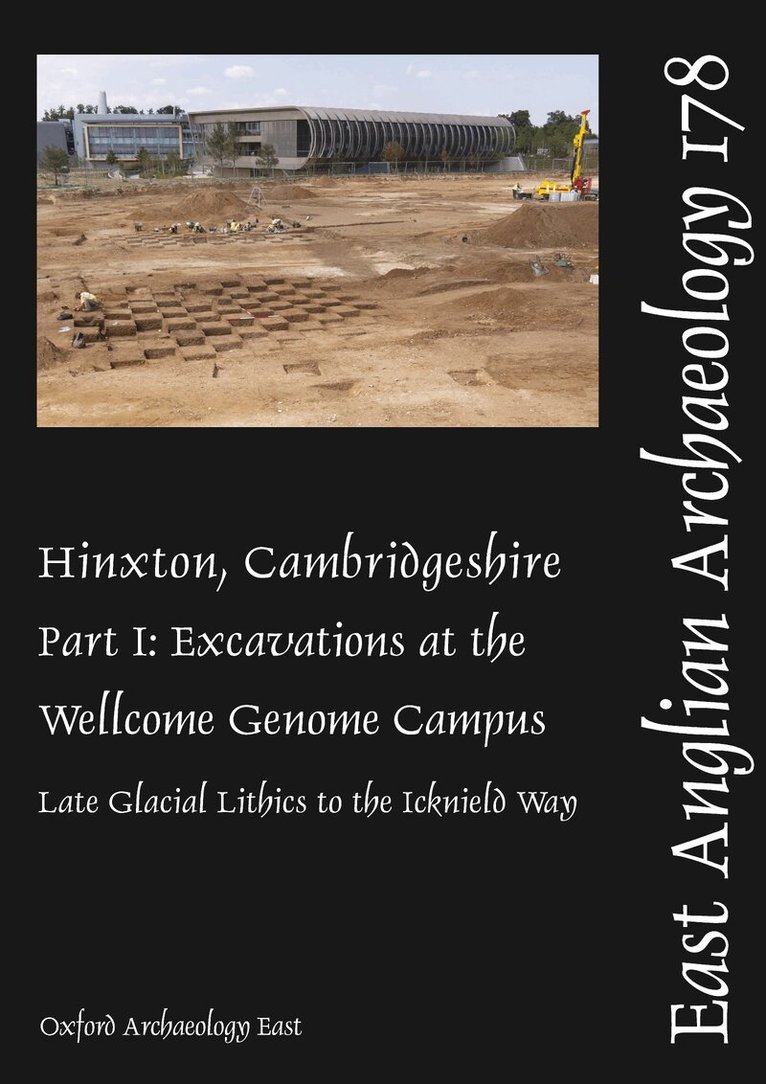
Excavations at the Wellcome Genome Campus: Late Glacial Lithics to the Icknield Way
Häftad, Engelska, 2023
346 kr
Skickas
Excavations at the Wellcome Genome Campus, Hinxton which revealed archaeological remains spanning early prehistory to the Roman period.
873 kr
Kommande
This issue of the Journal of Roman Pottery Studies focuses primarily on new data for early Roman pottery production and techniques. Three early Roman kilns were discovered at Longford, Gloucestershire associated with an originally Iron Age enclosure that was remodelled. Unusual features of the kilns included the use of ceramic tubes in one, and stacked pots to form the walls probably in all three. The associated pottery is closely linked to products of kilns known in Gloucester itself and is consistent with production for military-related communities rather than the wider Romano-British population of the region. The production may relate to an early stage of exploitation of the landscape consequent on establishment of the colonia at Gloucester by AD 98 if not rather earlier. Production probably did not continue after c. AD 120 at the very latest. At Brampton, Cambridgeshire in 2016, a cluster of eight previously unknown early Roman pottery kilns was recorded and subsequently published. Further analysis identified intriguing variation within the pottery assemblage, which provided an opportunity to investigate the chaîne opératoire. Technical and stylistic groups were examined in hand-specimen, thin-section petrography determined the fabric groups present and portable X-ray fluorescence helped to establish the geochemical composition of the sample. The data collected allowed for glimpses at the choices made by the potters and helped to unpick their making process, from which a characterising assessment of the organisation of production and its variations emerged. A kiln complex discovered at Elmswell, Suffolk close to the suggested course of a Roman road included two adjacent, single flue kilns associated with pottery forms dating to the later 1st–early 2nd centuries AD. The large pottery assemblage comprised primarily buff coloured flagons and black-surfaced jar forms and wasters, together with fragments of kiln furniture and associated environmental evidence and is discussed here in relation to the contemporary pattern of early Roman pottery production in this area of East Anglia, with particular regard to the question of itinerant, immigrant potters working out of Colchester.A new study of Upper Nene Valley Wares employed ceramic radiography to examine the embedding of potter’s wheel technology in the British craft. The data show that among certain Upper Nene Valley Wares the potter’s wheel was used to its greatest potential, to throw pots, thus marking a step-change relative to the heterogenous forming practices evident in earlier traditions. Discussion of the significance of this new understanding focuses on implications for narrative accounts of technological change during the Late Iron Age and early Roman periods and uses the development of parallel technological trajectories as a framework for understanding the emergence of diversity in early Roman pottery assemblages.Pottery associated with a Late Roman kiln of mid-3rd to early 4th century date in New Marston, Oxford was associated with large amounts of Oxfordshire white ware mortaria and red/brown slipped wares. A nummus of Constantine I (AD 310–313) recorded in the backfill of the kiln suggests that it is likely to have been retired during the early 4th century AD.