Alice Yao – författare
Visar alla böcker från författaren Alice Yao. Handla med fri frakt och snabb leverans.
4 produkter
4 produkter
518 kr
Skickas inom 5-8 vardagar
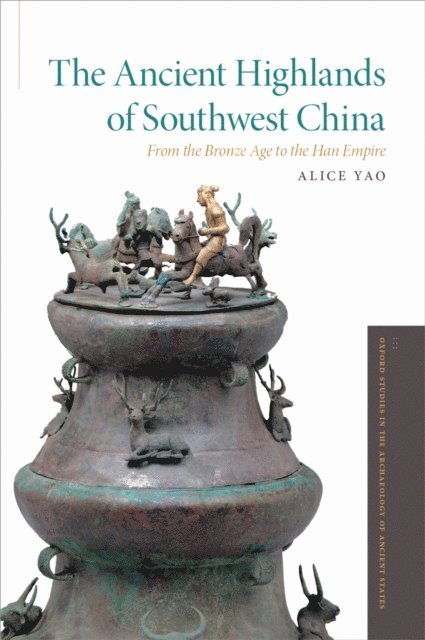
Although long considered to be a barren region on the periphery of ancient Chinese civilization, the southwest massif was once the political heartland of numerous Bronze Age polities. Their distinctive material tradition--intricately cast bronze kettle drums and cowrie shell containers--has given archaeologists and historians a glimpse of the extraordinary wealth, artistry, and power exercised by highland leaders over the course of the first millennium BC. In the first century BC, Han imperial conquest reduced local power and began a process of cultural assimilation.Instead of a clash between center and periphery or barbarism and civilization, this book examines the classic study of imperial rule as a confrontation between different political temporalities. The author provides an archaeological account of the southwest where Bronze Age landscape formations and funerary traditions bring to light a history of competing warrior cultures and kingly genealogies. In particular, the book illustrates how mourners used funerals and cemetery mounds to transmit social biographies and tribal affiliations across successive generations. Han incorporation thus entangled the orders of state time with the generational cycles of local factions, foregrounding the role of time in the production of power relations in imperial frontiers. The book extends approaches to empires to show how prehistoric time frames continue to shape the futures of frontier subjects despite imperial efforts to unify space and histories.
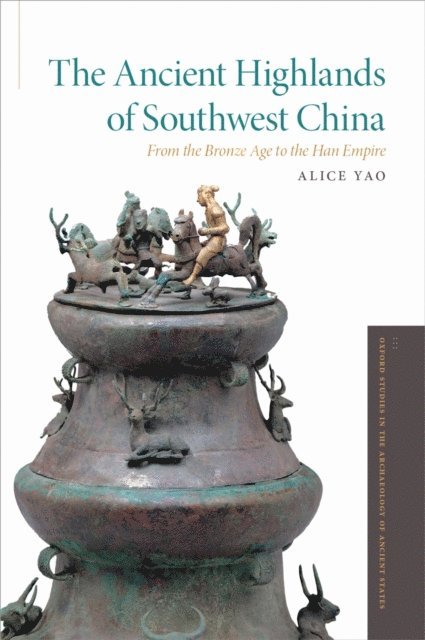
The Ancient Highlands of Southwest China
From the Bronze Age to the Han Empire
Inbunden, Engelska, 2016
1 002 kr
Skickas inom 5-8 vardagar
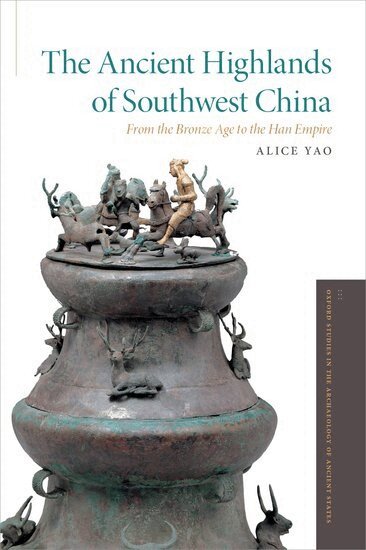
Although long considered to be a barren region on the periphery of ancient Chinese civilization, the southwest massif was once the political heartland of numerous Bronze Age kingdoms. Their distinctive material tradition--intricately cast bronze kettle drums and cowrie shell containers--have given archaeologists and historians a glimpse of the extraordinary wealth, artistry, and power exercised by highland leaders in prehistory. After a millennium of rule however, imperial conquest under the Han state reduced local power, leading to the disappearance of Bronze Age traditions and a fraught process of assimilation. Instead of a clash between center and periphery or barbarism and civilization, The Ancient Highlands of Southwest China examines the classic study of imperial conquest as a confrontation of different political times. Alice Yao grounds an archaeological account of the region where local landscape histories and funerary traditions bring to light a history of competing elite lineages, warrior cultures, and of kingly genealogies. In particular, this book illustrates how buried precious material objects--drums, ornate weaponry, and cowries--enabled the transmission and memorialization of biographies and lineage wealth across successive generations. A provocative picture emerges of imperial absorption and change as a problem entangling the generational time of highland leadership and its political cycles and the penetration of Chinese dynastic history as well as time of bureaucracy and state economy. Yao extends conventional approaches to empires to show how prehistoric forms of temporal experience can complicate imperial efforts to incorporate and unify time.
1 160 kr
Skickas inom 7-10 vardagar
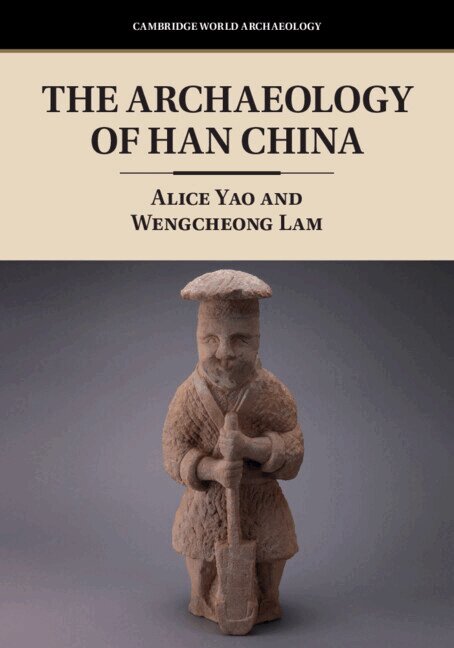
The Han Dynasty, which ruled from 202 BCE to 212 CE, is often taken as a reference point and model for Chinese identity and tradition. Covering a geographical expanse comparable to that of the People's Republic of China, it is foundational to understanding Chinese culture and politics, past and present. This volume offers an up-to-date overview of the archaeology of the Han Empire. Alice Yao and Wengcheong Lam study the period via an interdisciplinary approach that combines textual and archaeological evidence. Exploring the dynamics of empire building in East Asia, Yao and Lam draw on recent archaeological discoveries to recast Western Han imperialism as a series of contingent material projects, including the organization of spatial orders, foodways, and the expansion of communication and ritual activities. They also demonstrate how the archaeology of everyday life offers insights into the impact of social change, and how people negotiated their identities and cultural affiliations as individuals and imperial subordinates.
383 kr
Skickas inom 7-10 vardagar
The Han Dynasty, which ruled from 202 BCE to 212 CE, is often taken as a reference point and model for Chinese identity and tradition. Covering a geographical expanse comparable to that of the People's Republic of China, it is foundational to understanding Chinese culture and politics, past and present. This volume offers an up-to-date overview of the archaeology of the Han Empire. Alice Yao and Wengcheong Lam study the period via an interdisciplinary approach that combines textual and archaeological evidence. Exploring the dynamics of empire building in East Asia, Yao and Lam draw on recent archaeological discoveries to recast Western Han imperialism as a series of contingent material projects, including the organization of spatial orders, foodways, and the expansion of communication and ritual activities. They also demonstrate how the archaeology of everyday life offers insights into the impact of social change, and how people negotiated their identities and cultural affiliations as individuals and imperial subordinates.