Amara Esther Chimakonam – författare
Visar alla böcker från författaren Amara Esther Chimakonam. Handla med fri frakt och snabb leverans.
8 produkter
The Notion of Vitality in African Philosophy of Religion
Av Aribiah David Attoe, Amara Esther Chimakonam
Inbunden, 2025
892 kr
Lägg i varukorg
Since the early works of scholars like Alexis Kagame and Placide Tempels, discussions on the concept of vitality in African philosophy have acquired many dimensions. With scholars like Noah Dzobo and Thaddeus Metz projecting it as a grounding for human values and dignity, Aribiah Attoe and Yolanda …
The Notion of Vitality in African Philosophy of Religion
Av Aribiah David Attoe, Amara Esther Chimakonam
Häftad, 2025
282 kr
Lägg i varukorg
Since the early works of scholars like Alexis Kagame and Placide Tempels, discussions on the concept of vitality in African philosophy have acquired many dimensions. With scholars like Noah Dzobo and Thaddeus Metz projecting it as a grounding for human values and dignity, Aribiah Attoe and Yolanda …
Notion of Vitality in African Philosophy of Religion
Av Amara Esther Chimakonam, Aribiah David Attoe
E-bok, 2025
294 kr
Lägg i varukorg
Notion of Vitality in African Philosophy of Religion
Av Amara Esther Chimakonam, Aribiah David Attoe
E-bok, 2025
294 kr
Lägg i varukorg
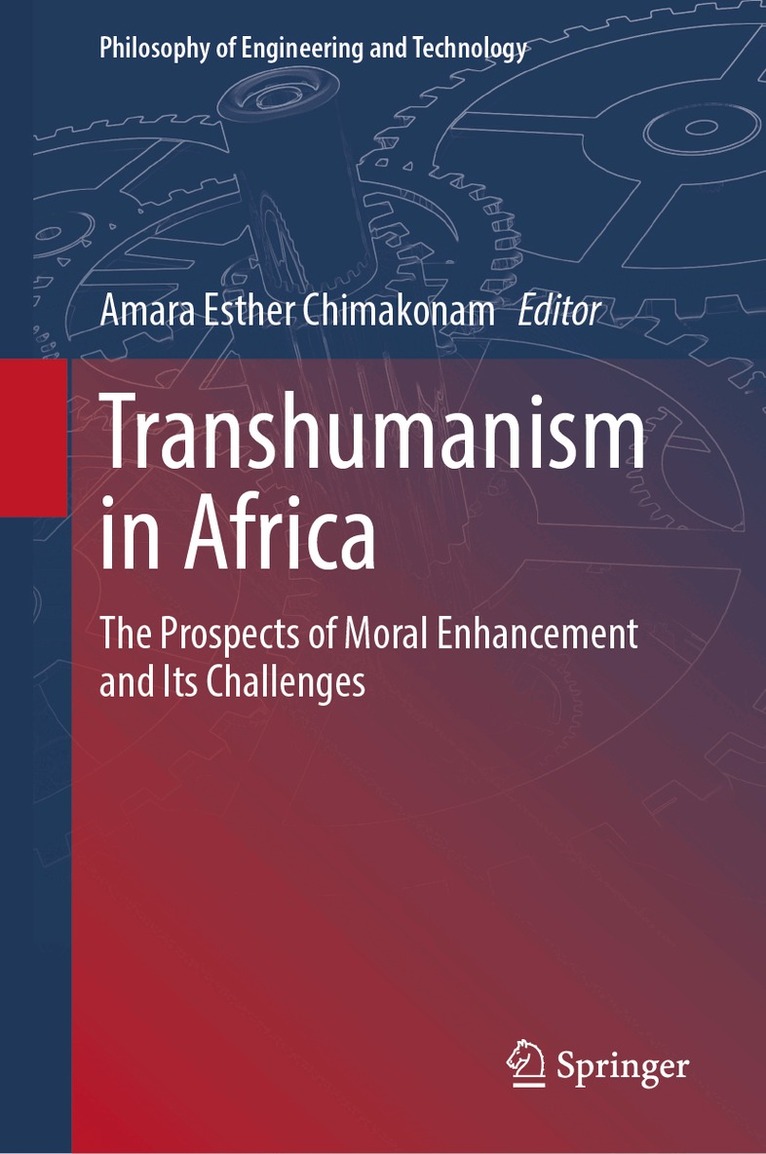
Transhumanism in Africa
The Prospects of Moral Enhancement and Its Challenges
Inbunden, 2026
1476 kr
Kommande
This edited volume demonstrates how African philosophy can offer new ways to understand transhumanism and moral enhancement, which involve improving humans' moral, emotional, and cognitive capacities, genes, and physical abilities through scientific and technological interventions. These …
Rethinking Feminist Discourse in Africa
Gender Marginalization or Complementarity?
Av Amara Esther Chimakonam, Jonathan O. Chimakonam
Inbunden, 2026
1098 kr
Lägg i varukorg
This book brings together leading African philosophers to revisit one of the most enduring questions in feminist discourse in Africa: were women in traditional African societies marginalized, or were gender roles historically organized through complementary, mutually sustaining responsibilities? …
Rethinking Feminist Discourse in Africa
Gender Marginalization or Complementarity?
Av Jonathan O. Chimakonam, Amara Esther Chimakonam
E-bok, 2026
1459 kr
Lägg i varukorg
This book brings together leading African philosophers to revisit one of the most enduring questions in feminist discourse in Africa: were women in traditional African societies marginalized, or were gender roles historically organized through complementary, mutually sustaining responsibilities? …
Her-storical Perspectives in African Philosophy
Critical Engagements with the Contributions of Women Philosophers
Av Amara Esther Chimakonam, Christiana Ngozi Calice Matris Idika
Inbunden, 2027
1263 kr
Kommande
Challenges male-dominated narratives in African philosophy and highlights contributions of women philosophers.This book recovers silenced histories through critical engagement and unveils a balanced, inclusive, transformative, and comprehensive framework for doing philosophy in an African context. …