Ammar Shamaileh - Böcker
Visar alla böcker från författaren Ammar Shamaileh. Handla med fri frakt och snabb leverans.
5 produkter
5 produkter
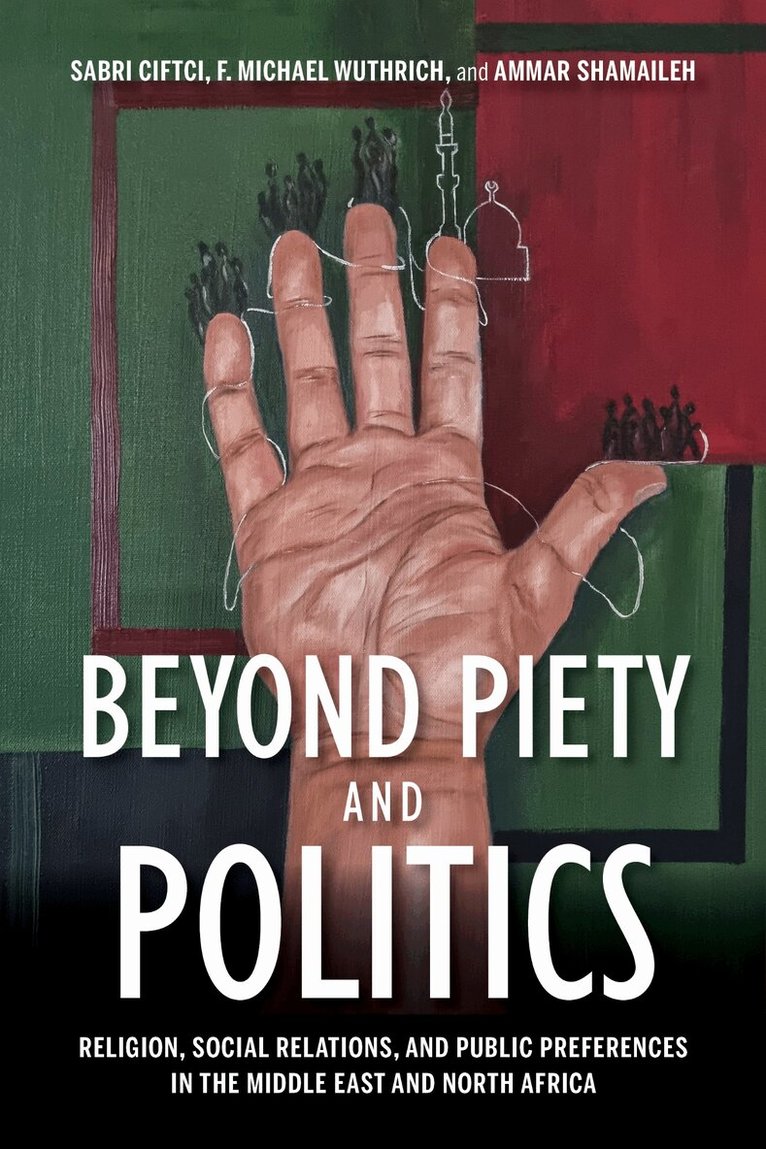
Beyond Piety and Politics
Religion, Social Relations, and Public Preferences in the Middle East and North Africa
Inbunden, Engelska, 2022
742 kr
Skickas inom 7-10 vardagar
How do ordinary men and women in Muslim-majority societies create religion-informed views of political topics such as democracy and economics?Beyond Piety and Politics provides a groundbreaking approach to understanding the depth and variety of political attitudes held by people who consider themselves to be pious Muslims. Using survey data on religious preferences and behavior, the authors argue for the relevance and importance of four outlook categories—religious individualist, social communitarian, religious communitarian, and post-Islamist—and use these to explore complex and nuanced attitudes of devout Muslims toward issues like democracy and economic distribution. They also reveal how intrafaith variation in political attitudes is not due simply to doctrinal differences but is also a product of the social aspects of religious association operating within political contexts. By highlighting the dynamic societal and political implications of religious devotion, Beyond Piety and Politics offers a fascinating new theoretical perspective on Islam and politics.
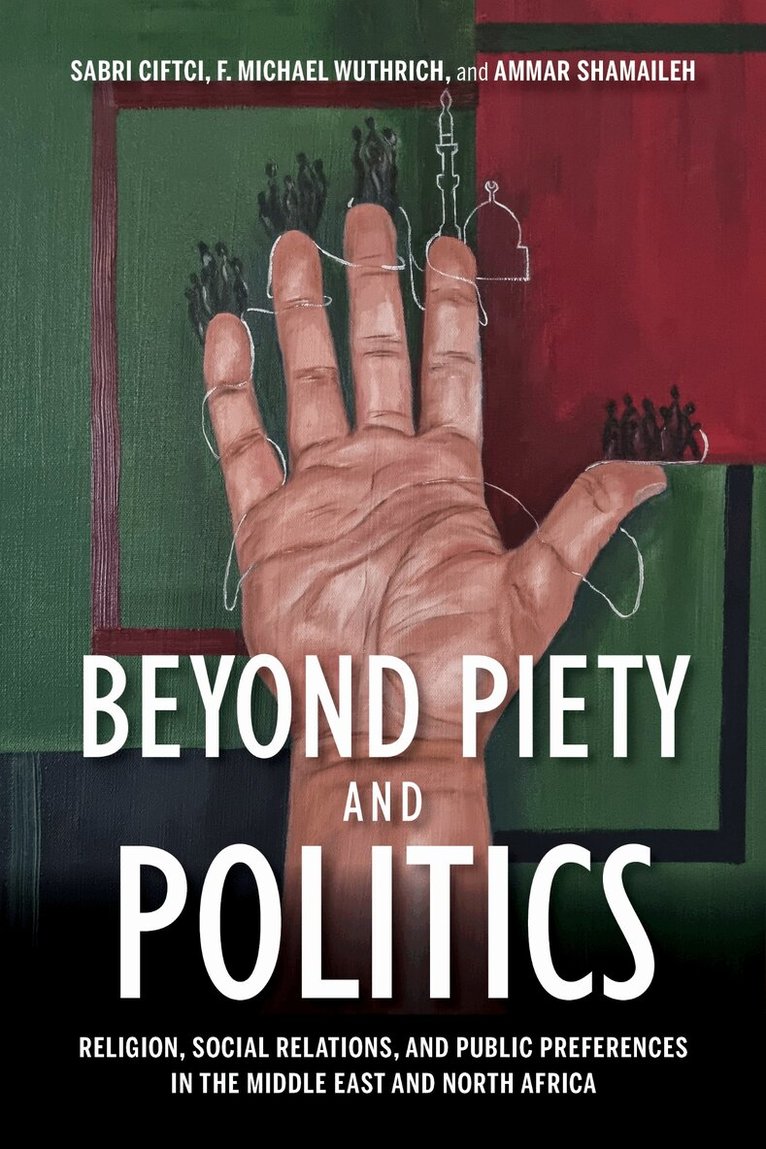
Beyond Piety and Politics
Religion, Social Relations, and Public Preferences in the Middle East and North Africa
Häftad, Engelska, 2022
216 kr
Skickas
How do ordinary men and women in Muslim-majority societies create religion-informed views of political topics such as democracy and economics?Beyond Piety and Politics provides a groundbreaking approach to understanding the depth and variety of political attitudes held by people who consider themselves to be pious Muslims. Using survey data on religious preferences and behavior, the authors argue for the relevance and importance of four outlook categories—religious individualist, social communitarian, religious communitarian, and post-Islamist—and use these to explore complex and nuanced attitudes of devout Muslims toward issues like democracy and economic distribution. They also reveal how intrafaith variation in political attitudes is not due simply to doctrinal differences but is also a product of the social aspects of religious association operating within political contexts. By highlighting the dynamic societal and political implications of religious devotion, Beyond Piety and Politics offers a fascinating new theoretical perspective on Islam and politics.
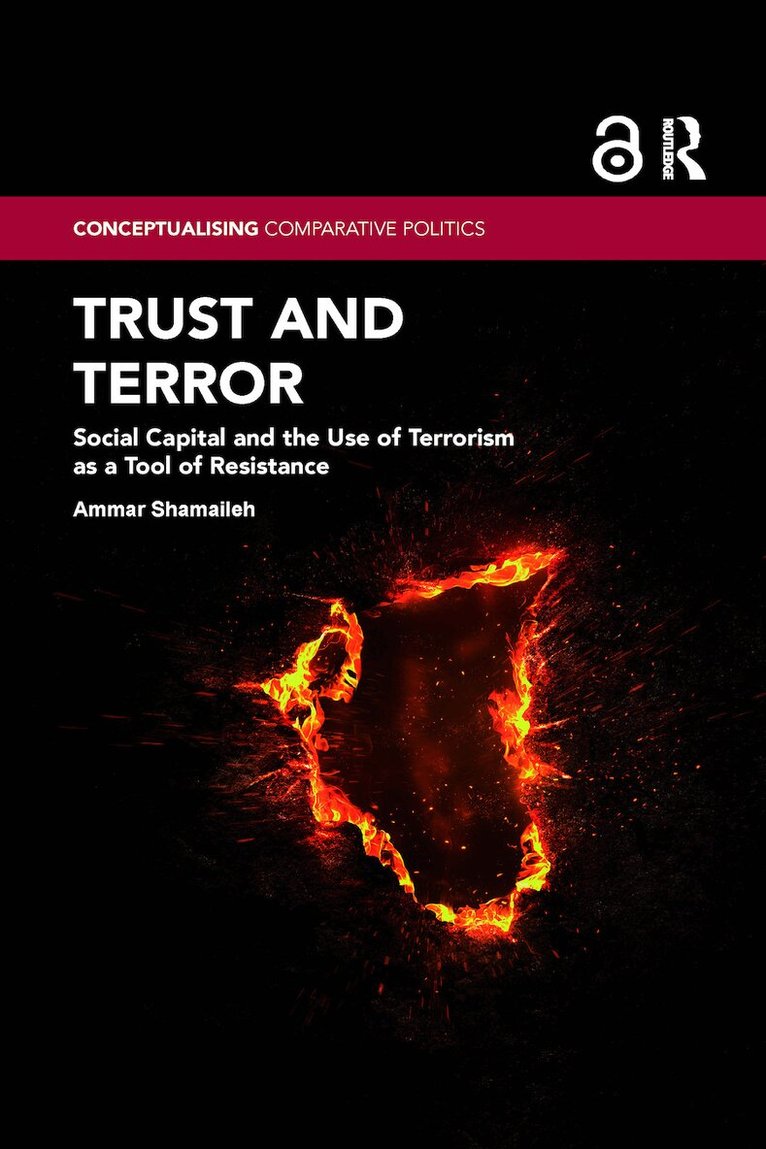
Trust and Terror
Social Capital and the Use of Terrorism as a Tool of Resistance
Häftad, Engelska, 2020
616 kr
Skickas inom 10-15 vardagar
Why do some individuals choose to protest political grievances via non-violent means, while others take up arms? What role does whom we trust play in how we collectively act? This book explores these questions by delving into the relationship between interpersonal trust and the nature of the political movements that individuals choose to join. Utilizing the examples of the Arab Spring uprisings in Egypt, Libya and Syria, a novel theoretical model that links the literature on social capital and interpersonal trust to violent collective action is developed and extended. Beyond simply bringing together two lines of literature, this theoretical model can serve as a prism from which the decision to join terrorist organizations or violent movements may be analyzed. The implications of the theory are then examined more closely through an in-depth look at the behavior of members of political movements at the outset of the Arab Spring, as well as statistical tests of the relationship between interpersonal trust and terrorism in the Middle East and globally.Trust and Terror will be of interest to scholars of Comparative Politics and International Relations.The Open Access version of this book, available at https://doi.org/10.4324/9781315505817, has been made available under a Creative Commons Attribution-Non Commercial-No Derivatives 4.0 license.
Trust and Terror
Social Capital and the Use of Terrorism as a Tool of Resistance
Inbunden, Engelska, 2017
2 103 kr
Skickas inom 10-15 vardagar
Why do some individuals choose to protest political grievances via non-violent means, while others take up arms? What role does whom we trust play in how we collectively act? This book explores these questions by delving into the relationship between interpersonal trust and the nature of the political movements that individuals choose to join. Utilizing the examples of the Arab Spring uprisings in Egypt, Libya and Syria, a novel theoretical model that links the literature on social capital and interpersonal trust to violent collective action is developed and extended. Beyond simply bringing together two lines of literature, this theoretical model can serve as a prism from which the decision to join terrorist organizations or violent movements may be analyzed. The implications of the theory are then examined more closely through an in-depth look at the behavior of members of political movements at the outset of the Arab Spring, as well as statistical tests of the relationship between interpersonal trust and terrorism in the Middle East and globally.Trust and Terror will be of interest to scholars of Comparative Politics and International Relations.The Open Access version of this book, available at https://doi.org/10.4324/9781315505817, has been made available under a Creative Commons Attribution-Non Commercial-No Derivatives 4.0 license.
2 025 kr
Kommande
More than a decade after the uprisings, the Arab state is not the same. These uprisings revealed novel challenges to statehood and raised theoretical and empirical questions about the Arab state. Bringing together a wide range of scholars who have significant ties to the region, this volume presents unique scholarly voices and centers regional perspectives in its exploration of these themes. The first section of the book cultivates an understanding of the state, its formation and reformation in the region, while being unshackled by the strict constraints and assumptions underlying Western theories of state formation. The second section is dedicated to empirically examining changes to the state in the aftermath of the uprisings, broadly covering the institutional, social, economic, and political ramifications on the state. The authors tackle a wide variety of topics that explore how the uprisings impacted regimes and the structure of rule, economic relationships, social dynamics, and the state's role in international relations.