Anders Bäckström - Böcker
Visar alla böcker från författaren Anders Bäckström. Handla med fri frakt och snabb leverans.
7 produkter
7 produkter
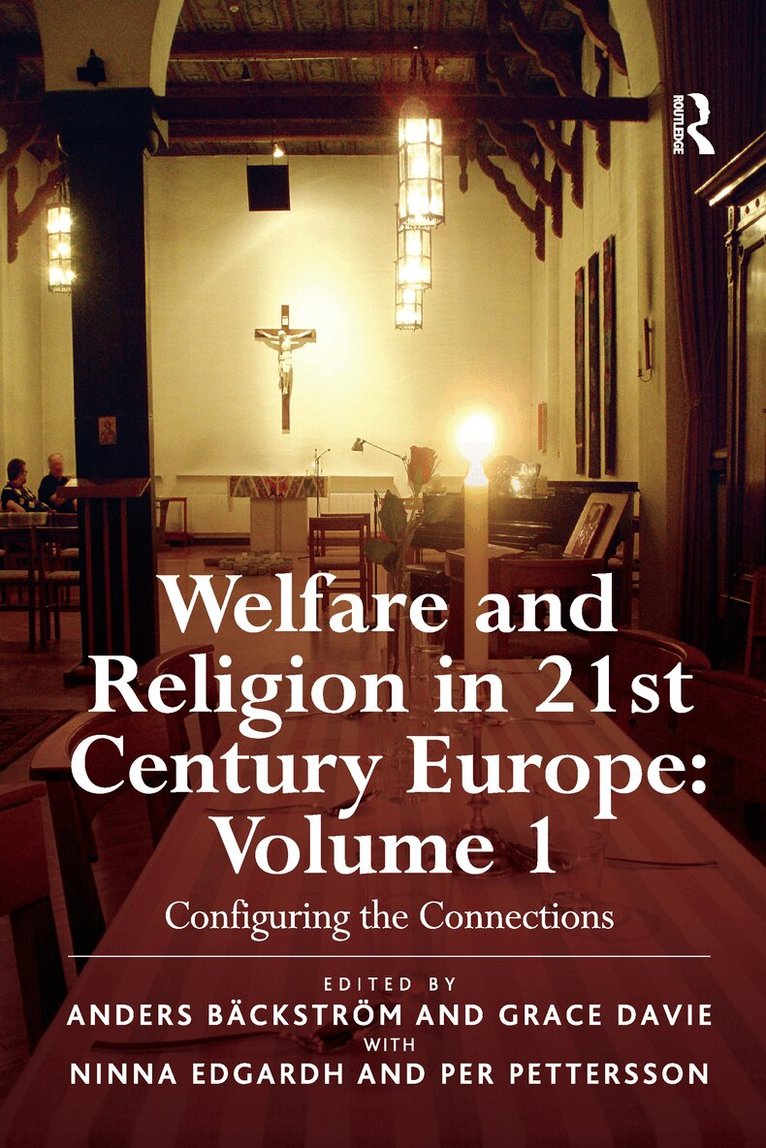
Welfare and Religion in 21st Century Europe
Volume 1: Configuring the Connections
Inbunden, Engelska, 2010
2 306 kr
Skickas inom 10-15 vardagar
Historically, European churches have played a large part in the provision of welfare. Responsibility, however, has gradually shifted to the state - a shift that forms an integral part of the process of secularization and one that has been readily accepted by European populations. But what happens when the state itself begins to recede - a process that is occurring in most, if not all, European societies for a wide variety of reasons? The implications for welfare are considerable, not least for the role of the churches which begin to resume the responsibilities previously shed but in new and different ways. This book looks at the connections between religion and welfare in Europe, exploring in detail eight European societies - Finland, Norway, Sweden, England, Germany, France, Italy and Greece. The different theological traditions, different church-state relationships and different welfare regimes are all examined. The analysis is based on first hand empirical research which considers not only the changing situation on the ground, but attitudes towards this within a range of different constituencies - the churches, local government and the general public. Particular attention is paid to the significance of gender in both the process of change and in attitudes towards this. Welfare and Religion in 21st Century Europe: Volume 1 represents comparative research at its best and highlights key policy implications for the future. A companion book, Welfare and Religion in 21st Century Europe: Volume 2 explores thematically the changing nature of religion and welfare and the new relationships that are emerging between the religious and the secular, and between church and state in the 21st century.
Welfare and Religion in 21st Century Europe
Volume 1: Configuring the Connections
Häftad, Engelska, 2010
676 kr
Skickas inom 10-15 vardagar
Historically, European churches have played a large part in the provision of welfare. Responsibility, however, has gradually shifted to the state - a shift that forms an integral part of the process of secularization and one that has been readily accepted by European populations. But what happens when the state itself begins to recede - a process that is occurring in most, if not all, European societies for a wide variety of reasons? The implications for welfare are considerable, not least for the role of the churches which begin to resume the responsibilities previously shed but in new and different ways. This book looks at the connections between religion and welfare in Europe, exploring in detail eight European societies - Finland, Norway, Sweden, England, Germany, France, Italy and Greece. The different theological traditions, different church-state relationships and different welfare regimes are all examined. The analysis is based on first hand empirical research which considers not only the changing situation on the ground, but attitudes towards this within a range of different constituencies - the churches, local government and the general public. Particular attention is paid to the significance of gender in both the process of change and in attitudes towards this. Welfare and Religion in 21st Century Europe: Volume 1 represents comparative research at its best and highlights key policy implications for the future. A companion book, Welfare and Religion in 21st Century Europe: Volume 2 explores thematically the changing nature of religion and welfare and the new relationships that are emerging between the religious and the secular, and between church and state in the 21st century.
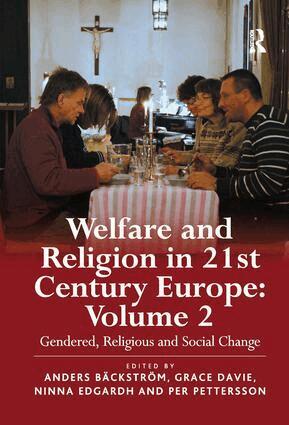
Welfare and Religion in 21st Century Europe
Volume 2: Gendered, Religious and Social Change
Inbunden, Engelska, 2011
2 170 kr
Skickas inom 10-15 vardagar
Historically, European churches have played a large part in the provision of welfare. Responsibility, however, has gradually shifted to the state - a shift that forms an integral part of the process of secularization and one that has been readily accepted by European populations. But what happens when the state itself begins to recede - a process that is occurring in most, if not all, European societies for a wide variety of reasons? The implications for welfare are considerable, not least for the role of the churches which begin to resume the responsibilities previously shed but in new and different ways. This book looks at the connections between religion and welfare in Europe, exploring in detail eight European societies - Finland, Norway, Sweden, England, Germany, France, Italy and Greece. The different theological traditions, different church-state relationships and different welfare regimes are all examined. The analysis is based on first hand empirical research which considers not only the changing situation on the ground, but attitudes towards this within a range of different constituencies - the churches, local government and the general public. Particular attention is paid to the significance of gender in both the process of change and in attitudes towards this. Welfare and Religion in 21st Century Europe: Volume 1 represents comparative research at its best and highlights key policy implications for the future. A companion book, Welfare and Religion in 21st Century Europe: Volume 2 explores thematically the changing nature of religion and welfare and the new relationships that are emerging between the religious and the secular, and between church and state in the 21st century.
Welfare and Religion in 21st Century Europe
Volume 2: Gendered, Religious and Social Change
Häftad, Engelska, 2011
676 kr
Skickas inom 10-15 vardagar
Historically, European churches have played a large part in the provision of welfare. Responsibility, however, has gradually shifted to the state - a shift that forms an integral part of the process of secularization and one that has been readily accepted by European populations. But what happens when the state itself begins to recede - a process that is occurring in most, if not all, European societies for a wide variety of reasons? The implications for welfare are considerable, not least for the role of the churches which begin to resume the responsibilities previously shed but in new and different ways. This book looks at the connections between religion and welfare in Europe, exploring in detail eight European societies - Finland, Norway, Sweden, England, Germany, France, Italy and Greece. The different theological traditions, different church-state relationships and different welfare regimes are all examined. The analysis is based on first hand empirical research which considers not only the changing situation on the ground, but attitudes towards this within a range of different constituencies - the churches, local government and the general public. Particular attention is paid to the significance of gender in both the process of change and in attitudes towards this. Welfare and Religion in 21st Century Europe: Volume 1 represents comparative research at its best and highlights key policy implications for the future. A companion book, Welfare and Religion in 21st Century Europe: Volume 2 explores thematically the changing nature of religion and welfare and the new relationships that are emerging between the religious and the secular, and between church and state in the 21st century.
268 kr
Skickas
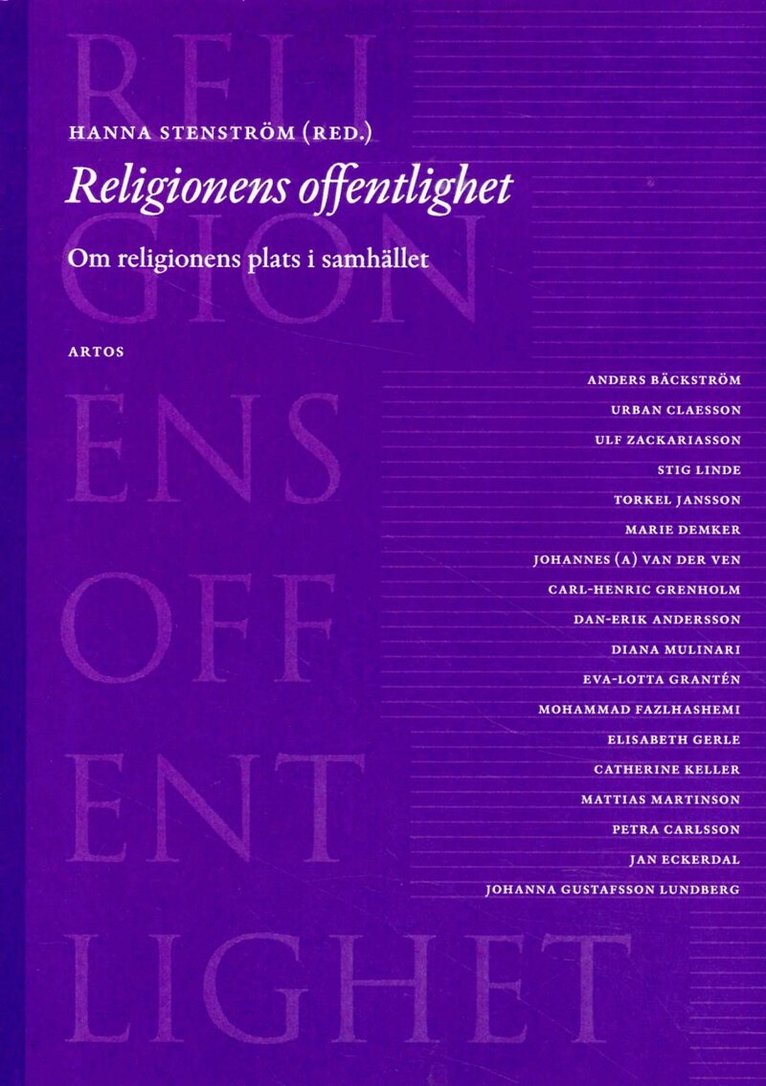
Religionerna spelar idag en tydlig roll i offentligheten, i Sverige och internationellt. Det är inte längre självklart att religion försvinner i ett modernt samhälle, alternativt blir något vissa ägnar sig åt privat eller i krympande kyrkor. Utvecklingen tar sig många olika uttryck. Ett uttryck är att kyrkor i Sverige offentligt tar ställning för en generös flyktingpolitik eller mot försämringar i den svenska välfärden, ett annat är pressdebatter om religiösa inslag vid skolavslutningar, omskärelse av pojkar och Guds existens. Ytterligare ett uttryck är religiöst legitimerat våld och terror, ett annat är den centrala roll muslimska föreställningar om människans värdighet spelade för demokratiaktivister under den arabiska våren. Religionens offentlighet. Om religionens plats i samhället behandlar denna utveckling och de frågor den väcker ur samhällsvetenskapliga, historiska, filosofiska och religionsvetenskapliga perpektiv. Med förankring i svensk och internationell forskning beskrivs utvecklingen och diskuteras utifrån konkreta exempel. Konstruktiva förslag ges till hur religiösa organisationer och individer kan delta i offentliga samtal och samhälleligt liv.
259 kr
Tillfälligt slut
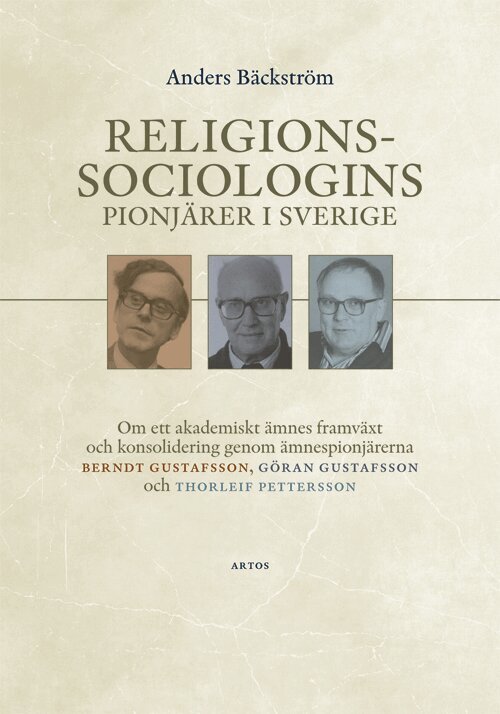
Religionssociologins pionjärer i Sverige : om ett akademiskt ämnes framväxt och konsolidering genom ämnespionjärerna Berndt Gustafsson, Göran Gustafsson och Thorleif Pettersson
Häftad, Svenska, 2023
293 kr
Skickas
Religionssociologin i Sverige har sina rötter i efterkrigstidens växande sociologiska och kyrkohistoriska forskning som Berndt Gustafsson (1920 1975) representerade. Denna forskning resulterade i etableringen av Religionssociologiska Institutet (RSI) 1962. Ämnet utvecklades därefter genom Göran Gustafssons (1936 2018) studier i sociologi och som professor i religionssociologi i Lund (1978 2001). Till sist har ämnet breddats genom en professur vid Uppsala universitet med Thorleif Pettersson (1940 2010) som innehavare (1988 2007). Denna bok skildrar ämnets framväxt och konsolidering genom att följa pionjärernas forskningsutveckling från 1950 till 2010-tal. Genom att fokusera på personernas bakgrund, visioner och forskningsresultat synliggörs forskningens innehåll och metodologiska strategier under mer än femtio år. Det blir då tydligt att ämnet successivt har blivit en del av universitetens expansion mot mångvetenskapliga forskningsmiljöer. Linnéstödet The Impact of Religion vid Uppsala universitet (2008 2018), med Centrum för mångvetenskaplig forskning om religion och samhälle (CRS), illustrerar detta. Religionssociologin har därmed blivit ett fakultetsövergripande ämne som fungerar internationellt sammanhållande. Författaren har genom samarbete med alla pionjärerna sedan 1960talets slut kommit att bli en del av denna utveckling.