Andreas Kulick - Böcker
Visar alla böcker från författaren Andreas Kulick. Handla med fri frakt och snabb leverans.
9 produkter
9 produkter
2 968 kr
Skickas inom 5-8 vardagar
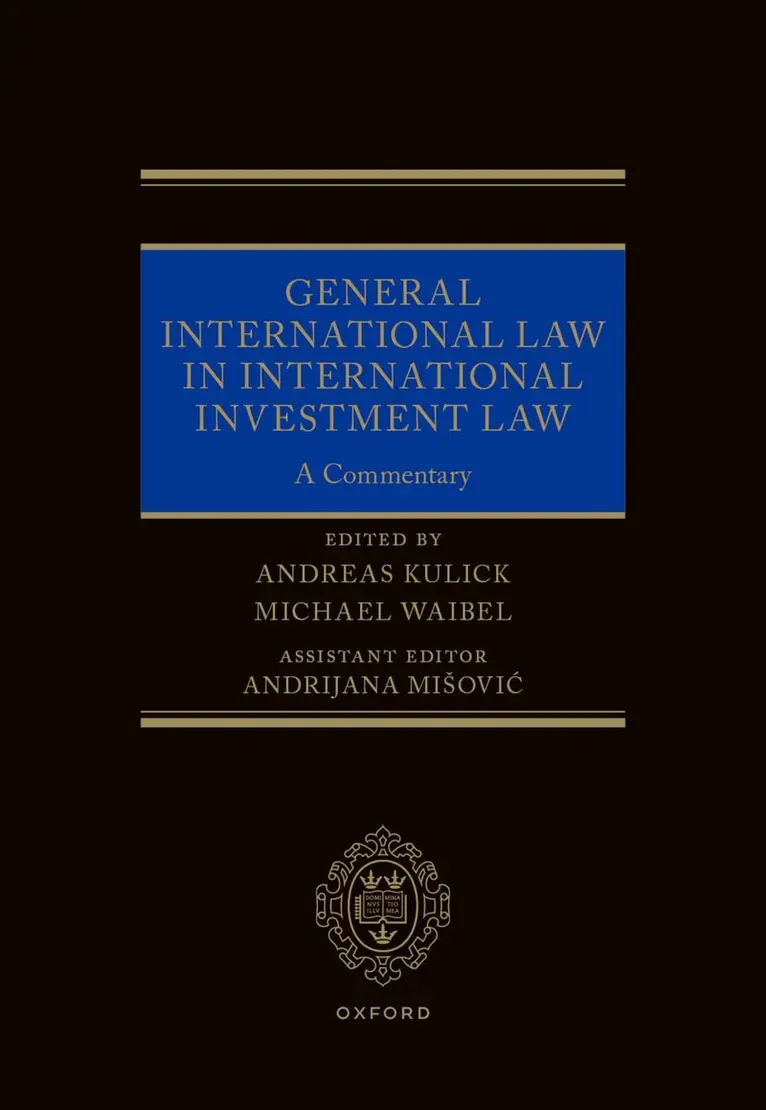
General international law is part and parcel of investor-state arbitration. This is the case not only regarding treaty law and state responsibility, but also with respect to matters such as state succession, the international minimum standard, and state immunity, all of which feature regularly in investor-state arbitration. Yet, although general international law issues arise in almost every investment case and often require extensive research, no systematic exploration of the relationship between the two exists. This Commentary is the first to fill this gap, providing a comprehensive treatment of the role of general international law in international investment law. It engages in detail with central matters of general international law, including in the practice of investment arbitration tribunals, moving beyond existing works which focus solely on procedural and institutional provisions. The Commentary's forty-six chapters do not focus on a single source or subject. Instead, each concentrates on a specific, relevant article from a particular source of public law - such as the Vienna Convention on the Law of Treaties (1969) or the International Law Commission's Articles on the Responsibility of States for Internationally Wrongful Acts (2001), among others. The entries combine detailed analysis with an examination of procedural and substantive aspects - such as nationality and unjust enrichment - and respond to the following questions: how have investment tribunals interpreted and applied the specific rule of general international law? To what extent and why does such interpretation and application align with or deviate from the practice by other international courts or tribunals? How could and should investment tribunals interpret and apply rules that have yet to feature in investment arbitration? This unique format means this commentary will serve as a central guide for all relevant case law and scholarship on international investment law.
Del 2 - The Rules of Interpretation of Customary International Law
Custom and its Interpretation in International Investment Law: Volume 2
Inbunden, Engelska, 2024
1 460 kr
Skickas inom 7-10 vardagar
At first glance, one may think of international investment law as a response to custom (or lack thereof), instead of a field of its application. However, in fact, the opposite is the case. The interpretation and application of customary rules and principles are the bread and butter of international investment law and arbitration. With a diverse range of expert contributors, this collection traces how customary international law is practised in international investment law. It considers how custom should be interpreted and how its rules and principles should be understood and applied by investor-state arbitral tribunals. Raising and addressing vital questions surrounding custom and international law, this collection is a necessary contribution to the scholarship of the theory and history of customary international law and international investment law. This title is also available as Open Access on Cambridge Core.
Del 90 - Cambridge Studies in International and Comparative Law
Global Public Interest in International Investment Law
Inbunden, Engelska, 2012
1 387 kr
Skickas inom 7-10 vardagar
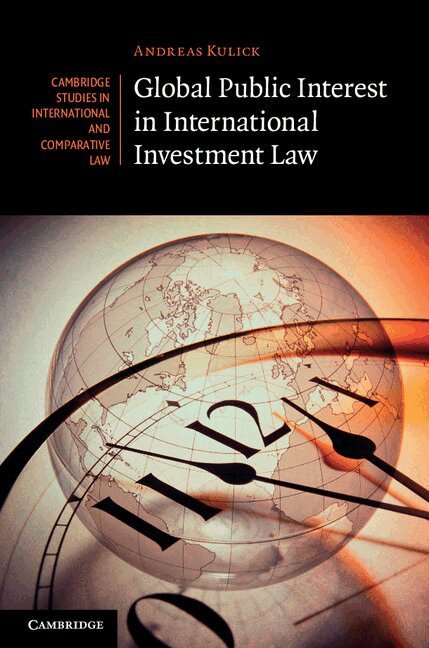
The strengths of international investment law - above all, a strong focus on investor interests and an effective adjudication and enforcement system - also entail its weaknesses: it runs the danger of impeding or even sanctioning the host states' legitimate regulatory interests and ignoring other fields of public international law. How does it cope with public interest concerns such as human rights, the environment or the fight against corruption? At the heart of this book lies a fresh approach towards a general theory of such global public interest considerations in the investment realm. Delineating how and why those considerations matter, and why the current system does not accommodate them properly, Andreas Kulick fleshes out general principles and customary international law as defences the host state may raise against alleged investor rights infringements and promotes proportionality as the appropriate balancing mechanism.
1 339 kr
Skickas inom 7-10 vardagar
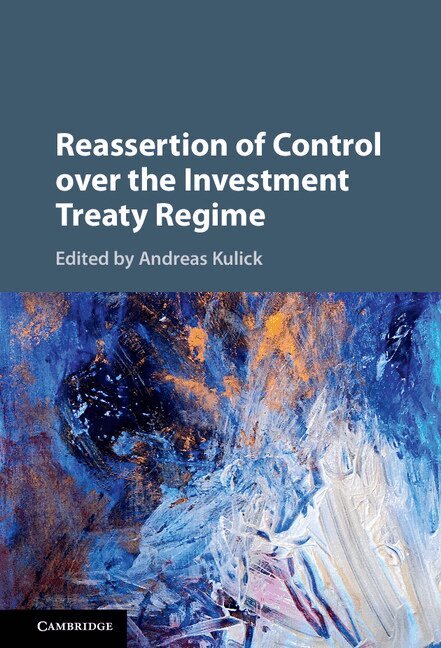
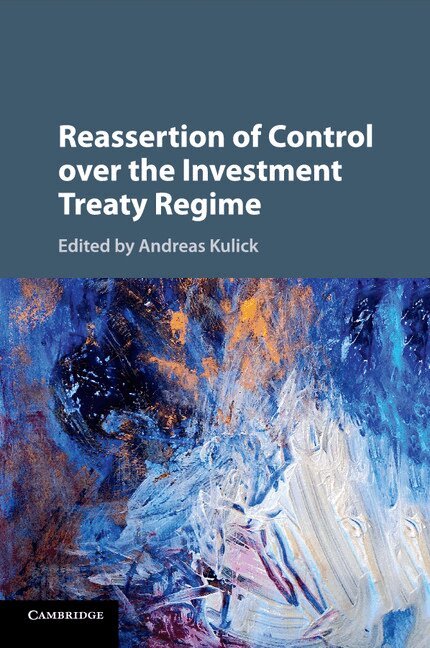
Driven by public opinion in host states, contracting parties to investment agreements are pursuing many avenues in order to curb a system that is being perceived - correctly or not - as having run out of control. Reassertion of Control over the Investment Treaty Regime is the first book of its kind to examine the many issues of procedure, substantive law, and policy which arise from this trend. From procedural aspects such as frivolous claims mechanisms, the establishment of appeals mechanism or state-state arbitration, to substantive issues such as joint interpretations, treaty termination or detailed definitions of standards of protection, the book identifies and discusses the main means by which states do or may reassert their control over the interpretation and application of investment treaties. Each chapter tackles one of these avenues and evaluates its potential to serve as an instrument in states' reassertion of control.
Del 90 - Cambridge Studies in International and Comparative Law
Global Public Interest in International Investment Law
Häftad, Engelska, 2014
467 kr
Skickas inom 7-10 vardagar
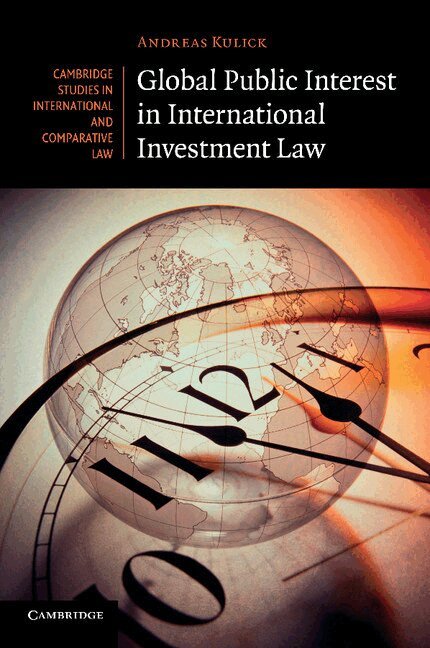
The strengths of international investment law - above all, a strong focus on investor interests and an effective adjudication and enforcement system - also entail its weaknesses: it runs the danger of impeding or even sanctioning the host states' legitimate regulatory interests and ignoring other fields of public international law. How does it cope with public interest concerns such as human rights, the environment or the fight against corruption? At the heart of this book lies a fresh approach towards a general theory of such global public interest considerations in the investment realm. Delineating how and why those considerations matter, and why the current system does not accommodate them properly, Andreas Kulick fleshes out general principles and customary international law as defences the host state may raise against alleged investor rights infringements and promotes proportionality as the appropriate balancing mechanism.
467 kr
Skickas inom 7-10 vardagar
Driven by public opinion in host states, contracting parties to investment agreements are pursuing many avenues in order to curb a system that is being perceived - correctly or not - as having run out of control. Reassertion of Control over the Investment Treaty Regime is the first book of its kind to examine the many issues of procedure, substantive law, and policy which arise from this trend. From procedural aspects such as frivolous claims mechanisms, the establishment of appeals mechanism or state-state arbitration, to substantive issues such as joint interpretations, treaty termination or detailed definitions of standards of protection, the book identifies and discusses the main means by which states do or may reassert their control over the interpretation and application of investment treaties. Each chapter tackles one of these avenues and evaluates its potential to serve as an instrument in states' reassertion of control.
Del 5 - Beiträge zum Sicherheitsrecht und zur Sicherheitspolitik
Der Terrorist als Feind?
Personalisierung im Polizei- und Völkerrecht
Häftad, Tyska, 2020
1 155 kr
Tillfälligt slut
Im Rechtsstaat bekämpft die Polizei Gefahren, keine Menschen. Für den Menschen interessiert sich das Recht erst, wenn man ihm Gefahren zurechnen kann. Nicht Freund und Feind sind daher die Kategorien des Rechtsstaats, sondern Störer und Nichtstörer. Es liegt jedoch im Wesen des Terrorismus, dass Täter unvermittelt Anschläge ungeheuren Ausmaßes ausführen können. Die Schwierigkeit, dies in Begriffen der Gefahr zu fassen, legt es nahe, an die Person des Terroristen anzuknüpfen. Das internationale Recht ringt mit dieser Strategie schon länger ("enemy combatants" etc.). Bewegt sich der Rechtsstaat also dorthin, wo das Völkerrecht schon ist und bestätigt damit ein unausgesprochenes Freund-Feind-Denken?Die Beiträge dieses Bandes stellen sich den Personalisierungstendenzen heutiger Sicherheitspolitik. Sie identifizieren die "Personalisierung" als Problem und mahnen sie zugleich als Ausgangspunkt einer konstruktiven Lösung an.
Del 291 - Jus Publicum
Horizontalwirkung im Vergleich
Ein Plädoyer für die Geltung der Grundrechte zwischen Privaten
Inbunden, Tyska, 2020
2 011 kr
Tillfälligt slut
Viel ist zur Wirkung der Grundrechte zwischen Privaten geschrieben worden. Jedoch offenbaren jüngere Entwicklungen in der Rechtsprechung - vgl. Stadionverbotsbeschluss (BVerfG) und Egenberger-Urteil (EuGH) - und in der Lebenspraxis - Stichwort: soziale Medien -, dass viele Fragen weiterhin ungeklärt bleiben oder neu gestellt werden müssen. Andreas Kulick nähert sich der Horizontalwirkung der Grundrechte und ihren Lösungsansätzen aus sechs Perspektiven: analytisch, dogmatisch, anwendungspraktisch, staatsorganisationsrechtlich, ethisch und demokratietheoretisch. Dieser Vergleich offenbart erhebliche Schwächen der vorherrschenden Auffassung und zeigt, dass die Vorbehalte gegenüber einem unmittelbaren Grundrechtsverhältnis zwischen Privaten weitgehend ins Leere gehen. Der Autor plädiert stattdessen für einen modifizierten Ansatz der Grundrechtsgeltung zwischen Privaten. Er sichert ihn theoretisch und dogmatisch ab und weist seine Realisierung primär der Fachgerichtsbarkeit zu.
315 kr
Tillfälligt slut
Das Bundesverfassungsgericht gilt als großer Innovator. Dieses dominante Bild ergänzt der Essay, motiviert durch das 70. Jubiläum des Bundesverfassungsgerichts, um die These eines konservativen Gerichts. In einigen Bereichen scheint das Gericht eher als Konservator denn als Innovator aufzutreten. Entgegen der vorherrschenden Auffassung zeigen die Autoren auf, dass, wo und warum das Bundesverfassungsgericht konservativ und konservierend judiziert. Sie ergänzen damit die dominante Erzählung vom Gericht als Treiber dogmatischer Neuerungen durch die bisher unterbelichtet gebliebene Perspektive des Konservatismus in der bundesverfassungsgerichtlichen Rechtsprechung. Der Essay entwickelt dazu eine Skala des dogmatischen Konservatismus: Vom Bewahren und Beharren über das Bremsen bis hin zum Musealisieren. In vier ausgewählten Themengebieten - der Staatsrichtung der Grundrechte, dem Staatskirchenrecht, dem Verhältnis zur Gubernative und der europäischen Integration - analysieren die Autoren zentrale Judikate mithilfe dieser Skalierung. Sie beziehen dabei zugleich die hinter der Dogmatik stehenden strategischen und (staats)politischen Erwägungen der Karlsruher Rechtsprechung mit ein.