Andrew Ladis - Böcker
Visar alla böcker från författaren Andrew Ladis. Handla med fri frakt och snabb leverans.
5 produkter
5 produkter
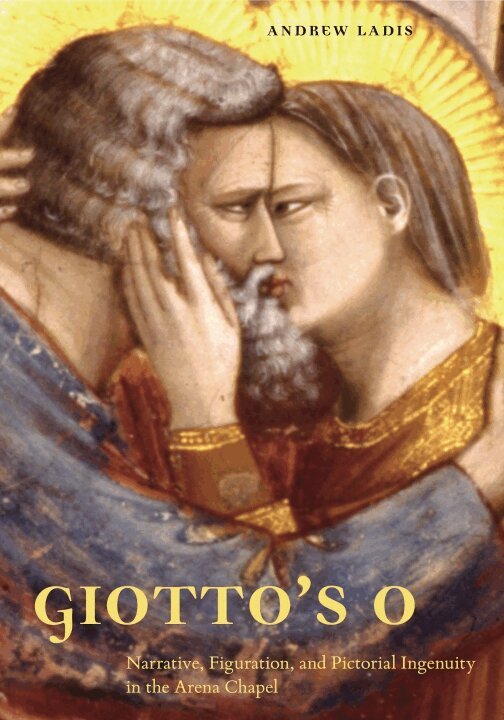
Giotto's O
Narrative, Figuration, and Pictorial Ingenuity in the Arena Chapel
Inbunden, Engelska, 2009
1 208 kr
Skickas inom 11-20 vardagar
Andrew Ladis begins his book with Giorgio Vasari’s famous story of Giotto’s O, in which the artist drew a perfect circle freehand, baffled Pope Benedict XI’s foolish messenger, and demonstrated his artistic brilliance to those qualified to understand. The fundamental premise of Ladis’s work is that the Arena Chapel, like Giotto’s mythical O (or tondo), must be understood as a complete, unified whole. He tells us, “the cycle of murals in the Arena Chapel has a depth that underpins the whole, an unpretentious profundity manifested in a formal order, and as in the case of the O, one must have the wherewithal to discern Giotto’s achievement beyond the directness and emotional power of the narrative.” Ladis does not write about the program from the more expected standpoints of patronage or audience, or via extensive analysis of archival source material. Instead, without discounting the former approaches, Ladis considers Giotto’s conception of the Arena Chapel in terms of biblical exegesis, a central geometry, and what he sees as the program’s carefully planned symmetry. He urges the viewer to abandon the temporal narrative and follow “visual cues that encourage readings that transcend narrative time,” and so he moves through a discussion of Giotto’s frescoes, offering new insights about particular passages and continually considering how the meaning of each section resonates with others throughout the chapel.
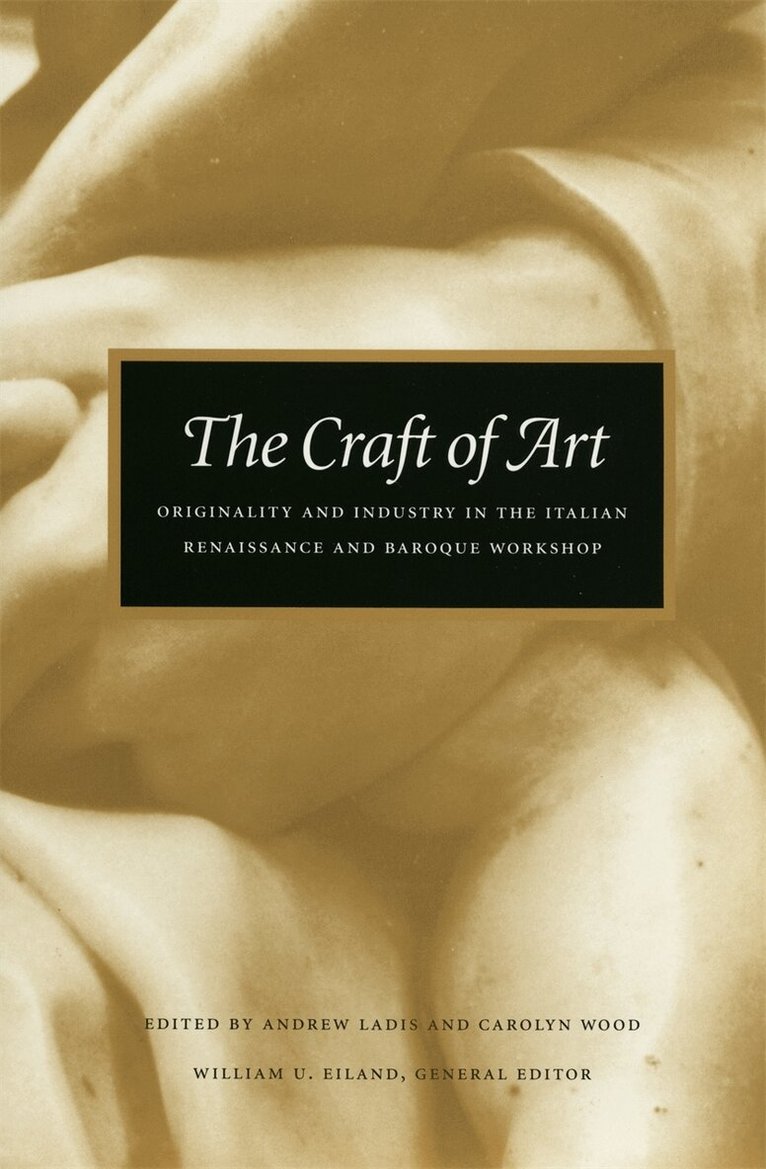
Craft of Art
Originality and Industry in the Italian Renaissance and Baroque Workshop
Häftad, Engelska, 2016
454 kr
Skickas inom 5-8 vardagar
In this collection of nine essays some of the preeminent art historians in the United States consider the relationship between art and craft, between the creative idea and its realization, in Renaissance and Baroque Italy. The essays, all previously unpublished, are devoted to the pictorial arts and are accompanied by nearly 150 illustrations. Examining works by such artists as Michelangelo, Titian, Volterrano, Giovanni di Paolo, and Annibale Carracci (along with aspects of the artists' creative processes, work habits, and aesthetic convictions), the essayists explore the ways in which art was conceived and produced at a time when collaboration with pupils, assistants, or independent masters was an accepted part of the artistic process.The consensus of the contributors amounts to a revision, or at least a qualification, of Bernard Berenson's interpretation of the emergent Renaissance ideal of individual "genius" as a measure of original artistic achievement: we must accord greater influence to the collaborative, appropriative conventions and practices of the craft workshop, which persisted into and beyond the Renaissance from its origins in the Middle Ages. Consequently, we must acknowledge the sometimes rather ordinary beginnings of some of the world's great works of art--an admission, say the contributors, that will open new avenues of study and enhance our understanding of the complex connections between invention and execution.With one exception, these essays were delivered as lectures in conjunction with the exhibition The Artists and Artisans of Florence: Works from the Horne Museum hosted by the Georgia Museum of Art in the fall of 1992.
1 383 kr
Skickas inom 11-20 vardagar
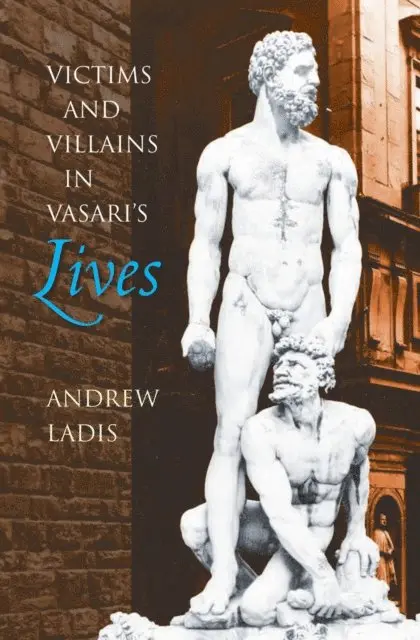
This book explores the rich literary character and rhetorical strategies of Giorgio Vasari's Lives of the Most Eminent Painters, Sculptors and Architects, which tells the story of Italian art as it unfolded from its beginnings in the fourteenth century to its pinnacle in Michelangelo and the art of the Academy in the mid-sixteenth century. The contributors of Reading Vasari propose ways to understand Vasari's text in the light of recent disputes over what is fact, fiction, or biography, and who may have read Vasari's editions when they were first published. The book isolates and analyses select threads from Vasari's luxurious textual tapestry: these range from architecture, cosmology and philosophy to biography, comedy, elegy and travelogue.
1 346 kr
Skickas inom 5-8 vardagar
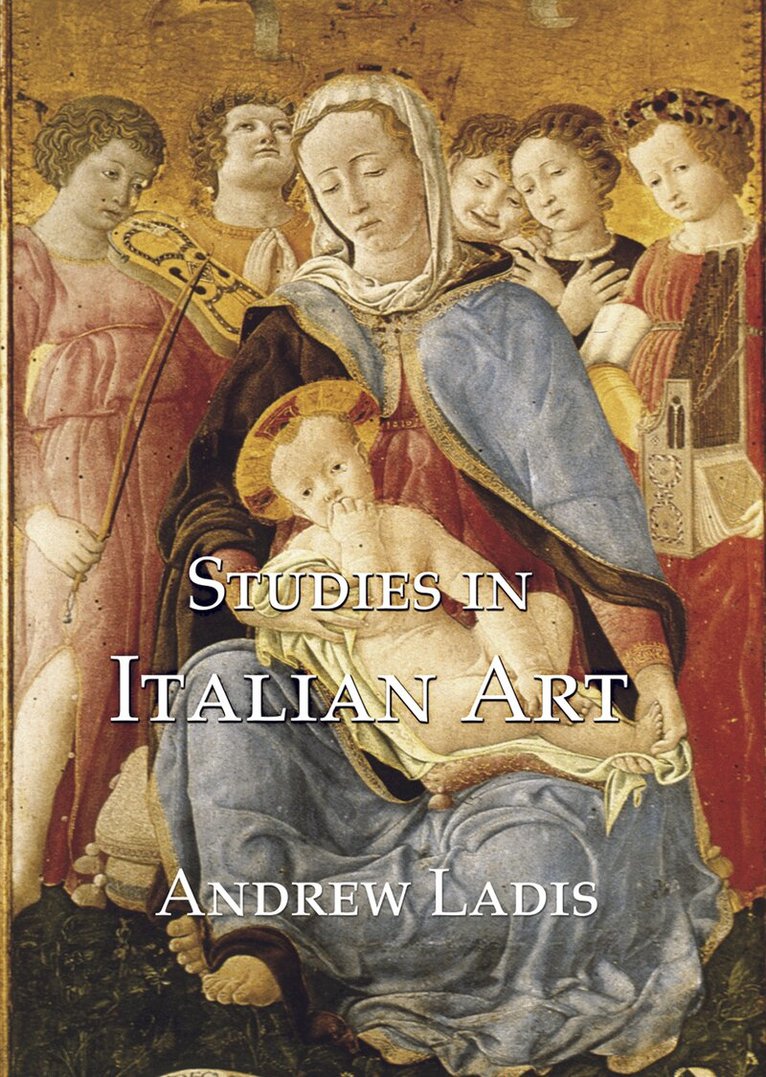
Andrew Ladis is Franklin Professor of Art History at the University of Georgia. Over the course of the last twenty years he has written extensively on Italian art. In addition to books on Taddeo Gaddi and on the Brancacci Chapel, he has made notable contributions to the study of early Italian painting and sculpture with essays on such figures as Giovanni Pisano, Giotto, Jacopo del Casentino, Ambrogio Lorenzetti, and Niccolò di Tommaso. But the range of his interests, made apparent by this collection, extends far beyond fourteenth-century Florence and Siena to encompass Tuscan painting of the fifteenth century, Renaissance maiolica, the writings of Giorgio Vasari, biography, and modern historiography. Further, the assembled essays and book reviews embrace a wide array of art historical problems, such as connoisseurship, patronage, workshop procedure, and the relationship between form and meaning. Of particular note is a major interpretive essay on one of the key monuments of the Renaissance, the mural decoration of the Brancacci Chapel painted by Masaccio, Masolino, and Filippino Lippi. Appearing here in revised form, this study is newly accompanied by a copious number of illustrations, including some never before published.
548 kr
Skickas inom 5-8 vardagar
Andrew Ladis is Franklin Professor of Art History at the University of Georgia. Over the course of the last twenty years he has written extensively on Italian art. In addition to books on Taddeo Gaddi and on the Brancacci Chapel, he has made notable contributions to the study of early Italian painting and sculpture with essays on such figures as Giovanni Pisano, Giotto, Jacopo del Casentino, Ambrogio Lorenzetti, and Niccolò di Tommaso. But the range of his interests, made apparent by this collection, extends far beyond fourteenth-century Florence and Siena to encompass Tuscan painting of the fifteenth century, Renaissance maiolica, the writings of Giorgio Vasari, biography, and modern historiography. Further, the assembled essays and book reviews embrace a wide array of art historical problems, such as connoisseurship, patronage, workshop procedure, and the relationship between form and meaning. Of particular note is a major interpretive essay on one of the key monuments of the Renaissance, the mural decoration of the Brancacci Chapel painted by Masaccio, Masolino, and Filippino Lippi. Appearing here in revised form, this study is newly accompanied by a copious number of illustrations, including some never before published.